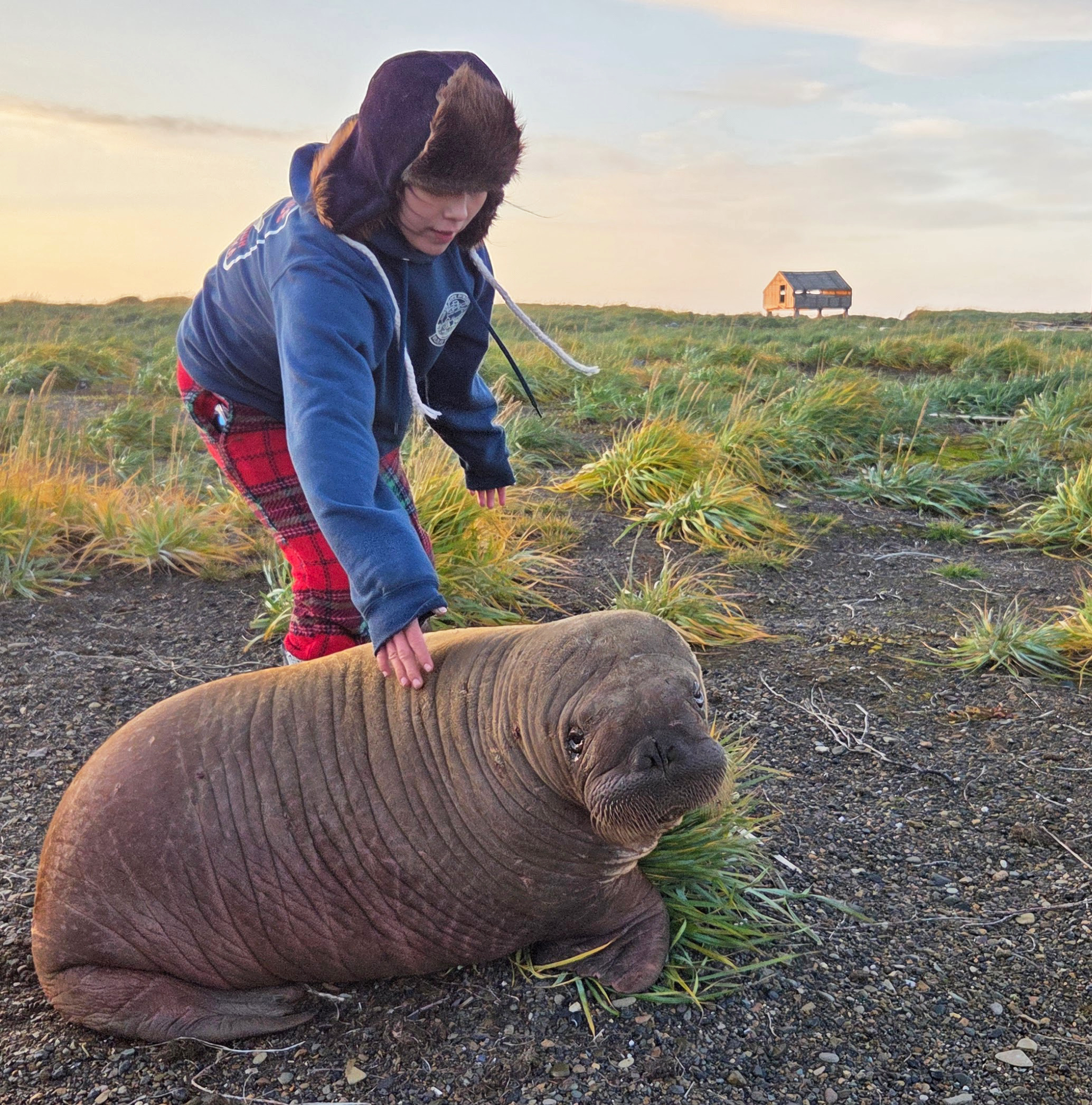
On a remote beach near Point Lay, on Alaska’s northwest coast, Iḷisaġvik College intern Violet Anniskett was doing what the survey asked of her: photographing walrus carcasses left behind after a herd stampeded into the water during a storm. She was counting. Documenting. Then one stomach moved.
She stepped closer. The orphaned Pacific walrus calf opened his eyes.
That mid-September 2026 moment — startling, tender, and urgently practical — set off a rescue that stretched from a storm-battered island cabin to the Alaska SeaLife Center in Seward more than 800 miles away, and eventually to a long-term home. The calf was later named Annautaq, after Anniskett’s late father. The photographs in this story are not stock. They were made on site by U.S. Geological Survey researchers and released as U.S. government public-domain works.
A beach after the stampede
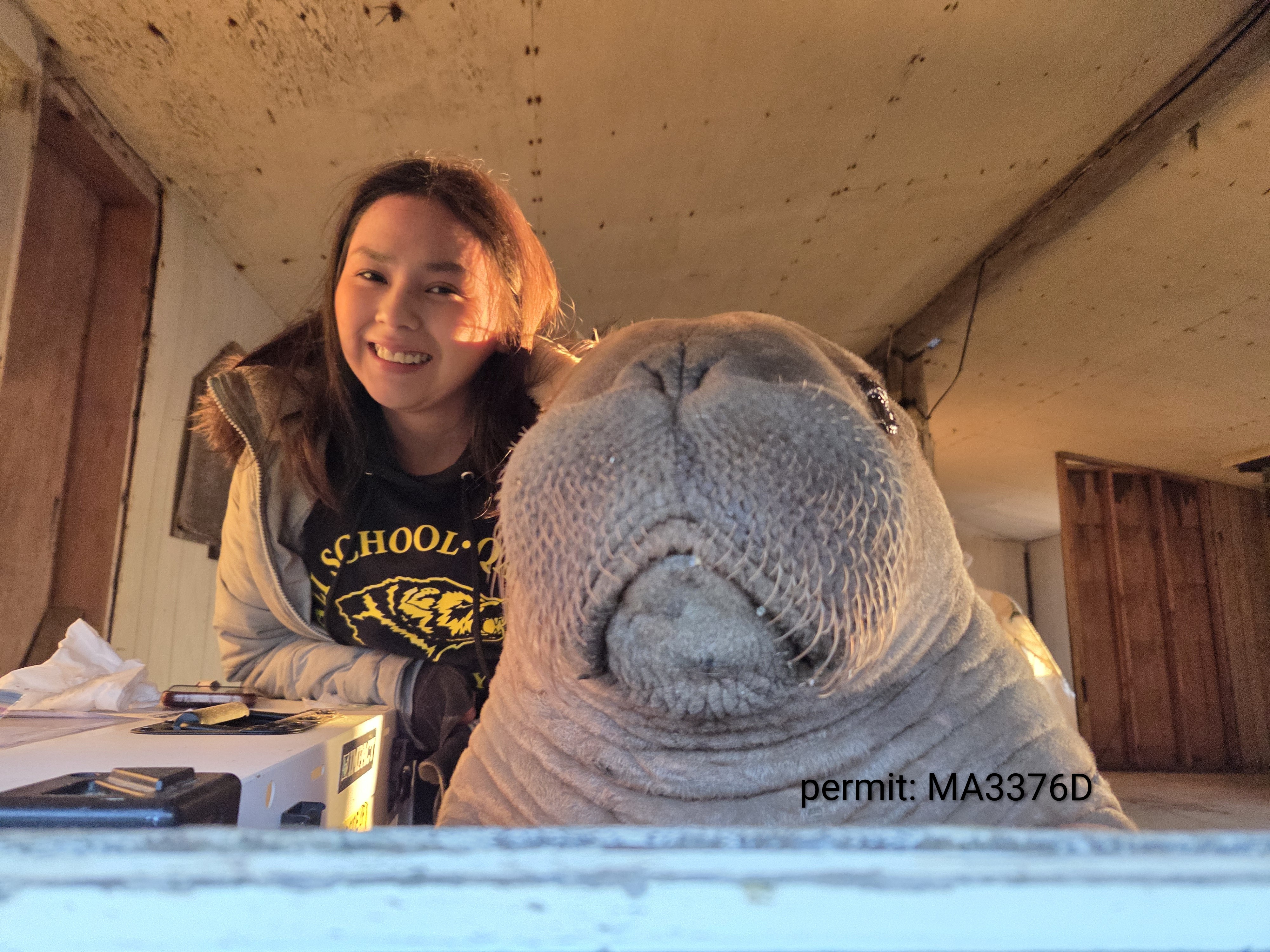
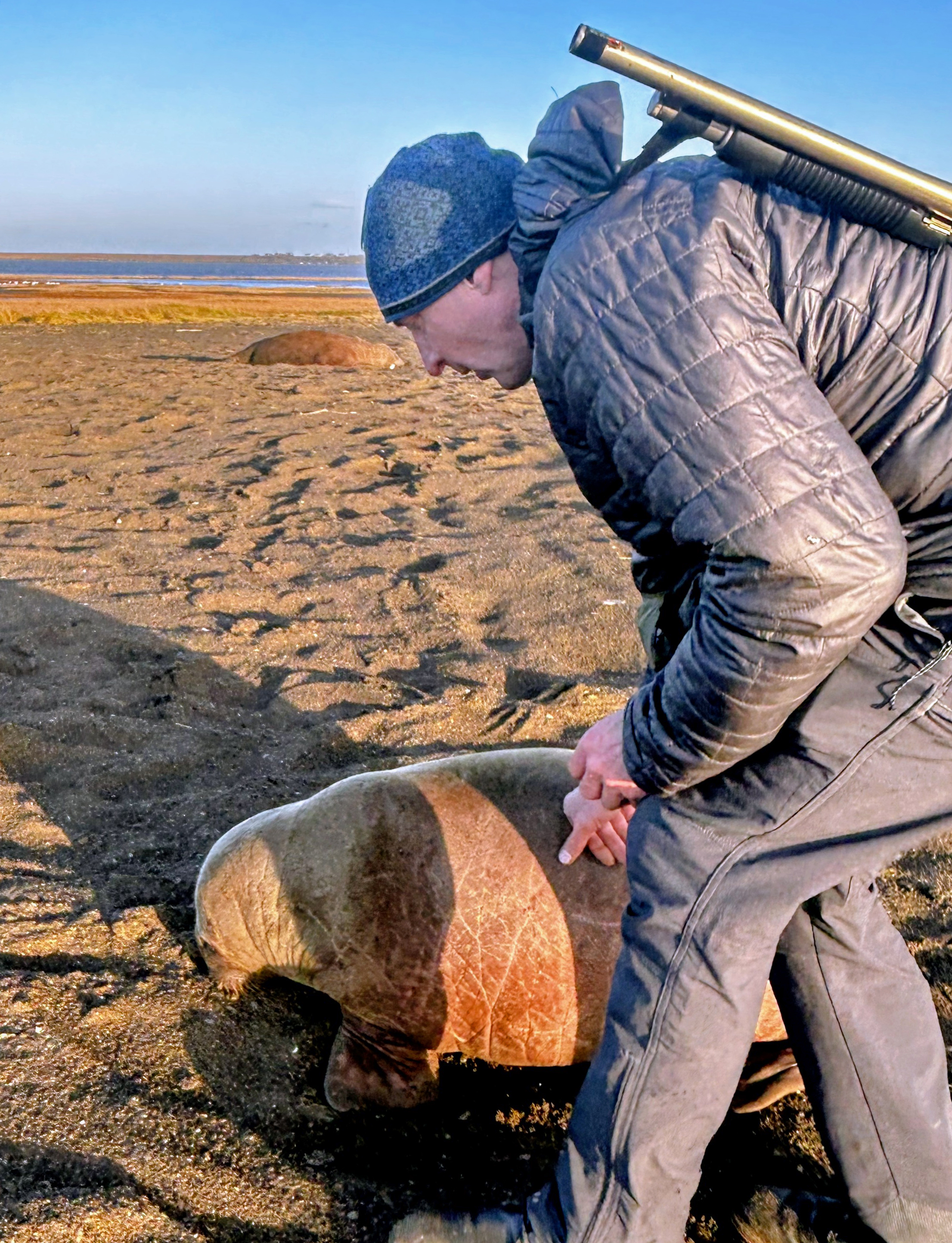
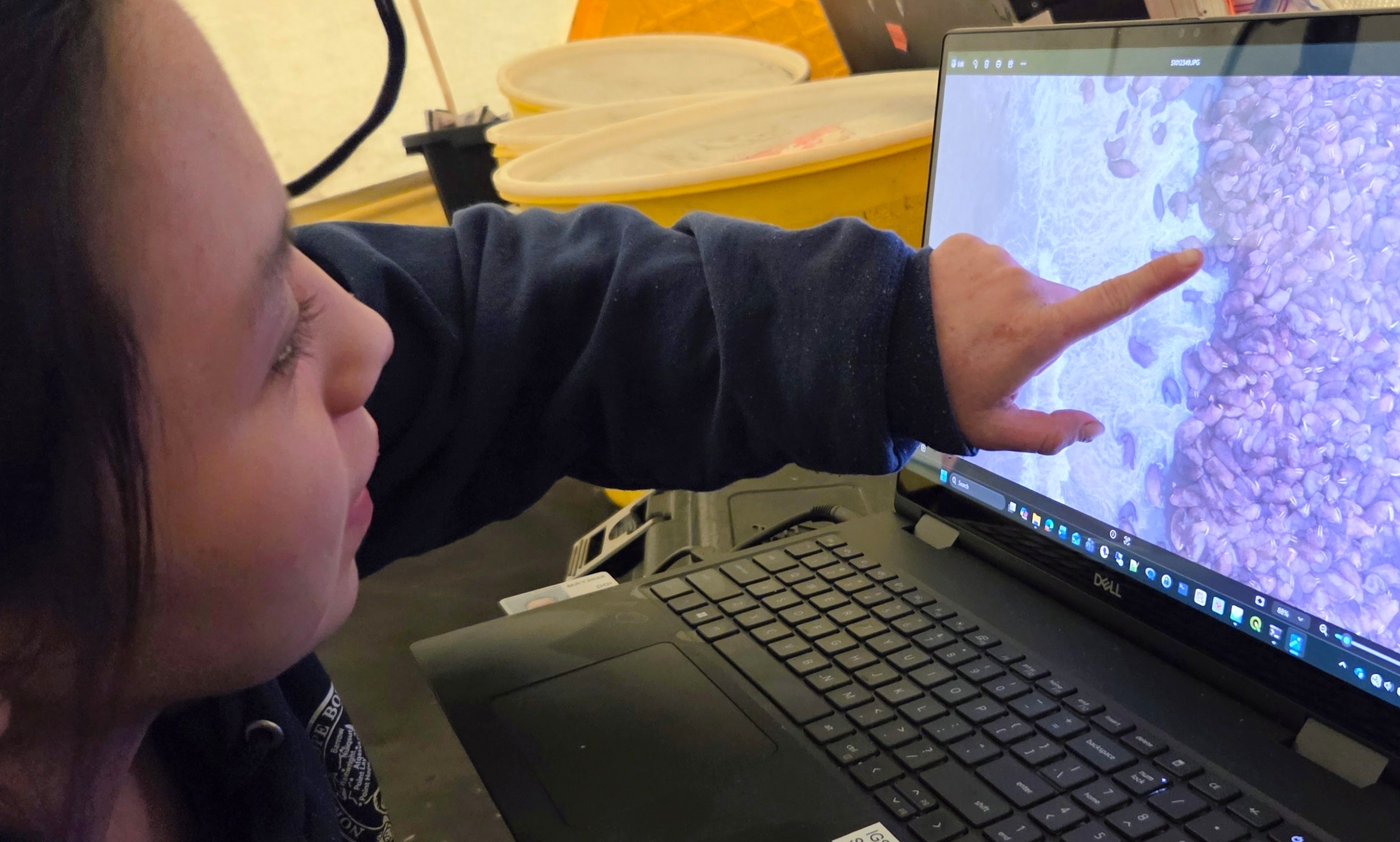
Walruses gather in dense coastal haulouts. When they are disturbed — by surf, predators, or people — they can rush for the water. In that panic, younger animals are sometimes trampled. USGS research wildlife biologist Anthony (Tony) Fischbach and Anniskett, who is from Point Lay, were surveying the beach after heavy surf drove a herd away. Their work included sampling fresh carcasses for harmful algal toxins, part of a longer effort to understand walrus health and meet Marine Mammal Protection Act reporting needs.
What they found next was something Fischbach said he had not seen in more than a decade at the site: a live calf hidden between the older remains of two adult walruses. Gulls were already intent on scavenging. Polar bears were active on the island. Without intervention, the calf’s odds were grim.
First, ask the community
Point Lay is an Iñupiaq community where walrus hold deep cultural and subsistence meaning. Eligible Alaska Native residents may legally harvest walrus. Anniskett has been clear in interviews that the first and most important step was not a phone call to a rehab center — it was asking the community.
“It’s a big part of our culture that we harvest animals for subsistence living,” she told Alaska Public Media. Taking the calf without that conversation would have meant taking him from the community. The Native Village of Point Lay supported rehabilitation. With U.S. Fish and Wildlife Service approval as well, the path opened toward the only marine mammal rehabilitation center in Alaska: the Alaska SeaLife Center in Seward.
Four days in a storm, with a baby walrus
Transportation could not reach them at once. Storm conditions left Fischbach and Anniskett isolated. They shepherded the orphan more than half a mile to an abandoned building where he would be safer from predators, then stayed with him for nearly four days.
Anniskett later described coaxing him through a broken door with walrus sounds — and the calf’s realization that she was not, in fact, a walrus. The first night was the hardest. He was afraid. He paced and made soft “hoo, hoo” sounds at the windows.
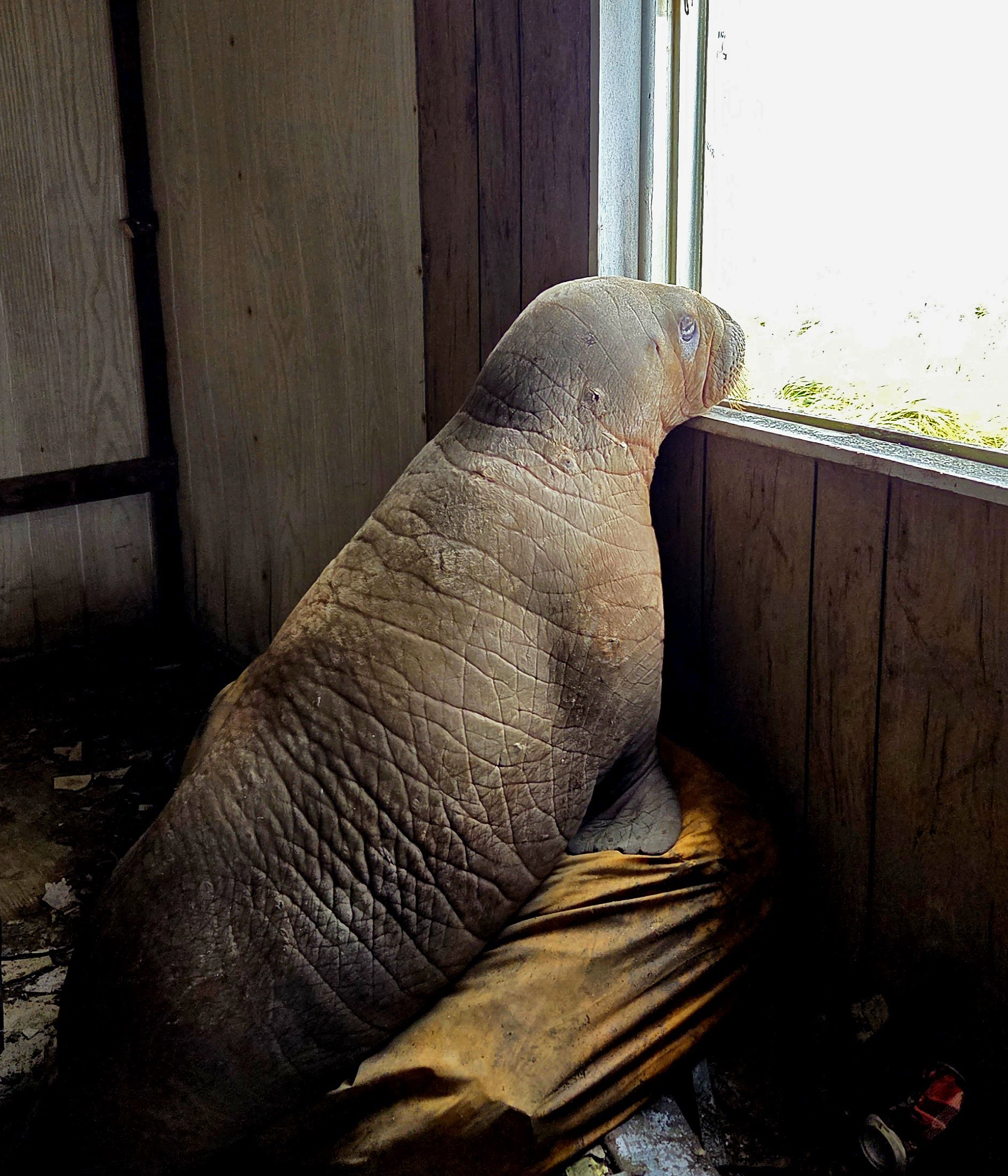
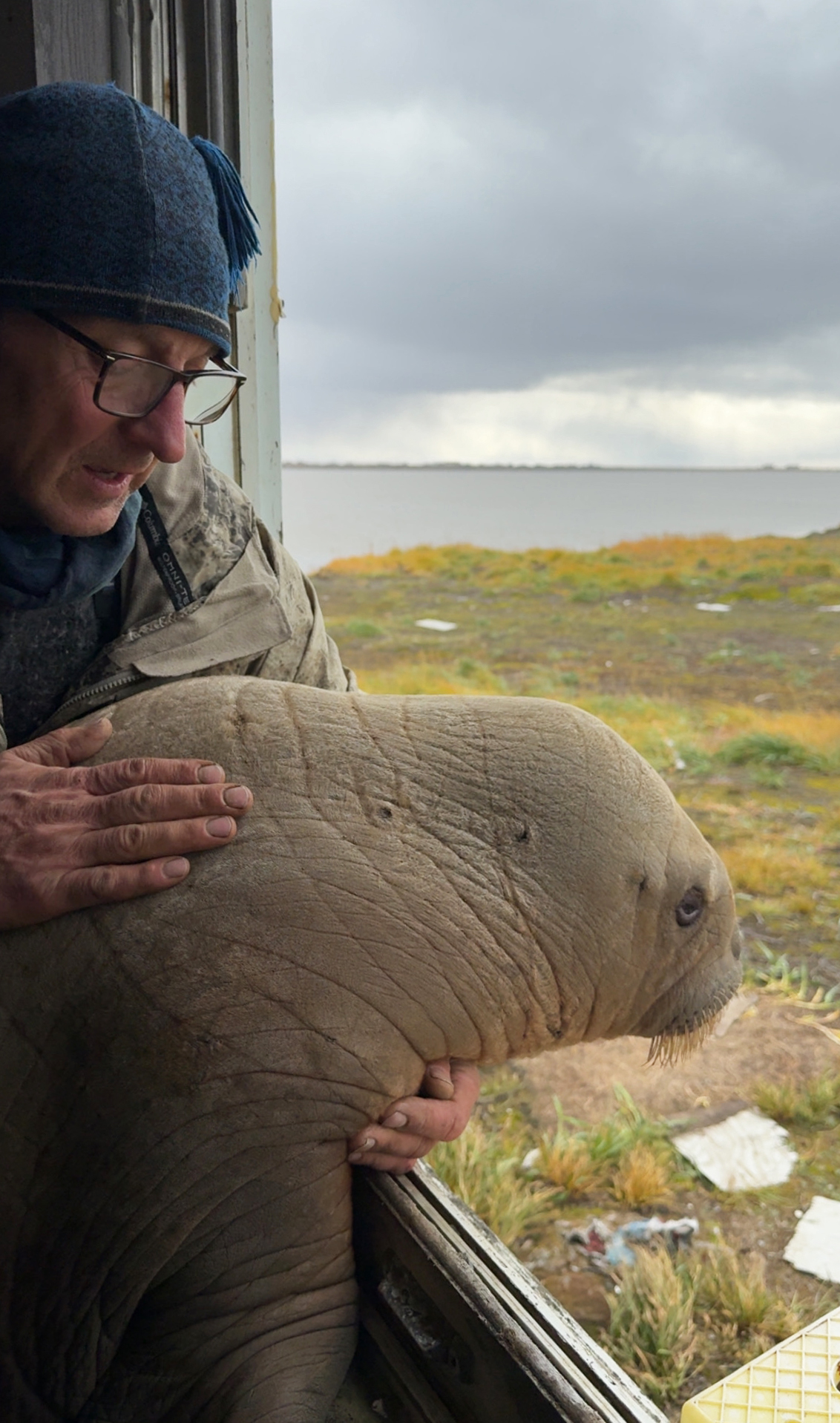
Bonding came quickly. He would not sleep unless someone stayed in the room. Fischbach, taller and sooner at ease with the calf’s weight and closeness, became a cuddle partner. By day two Anniskett grew braver too. In her telling, Annautaq would settle his snout against a leg and drift off — then protest if he woke alone.
“It was just us two for three days, stuck in a storm with the young walrus,” Anniskett recalled in the Alaska SeaLife Center account.
Eight hundred miles to Seward
When weather and logistics finally aligned, Point Lay community members helped move the calf by boat across the lagoon to town, then to the airport. ASLC Wildlife Response staff met them with a plane. Anniskett flew as far as Anchorage with the team before the final van leg to Seward. Annautaq arrived late on the evening of September 14, 2026.
At intake he weighed about 200 pounds and was estimated at five months old: alert, responsive, and in surprisingly good body condition, though dehydrated, with several superficial wounds. Staff treated inflammation and infection risk, gave fluids, and prepared for round-the-clock care.
Orphaned Pacific walrus calves are among the rarest patients in marine mammal rehab. Since opening in 1998, ASLC has cared for only a dozen. Mother–calf bonds in this species can last one to two years; calves are intensely social. Human caregivers become authorized surrogates — shifts around the clock for contact, feeding support, and veterinary care.
Why he will not go back to the wild
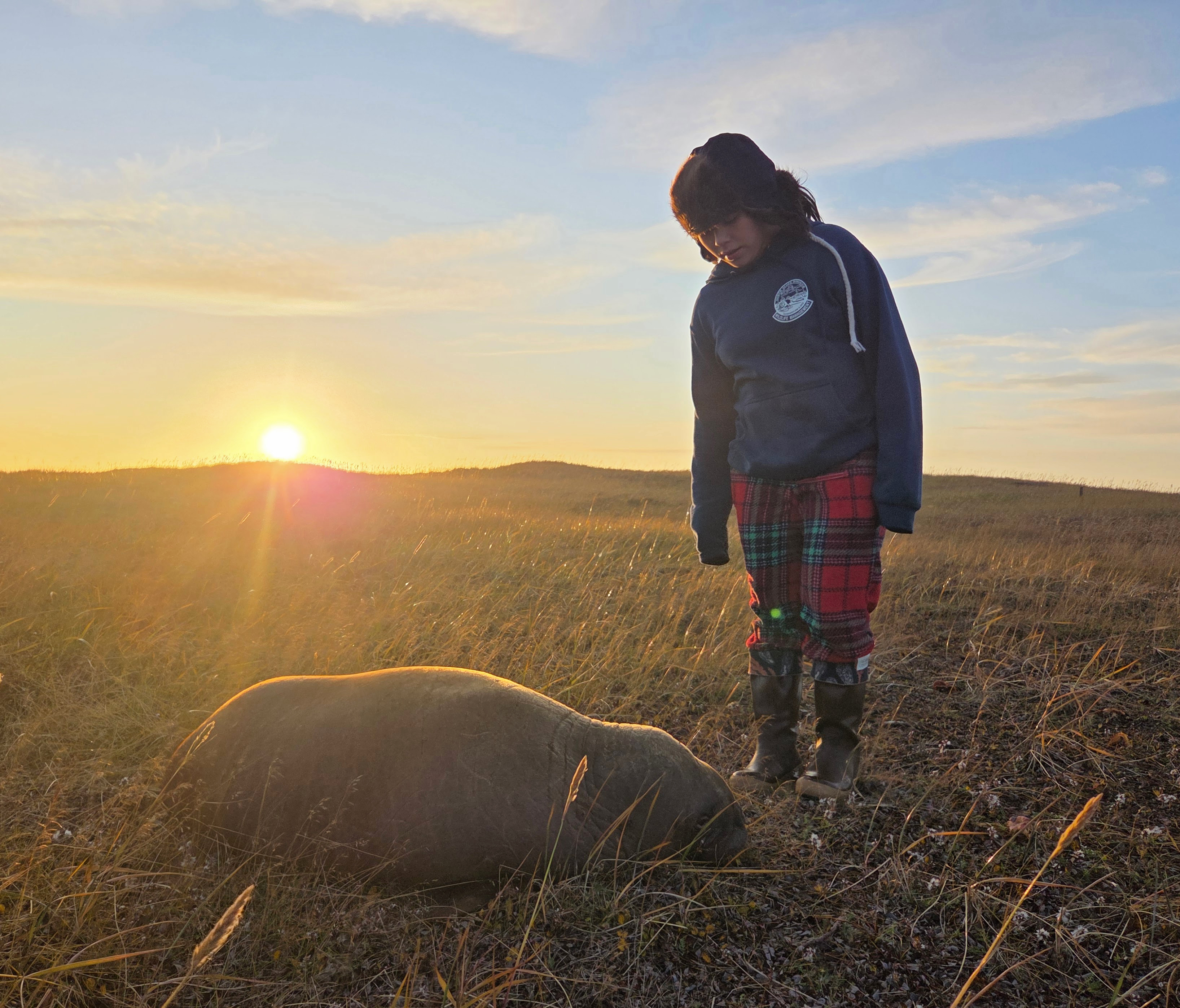
That closeness saves calves — and it also means they become accustomed to people. According to USFWS guidance cited by ASLC, most walruses that strand as calves are not good release candidates because of their long maternal dependency; calves are generally considered non-releasable and evaluated case by case for permanent placement. Annautaq was stronger and healthier than many orphans ASLC sees, which helped the team look ahead quickly to his social needs and a long-term home.
By early October 2026, ASLC reported he had transitioned out of critical rehabilitative care to a permanent facility. Later reporting placed him at SeaWorld Orlando alongside other Alaska-rescued walruses, including Uki. He will live as an ambassador for his species — a living reminder of Pacific walruses, the changing marine world they depend on, and their connection to Alaska’s people.
Why this story feels like Amazetify
It is not only that a baby survived. It is how: a student from the same coast noticed movement where others might have walked past; a federal biologist made the calls; a village weighed culture and compassion together; wildlife responders flew into a remote airport; and caregivers kept company with a calf who would not sleep alone.
The photos on this page are the real ones from that beach and that cabin — public-domain USGS images by Anthony Fischbach and Violet Anniskett — so what you see is what happened.
Sources
- Alaska SeaLife Center, Oct 6, 2026: Rescue announcement
- Casey Grove, Alaska Public Media, Oct 12, 2026: Interview with Violet Anniskett
- USGS Alaska Science Center image gallery (public domain): Multimedia images