In late January and early February 2026, Arctic air poured into Florida’s panhandle and the shallow water of St. Joseph Bay dropped into the danger zone for sea turtles. When the temperature falls below about 50°F (10°C), green turtles can become cold-stunned: sluggish, then unable to swim, until they float at the surface like leaves on a winter pond.
What followed was one of the largest coordinated cold-stun rescues on the Gulf Coast in recent memory. NOAA Fisheries and a web of partners — U.S. Fish and Wildlife Service, Florida Fish and Wildlife, Gulf Specimen Marine Laboratory, authorized responders, and volunteers — pulled more than 600 sea turtles out of the bay and into care.
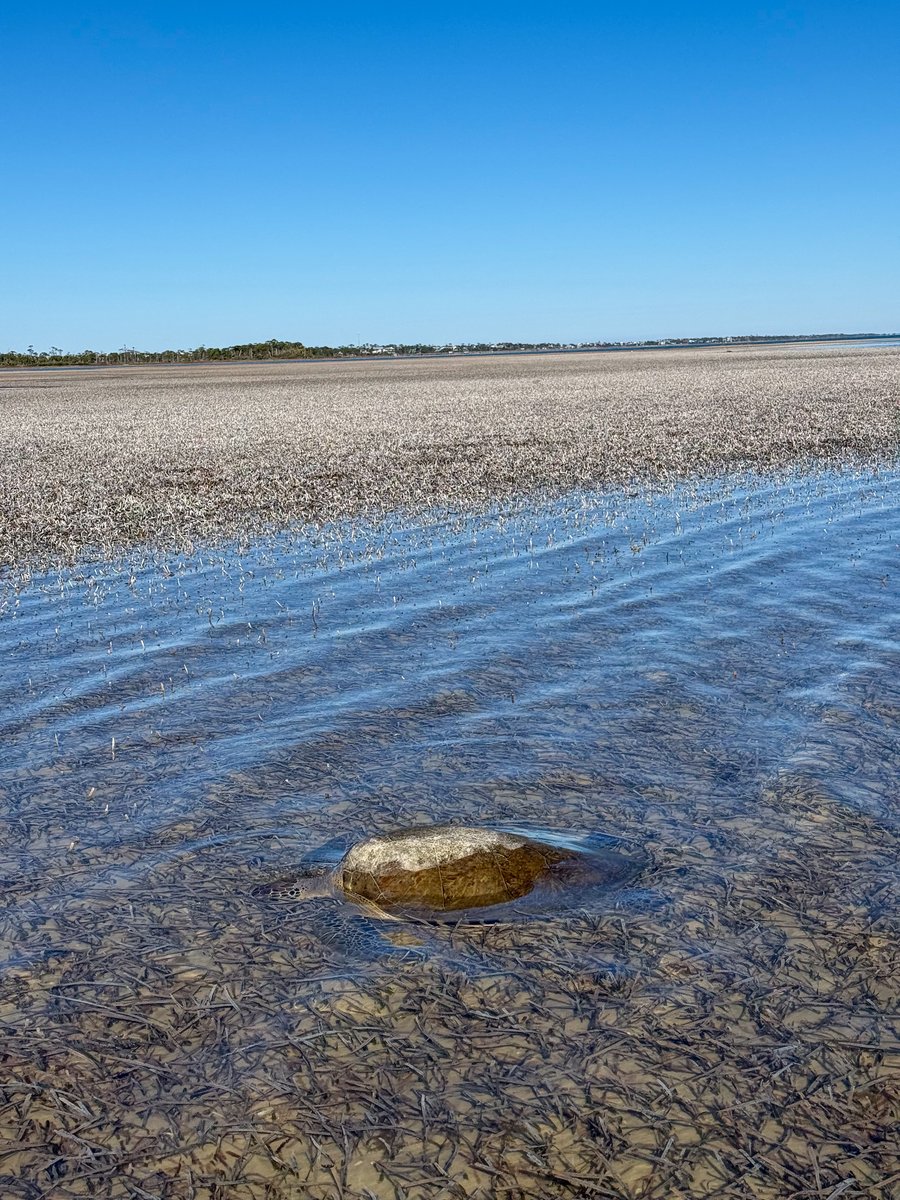
A bay that feeds turtles — and traps them in a freeze
St. Joseph Bay is usually a gift. Wide seagrass flats offer food for juvenile green turtles. But the same shallow water that makes the bay rich also cools fast when Arctic air arrives. Turtles that cannot dive or swim become easy to find — and impossible to ignore.
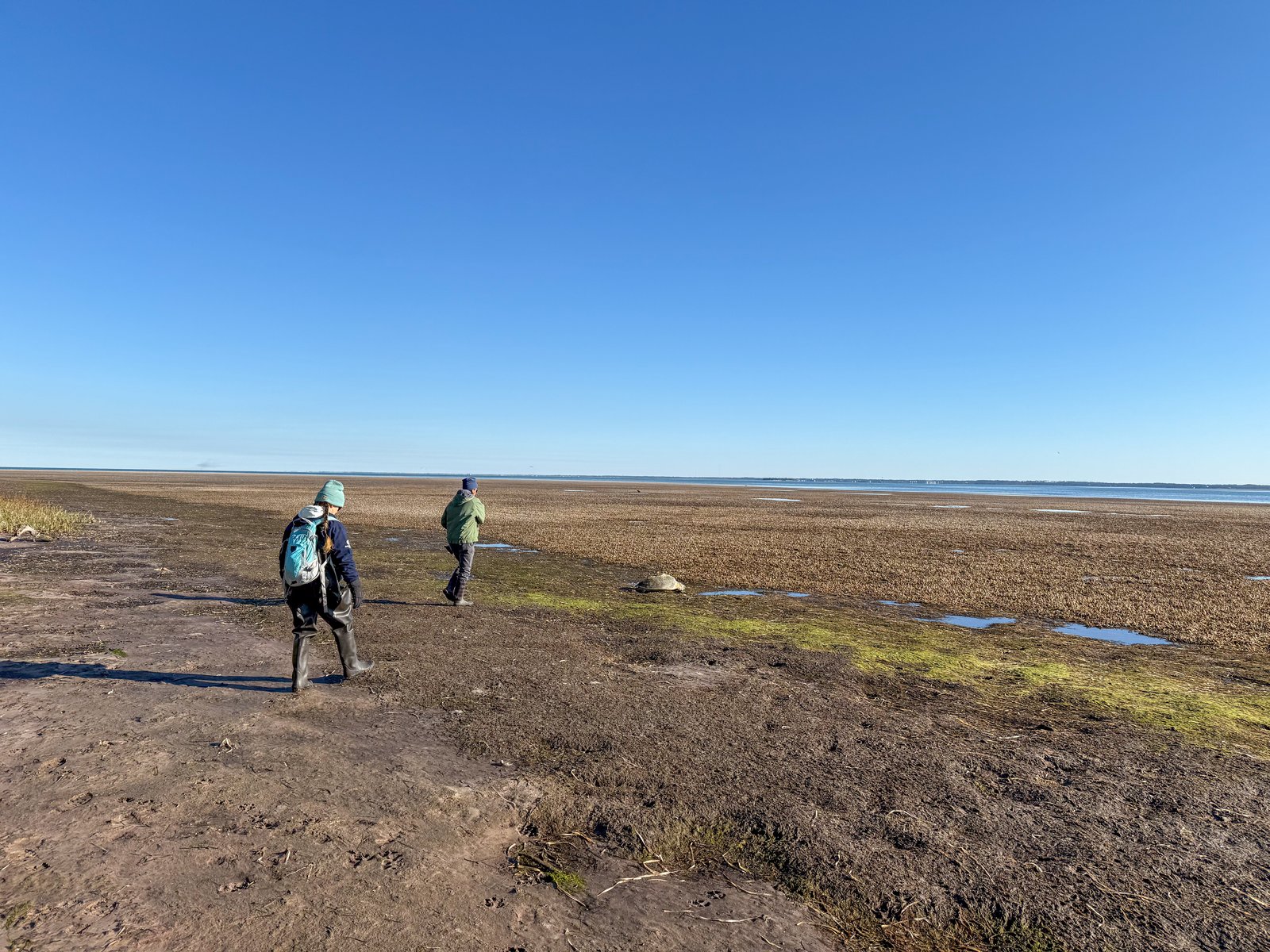
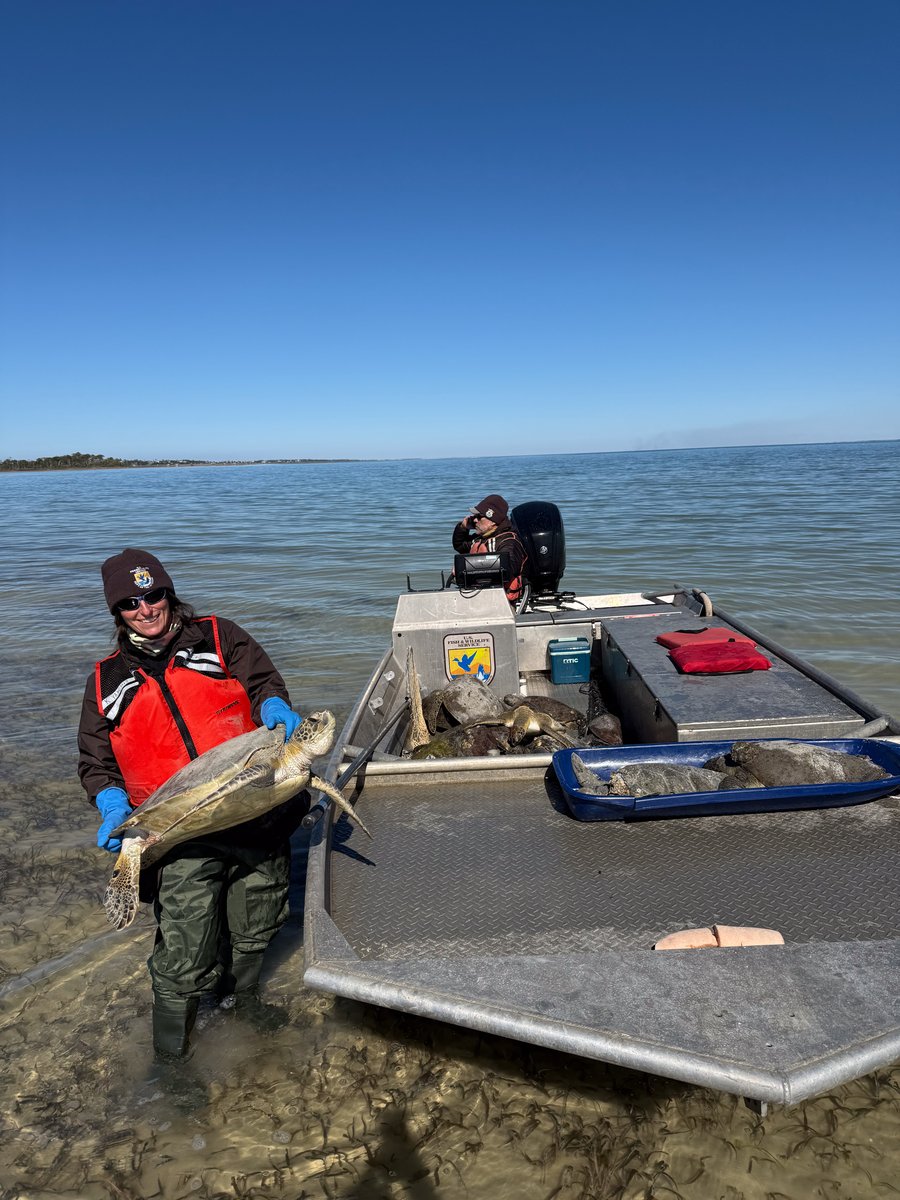
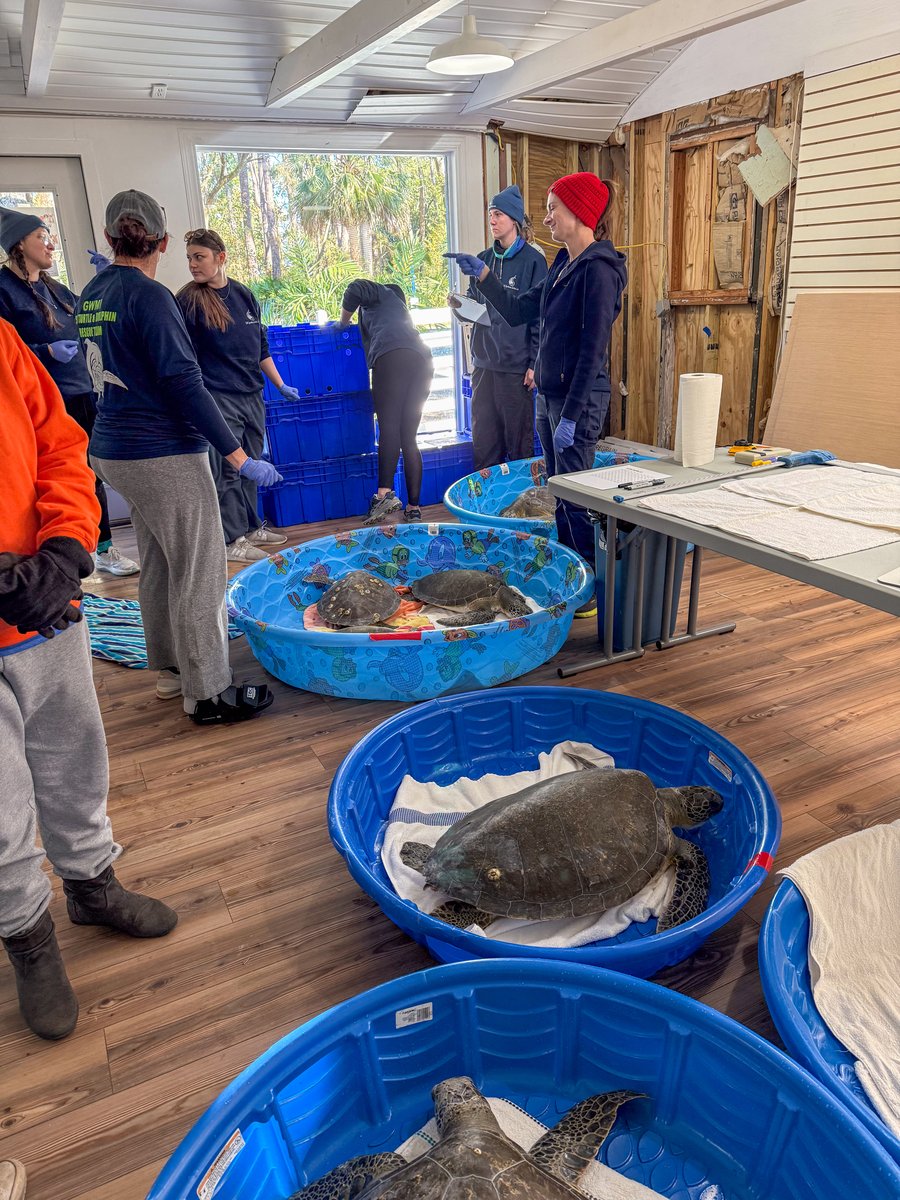
Boats worked the flats. Staff from the U.S. Fish and Wildlife Service lifted turtles from the water. On shore, sleds carried animals too weak to struggle. Every turtle that could be reached went into bins, then onto trucks bound for rehabilitation.
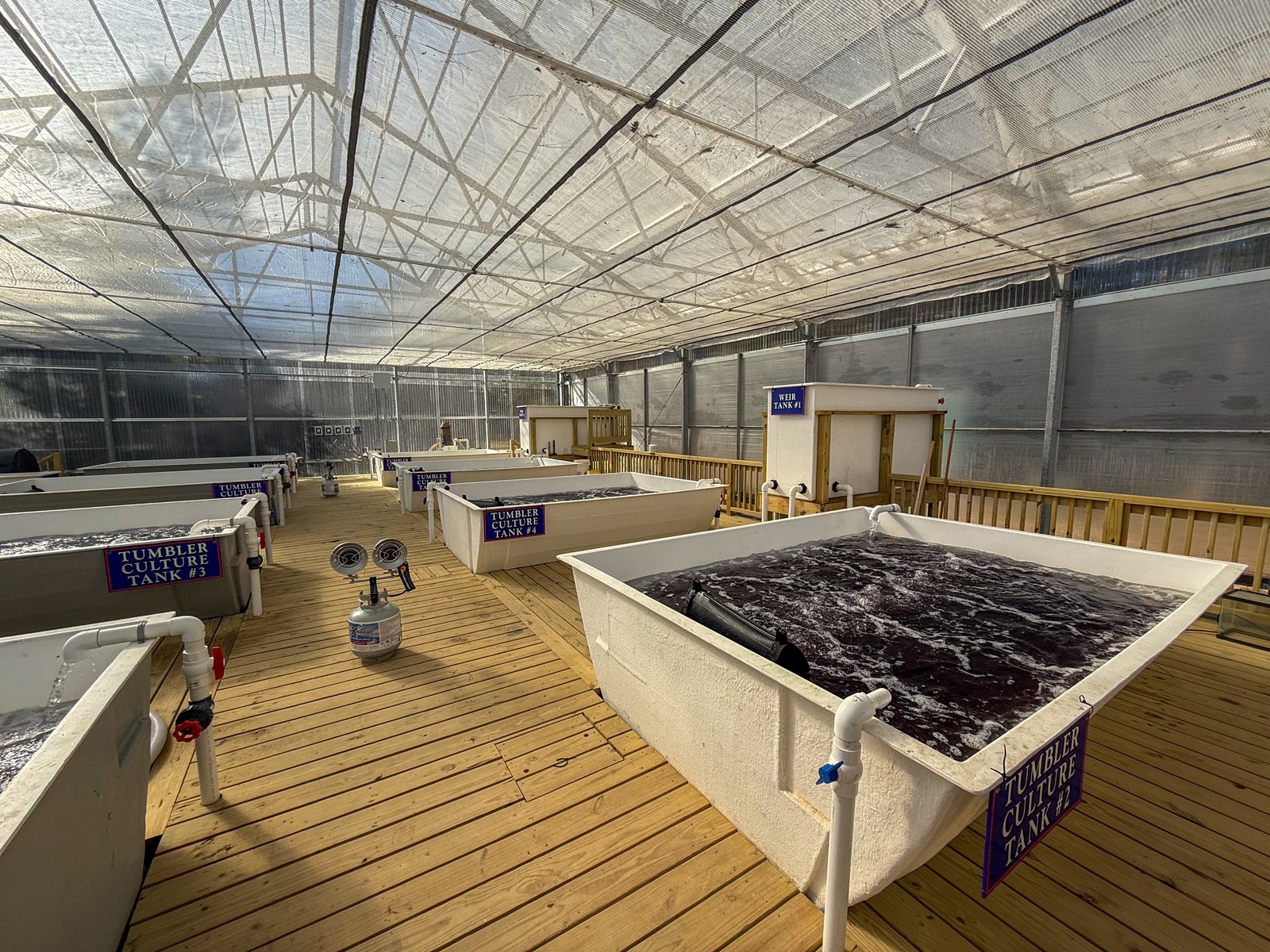
A lab that suddenly had to hold hundreds
Gulf Specimen Marine Laboratory in Panacea, Florida, is part of the state’s sea turtle stranding network. In a typical cold season it might take in fewer than 100 cold-stunned turtles. In February 2026, the lab became a field hospital for an order of magnitude more.
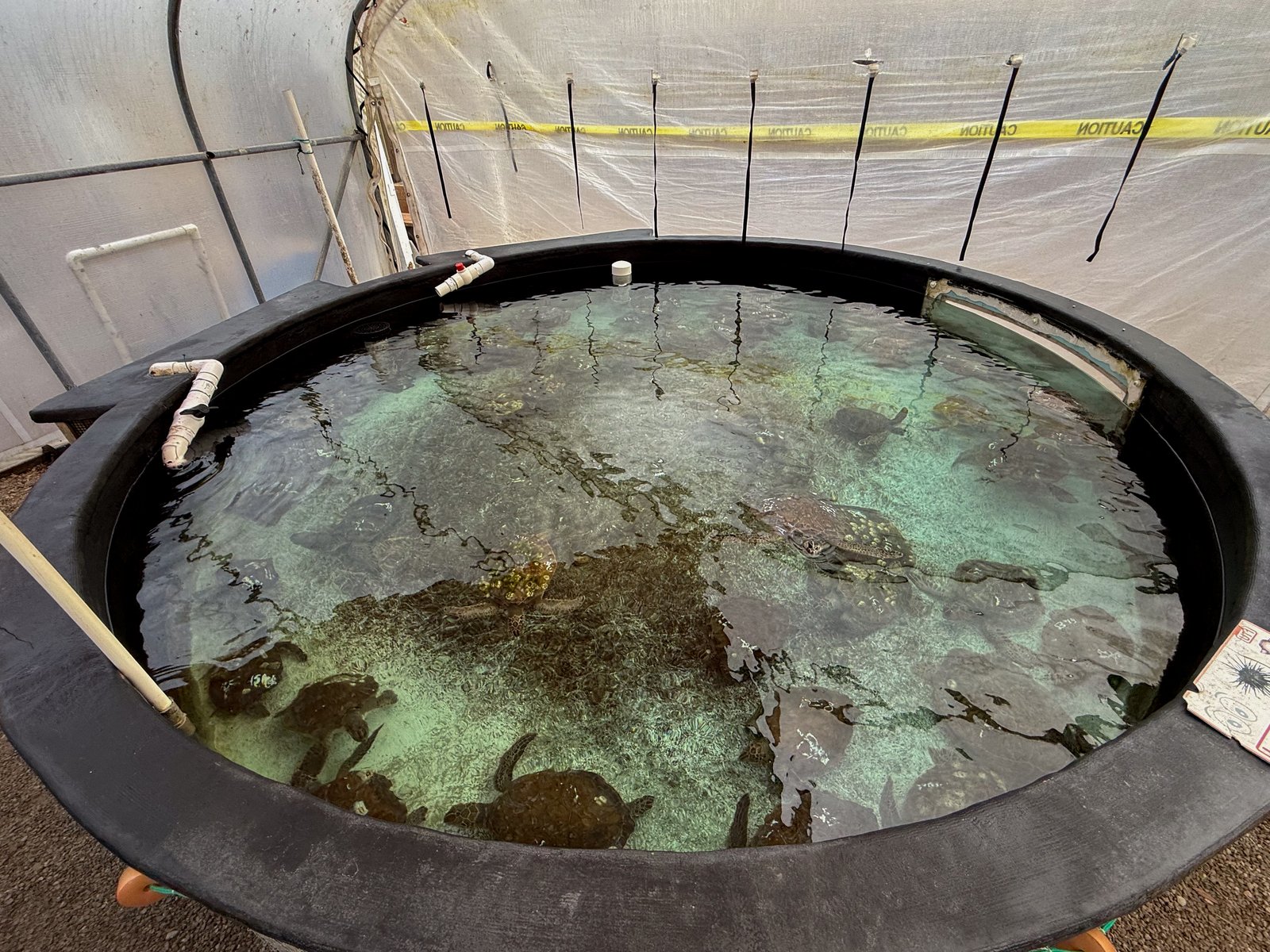
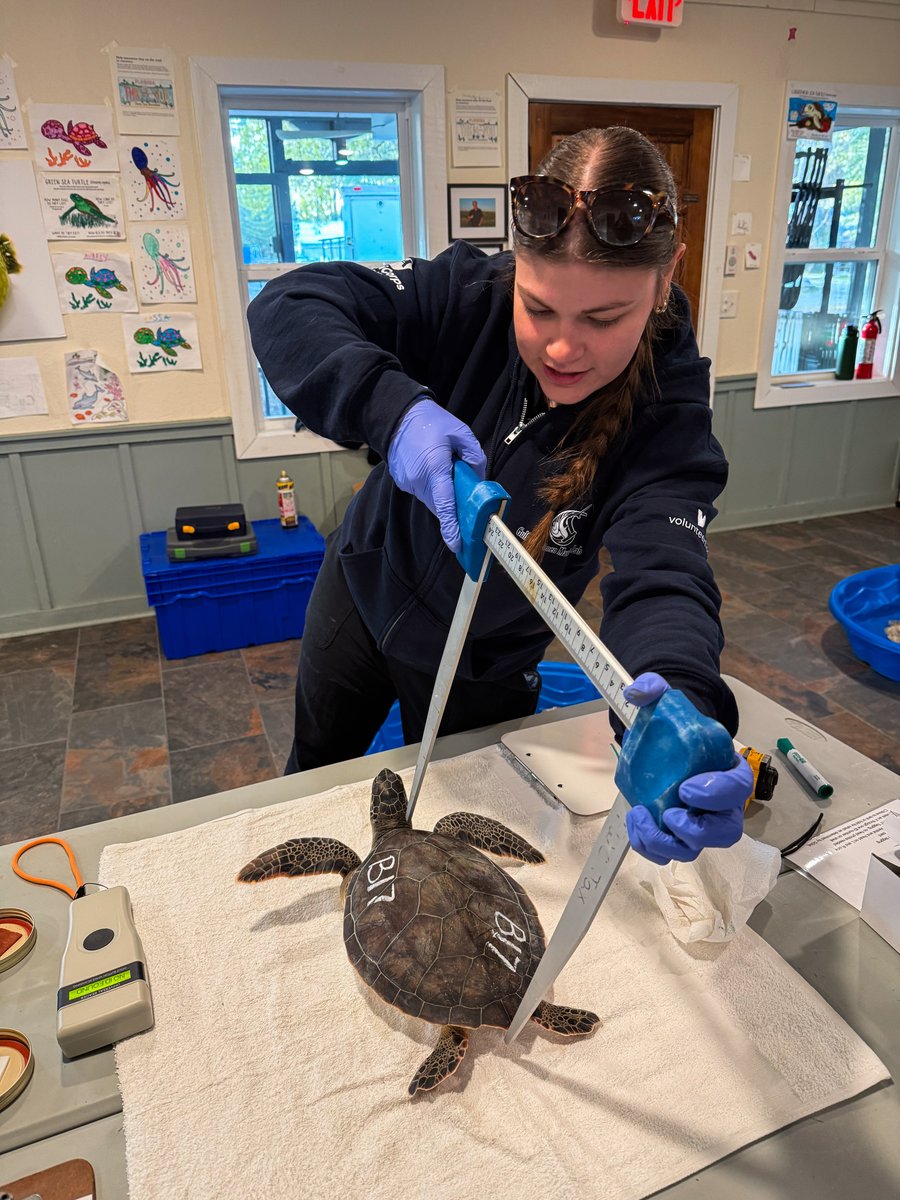
The open deck of the lab’s marine algae aquaculture greenhouse turned into temporary housing. Florida Fish and Wildlife helped stand up tanks, heaters, plumbing, and filtration. Interns measured shells, photographed each arrival, and checked vital signs. Warmth came back slowly — never as a sudden shock.
The swim test before freedom
Rescue is only half the story. Before release, turtles must prove they can swim again. Once internal temperatures rise and strength returns, staff run swim tests. Animals that pass are measured, tagged, and held until bay temperatures are safe.
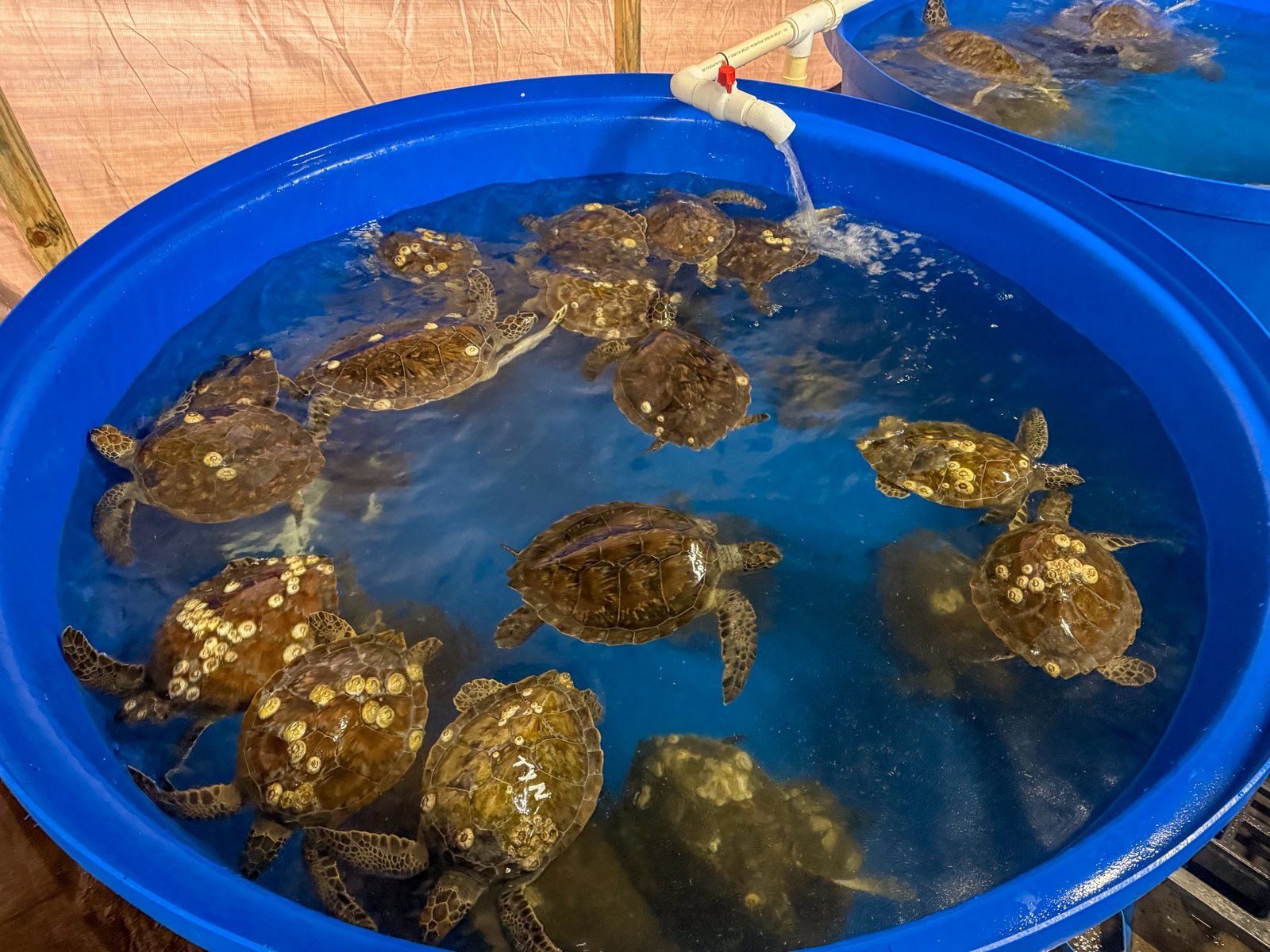
Tags matter. They help scientists follow survivors and understand how often cold-stun events hit the same animals — and how well the network works when the next freeze arrives.
Why this story travels
It is easy to feel helpless about climate extremes. This rescue is the opposite of helplessness: a practiced, messy, beautiful chain of people who already know what to do when the bay goes quiet and turtles start to float.
More than 600 animals were carried out of cold water, warmed, tested, and pointed home. The photographs above are not stock. They are NOAA Fisheries records of the real turtles, the real flats, and the real hands that lifted them — public domain images anyone can share with credit.
How cold stunning works — and why speed matters
Sea turtles are reptiles. When water temperatures slide below roughly 50°F, their metabolism slows. They stop foraging efficiently. Eventually they cannot dive. Floating at the surface, they risk boat strikes, predation, and simply drifting until they die. That is why authorized responders treat cold stunning like a mass-casualty event for wildlife: find them fast, keep them wet and supported, move them to facilities that can warm them gradually.
St. Joseph Bay’s seagrass flats are famous among biologists precisely because green turtles love them. The same geography that feeds hundreds of juveniles becomes a trap when an Arctic air mass parks over the panhandle. NOAA’s gallery from February 2026 reads like a timeline — turtles in the shallows, boats on the flats, sleds on the shore, bins on trucks, tanks in a greenhouse that was never designed to be an ICU.
Elizabeth Bevan, a NOAA-affiliate sea turtle biologist, appears in the field photos examining animals at the water’s edge. National sea turtle coordinator Stacy Hargrove helped haul sleds. USGS scientist Meg Lamont’s camera caught some of the transport work. None of them posed for a magazine spread. They were mid-rescue, and the public domain photographs prove it.
By the time swim tests began, the story had already shifted from emergency to recovery. That arc — from floating to swimming to tagged and free — is why Amazetify is telling it with NOAA’s own frames instead of generic turtle stock.
Sources: NOAA Fisheries photo gallery — Rescuing Cold Stunned Sea Turtles in St. Joseph Bay, Florida (updated June 16, 2026). All photos in this article: NOAA Fisheries / partner agency staff, U.S. government works, public domain.