Somewhere on a dark Georgia beach this summer, a loggerhead sea turtle about a meter long hauled herself out of the surf, dug a hole with her back flippers, and laid a clutch of eggs. Then she did what loggerheads have done for millions of years: she covered it up and slipped back into the sea.
What made 2026 special is how many times that happened. Loggerhead sea turtles laid a record 4,292 nests on Georgia’s beaches this year. Back in 2004, the count was just 358.
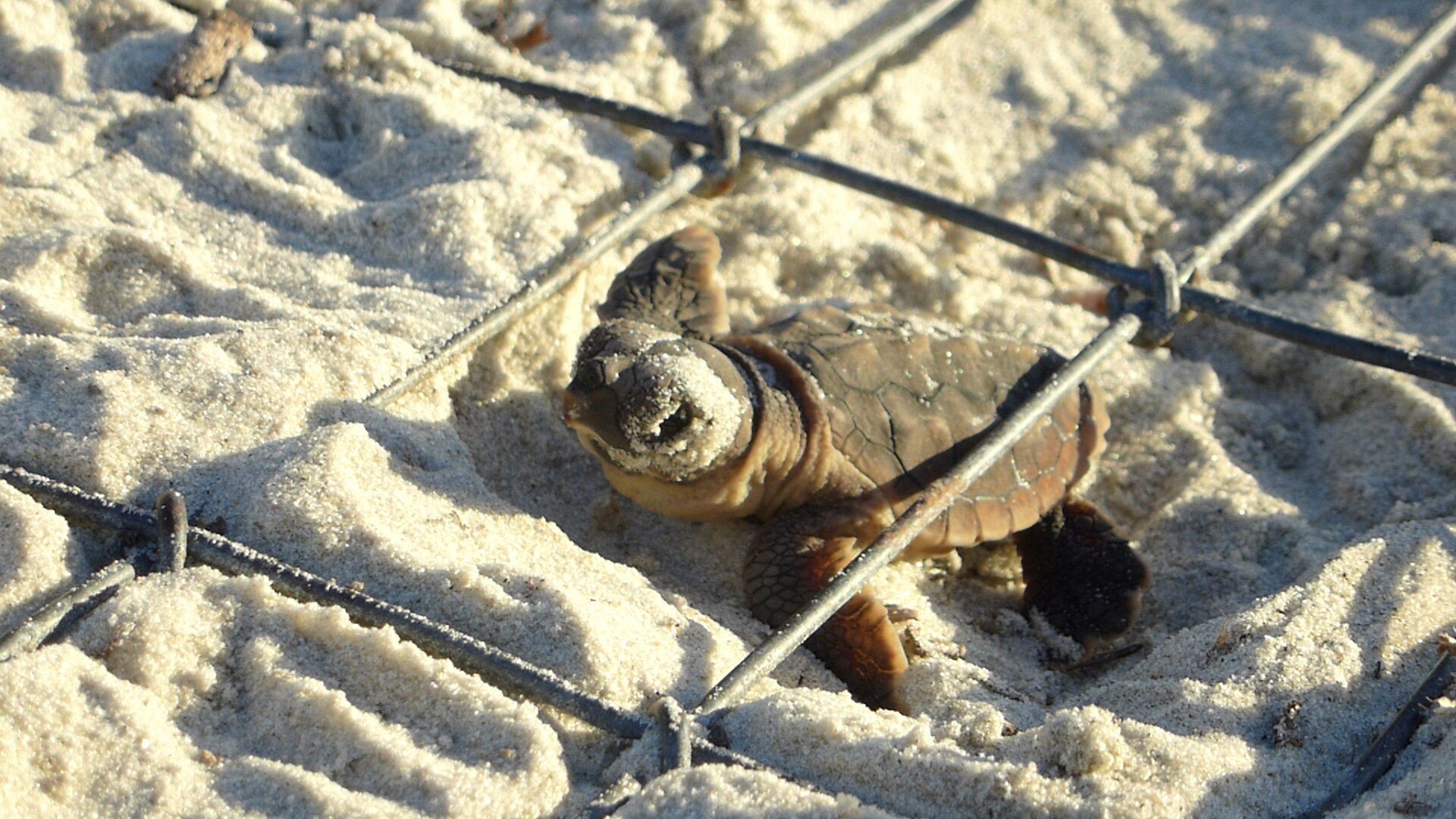
From 358 nests to more than 4,000
That jump didn’t happen by luck. According to reporting by The Current GA, carried by the Associated Press and Savannah station WJCL, the turtles get help from hundreds of volunteers and professionals who walk the beaches from Cumberland Island to Tybee nearly every day from May through August.
Their job sounds simple. They find each new nest, mark it, protect it from predators and curious beachgoers, and later check how many eggs hatched. Georgia has run this kind of beach monitoring along its whole coast since 1989, under the direction of the state Department of Natural Resources and its sea turtle program coordinator, Mark Dodd.
Here’s the part that blows my mind. Loggerheads don’t start nesting until they’re about 25 to 30 years old. So the mothers crawling up Georgia’s beaches in 2026 are, in a real sense, the payoff of protections people started before the turn of the century.
Records falling up and down the coast
It wasn’t just the state total. Individual beaches had big years, too.
- Cumberland Island National Seashore broke its all-time record in early August, when it logged 1,256 nests, one more than its previous best of 1,255 set in 2022. The National Park Service said the island also had Georgia’s highest single-day total, with 40 nests in one day, and the state’s first nest to hatch this year, on July 7.
- Three species nested on Cumberland this season: loggerheads by far, plus a handful of green turtle nests and three nests from the rare Kemp’s ridley.
- Tybee Island had 41 nests by July 2, smashing its old record of 35. It finished the season with 59, and the Tybee Island Marine Science Center had to order more nest-marking supplies to keep up.
Cumberland’s 18 miles of wild, undeveloped beach usually account for about a quarter of all the sea turtle nesting in Georgia, which is why park staff patrol it every day through the season.
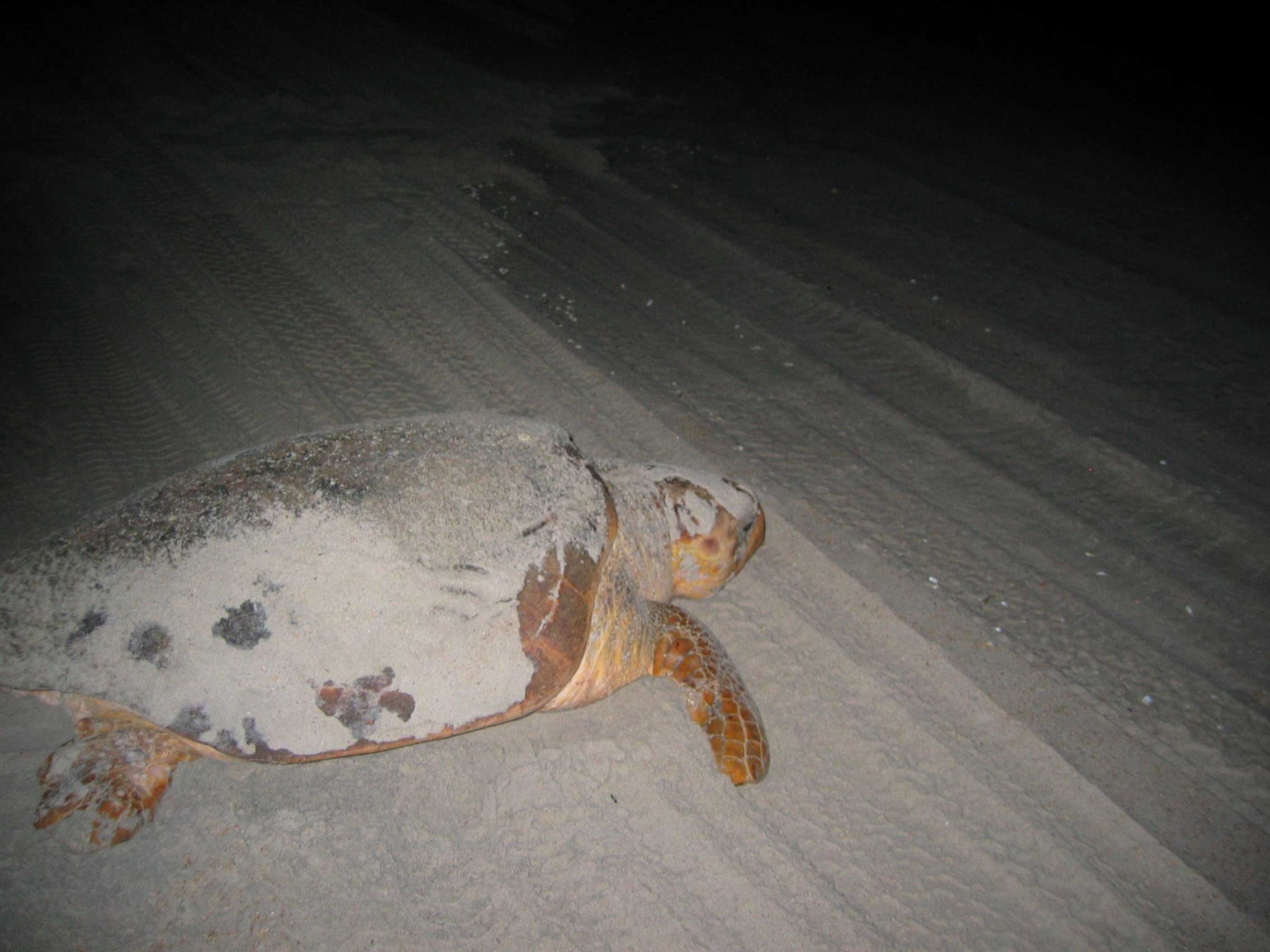
Dawn patrol
On Tybee, the work starts before sunrise. Alli Caldwell, programs director at the Tybee Island Marine Science Center, walks the sand looking for one telltale sign: a looping track that looks like a single, heavily treaded tire. That’s the trail a loggerhead mother leaves as she drags herself up the beach and back down to the water.
Volunteers cover the rest of the island on foot so no stretch of the 5-mile beach goes unchecked. When they find a nest, it gets caution tape, a sign, and screening over the sand to keep out predators like ghost crabs.
People notice. One beachgoer spotted Caldwell’s volunteer shirt and congratulated her on the record year.
Night shift on Wassaw Island
On Wassaw Island, a national wildlife refuge, the action happens after dark. The Savannah-based Caretta Research Project, named after the loggerhead’s scientific name, Caretta caretta, brings in volunteers who pay to spend a week in a rustic cabin working the night shift. The project is in its 54th year and is the longest continuously running program of its kind in the U.S., tagging every nesting turtle it can find.
“It’s stifling heat, vicious bugs, and the humidity is awful,” project director Kris Williams Carroll told The Current GA. “There’s no privacy, but the turtles are awesome.”
One July night, the team found a nesting turtle already carrying tags. She turned out to be a loggerhead named Mia, back on Wassaw for another nest that season. As a biologist brushed the sand off Mia’s shell to measure her, algae on the shell glowed with bioluminescence. Later that night, they met a second mother with what looked like an old, healed shark bite on her shell. She had no tags yet, so she got her first ones.
The teams also collect a single egg from many nests for DNA testing at the University of Georgia. Research scientist Brian Shamblin’s lab has been building a genetic database of the state’s nesting females since the mid-2000s, and now it’s starting to track the males, too.
The net that lets turtles go
Beach patrols are only half the story. Loggerheads spend nearly their whole lives at sea, and for years many drowned after getting caught in shrimp trawling nets.
The fix was a clever piece of gear called a turtle excluder device, or TED. It’s a grid fitted inside the net with an escape opening. Shrimp slip through the bars and into the net, while a turtle hits the grid and gets guided out the hatch. The reporting credits TEDs, along with years of beach monitoring, for the turtles nesting today.
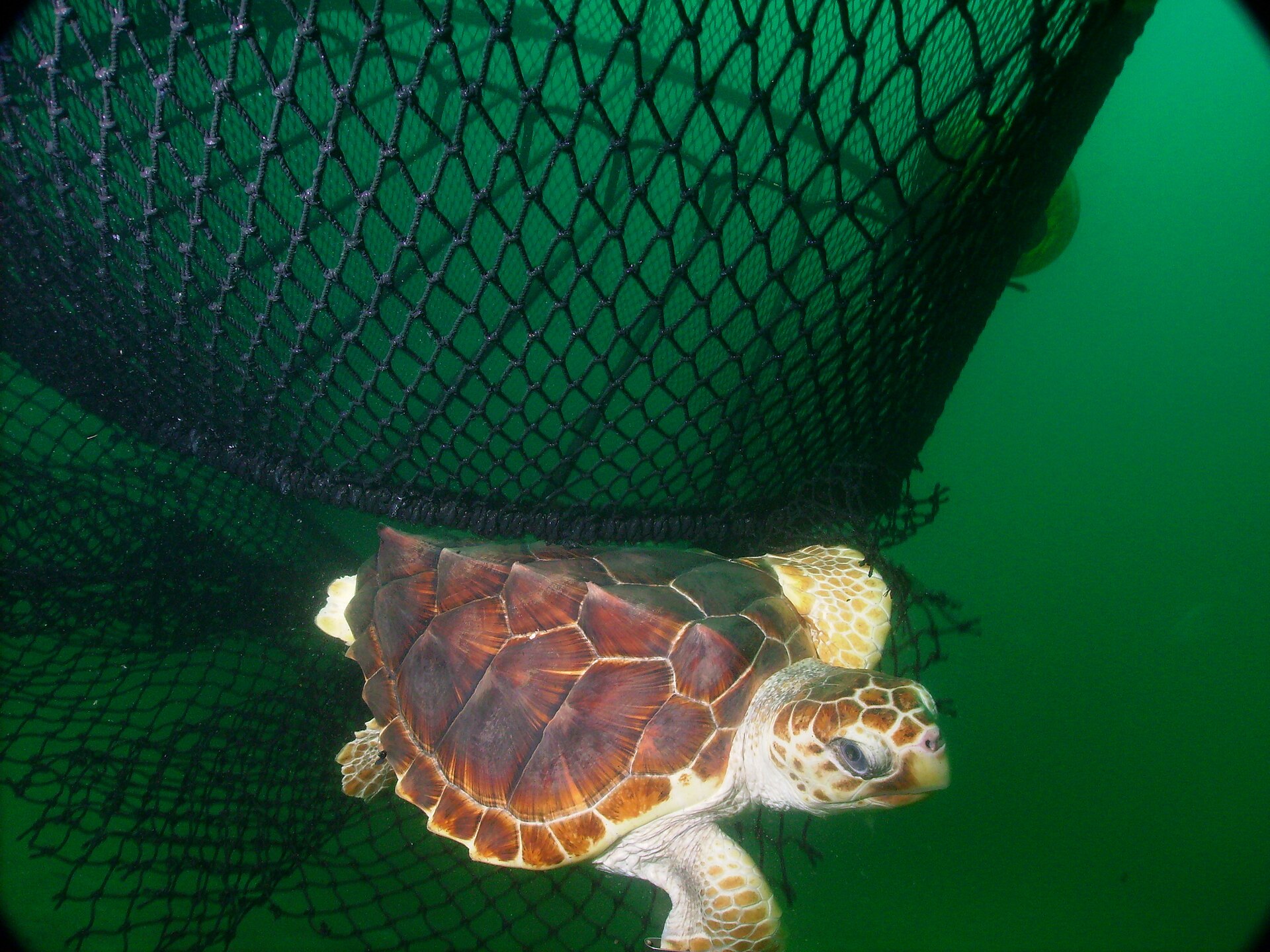
Waiting for the “boil”
About 50 days after a nest is laid, the eggs start to hatch. On beaches like Tybee, volunteers sit by nests that are close to hatching, hoping to see the “boil,” when most of the more than 100 hatchlings in a typical nest scramble out of the sand at once.
It’s harder to catch than it sounds. One evening, Tybee aquarist Tyler Hood watched a single tiny turtle push its head out of the sand. “That’s a head. That’s a little baby sea turtle head,” she said. “It just hatched.” It wobbled through the dune grass, flipped over, righted itself, and made it to the water. Then rain chased everyone inside, and they missed the main event.
That’s normal, Dodd said. Hatchlings usually boil out at night when nobody’s around. “If you get to see it you’ve seen a really rare thing,” he said.
Why this record matters
Loggerheads in this part of the world are listed as threatened under the U.S. Endangered Species Act, and a record season doesn’t mean their troubles are over. Not every nest survives, and every hatchling still faces a long, risky trip out into the Atlantic.
But a climb from 358 nests to 4,292 is the kind of number that makes you stop and smile. It’s what decades of patient work look like: escape hatches in fishing nets, early-morning beach walks, sweaty night shifts, and a lot of people who simply decided these turtles were worth the trouble.
The turtles laying eggs on Georgia’s beaches today hatched decades ago, when people first started giving them a fighting chance. The hatchlings that scrambled into the surf this summer could be back to nest around the 2050s.
Sources
- WJCL / The Current GA: Georgia beaches set new loggerhead turtle nest record (Oct. 9, 2026)
- Associated Press: Georgia had a record-setting sea turtle nesting season
- Action News Jax: Cumberland Island National Seashore sets sea turtle nesting record (Aug. 5, 2026)
- National Park Service: Sea turtles at Cumberland Island National Seashore
- NOAA Fisheries: Turtle excluder devices
Photo credits: All images are U.S. government works in the public domain, via Wikimedia Commons. Hatchling on Blackbeard Island, Georgia: Becky Skiba/U.S. Fish and Wildlife Service. Nesting female at Cape Hatteras: National Park Service. Turtle excluder device: NOAA.