Some coral reefs sit in water so clear you can snorkel them. Others live in the twilight zone — the mesophotic depths where sunlight thins and technical divers, not weekend snorkelers, do the work. In spring 2026, a team aboard NOAA Ship Nancy Foster set out to plant propagated mesophotic corals into Gulf habitat injured by the 2010 Deepwater Horizon oil spill.
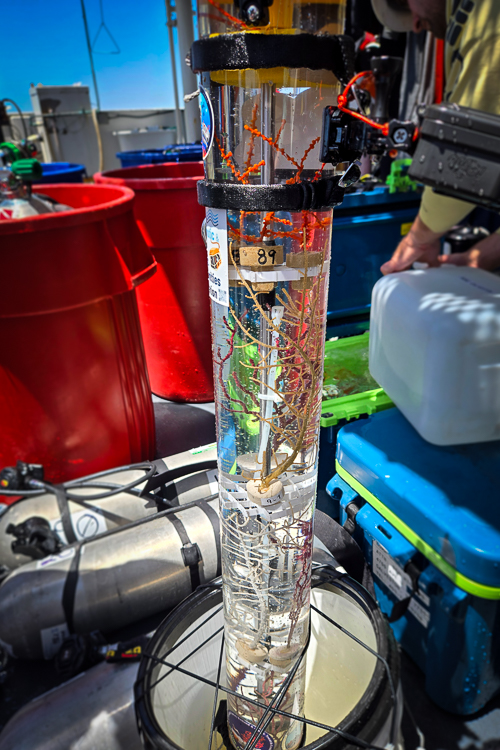
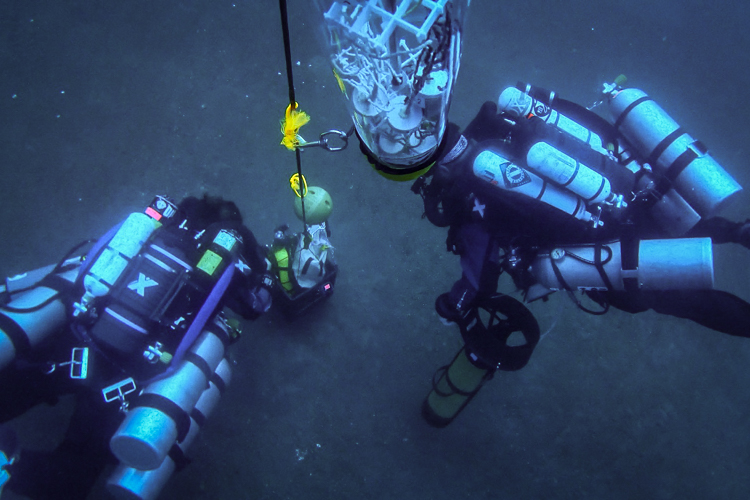
Their tool of the trade looked almost playful: a sealed “coral torpedo” packed with living fragments, lowered from the surface so divers waiting on the seafloor could outplant them where damaged colonies once stood.
Why mesophotic corals matter
Mesophotic ecosystems often hold soft corals and other species that grow slowly and recover slowly. After Deepwater Horizon, scientists documented injury across a range of depths. Restoration here is not a weekend beach clean-up; it is ship time, decompression planning, and hands that know how to handle living tissue without killing what they came to save.
A full ship for a few careful dives
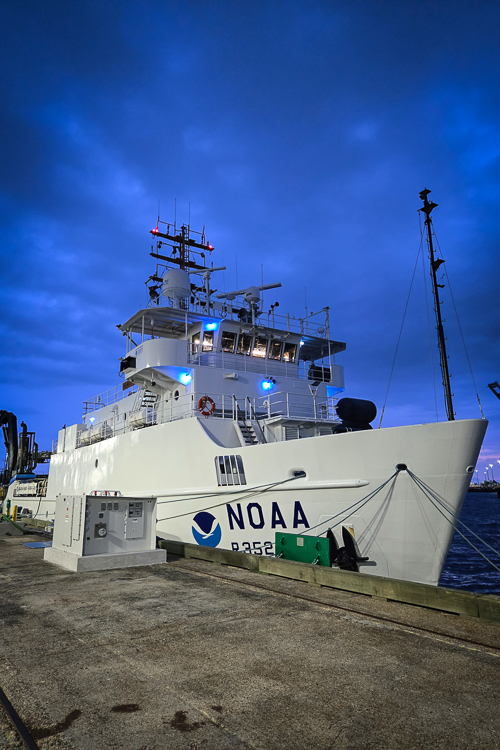
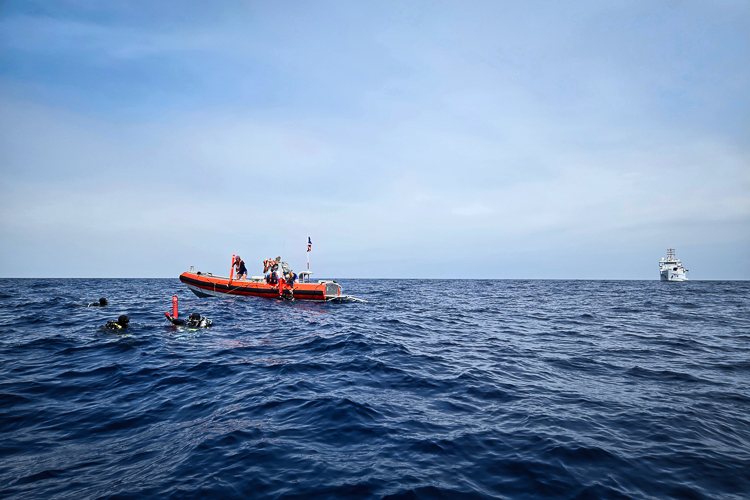
NOAA Ship Nancy Foster carried divers, medical staff, scientists, data managers, and crew. Small boats ferried teams. A CTD rosette sampled the water column. Before each dive, the group planned routes and contingencies — the kind of quiet meetings that make dramatic underwater photos possible.
Hope you can photograph
Restoration stories sometimes arrive as press releases without pictures of the actual work. This one comes with a NOAA Fisheries gallery: the torpedo packed with coral, the soft colonies on the bottom, the ship that made the dives possible. Every image used here is a U.S. government work credited to NOAA photographers — public domain, authentic to the 2026 expedition.
Deepwater Horizon was a wound measured in years. Missions like this are how institutions stitch pieces back — one outplant, one dive, one carefully tagged colony at a time.
Oil spill scars, living answers
The 2010 Deepwater Horizon disaster damaged more than beaches and marshes. Deeper coral communities — including soft corals that do not make the postcard reef photos — were injured too. More than a decade later, restoration still means returning living tissue to places that lost it.
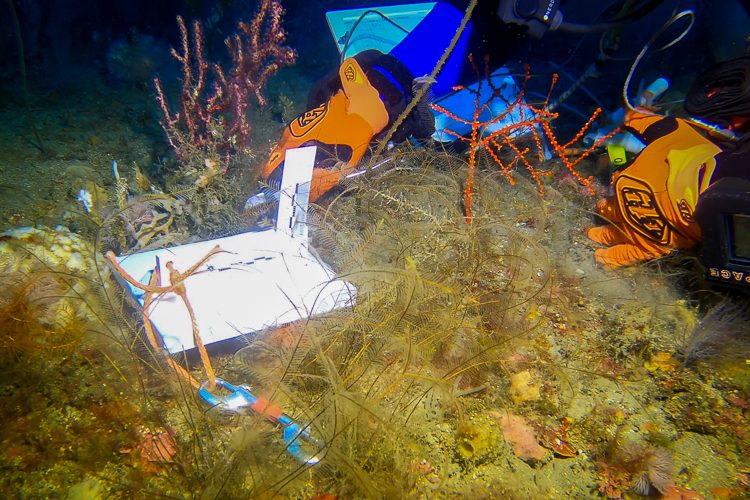
Propagated fragments ride the coral torpedo because the alternative is slower and riskier: free-swimming carries, longer bottom times, more handling stress. The torpedo is engineering in service of biology. Divers Mikey Kent, Jason Nunn, Scott Mau, and colleagues appear in the NOAA gallery not as stock models but as the people who did the dives.
When the team surfaces with a bright buoy, a small boat closes the loop back to Nancy Foster. That rhythm — plan, dive, outplant, surface, warm up, plan again — is how large restoration programs turn funding into living colonies.
For readers who only meet coral through bleached headlines, this gallery is a corrective: proof that agencies still send ships, train technical divers, and plant hope where an oil plume once passed.
Technical diving is the unglamorous miracle
Mesophotic work happens deeper than recreational limits. Divers train for gas mixes, deco schedules, and the discipline of not rushing a coral fragment into the wrong crevice. On deck, the lab becomes a gear locker and sample bench. On the bridge, the ship holds station. In the water, a buoy is a signal flare of the ordinary kind: we are here, come get us, the outplants are in.
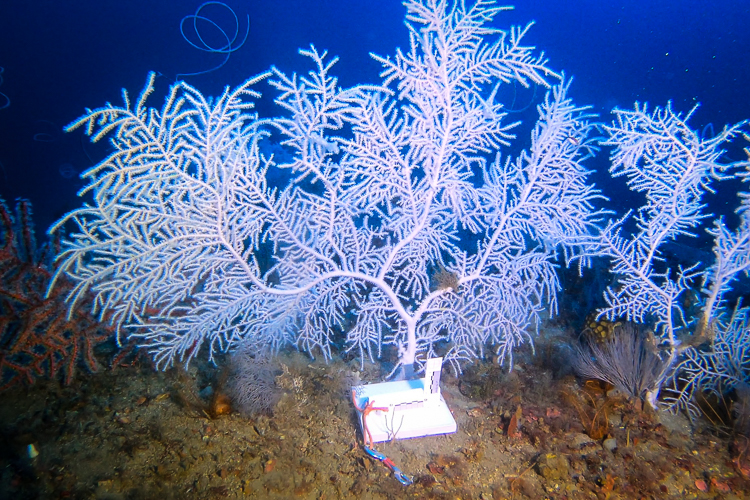
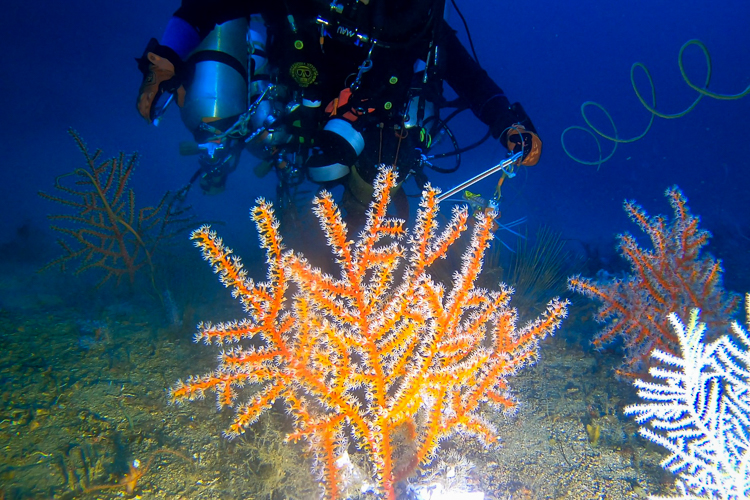
NOAA’s July 2026 gallery does not hide the logistics. You see the coral torpedo packed like a careful lunchbox of living branches. You see Swiftia, Thesea, and Muricea where they belong — on the bottom, not in a tank on land. You see the team that made a spring expedition look inevitable after months of planning.
Deepwater Horizon’s legal and scientific aftermath created obligations to restore injured resources. This mission is one visible answer. Amazetify’s job is to put authentic photographs next to that answer so the story does not float away as a press bullet point.
Sources: NOAA Fisheries — Photo Gallery: Mesophotic Coral Restoration (spring 2026 expedition aboard NOAA Ship Nancy Foster; gallery updated July 29, 2026). Photos: NOAA / named staff photographers as credited (public domain).