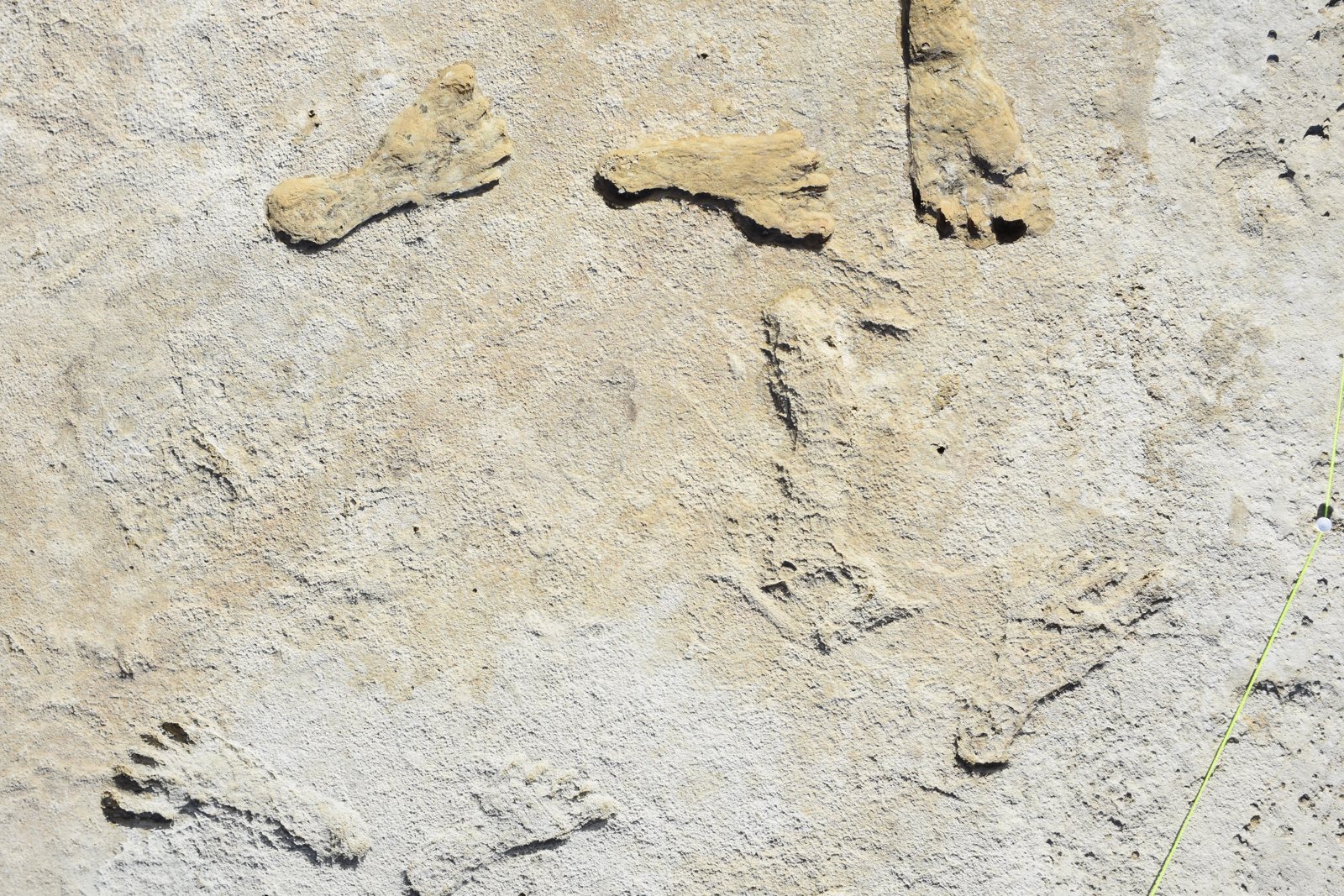
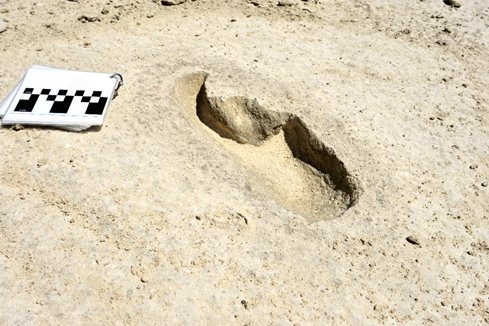
Somewhere between 23,500 and 21,700 years ago, a group of people walked across the muddy edge of a shrinking lake in what is now southern New Mexico. Some of them were small children. Their footprints, pressed into wet gypsum mud, hardened and were buried.
Today that spot sits inside White Sands National Park, and the footprints are still there. A new study published on October 14, 2026, in the journal Science Advances has now added something remarkable to their story: a detailed, generation-by-generation picture of the world those travelers lived in, including a sudden drought they would have felt within their own lifetimes.
A trench that kept getting longer
The footprints first made headlines in 2021, when a team led by researchers from the U.S. Geological Survey (USGS), the National Park Service and Bournemouth University reported in Science that they dated to the height of the last Ice Age. That was thousands of years earlier than many scientists had thought people were living in North America.
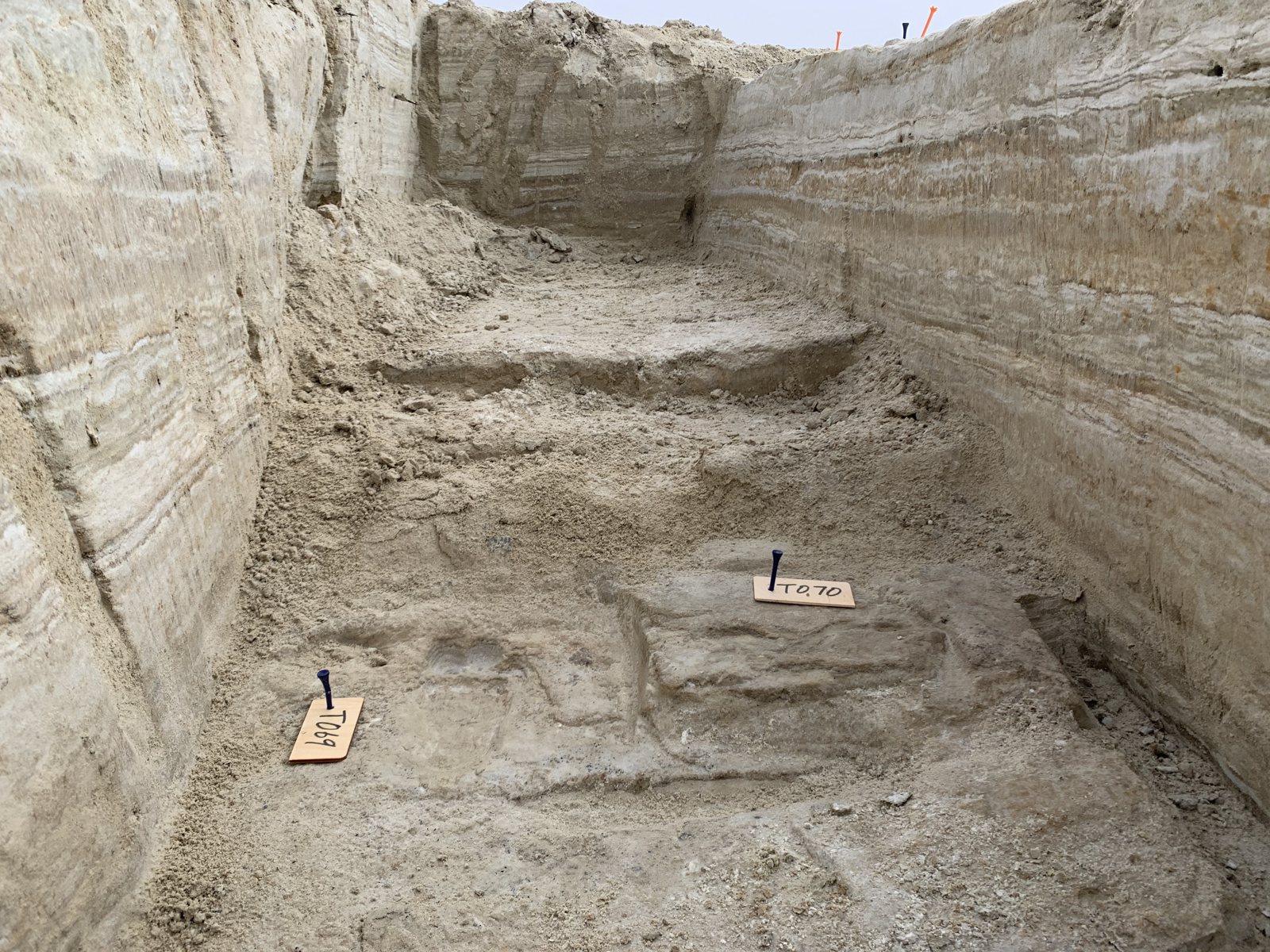
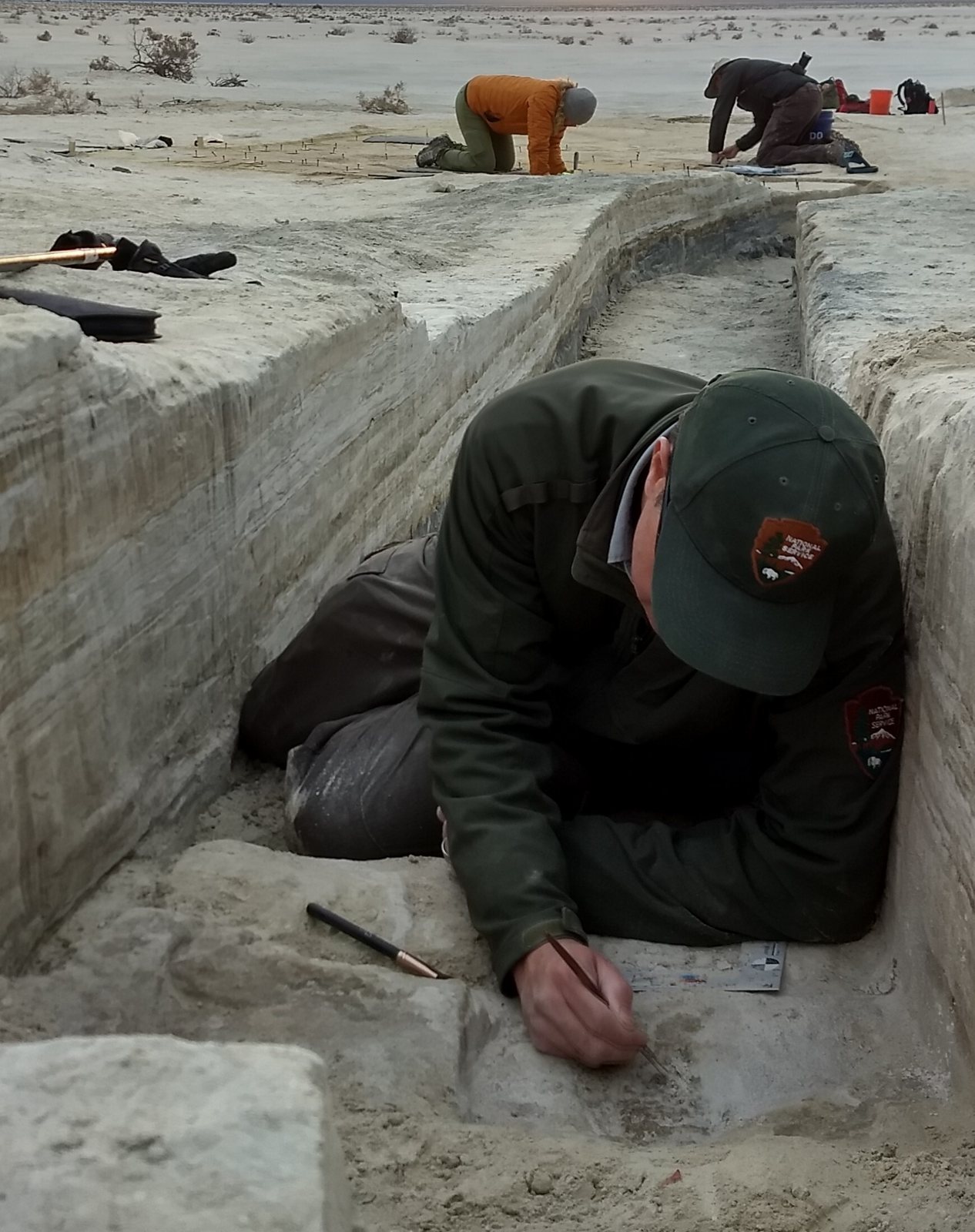
The original excavation trench at the site, known as Locality 2, was 11 meters long and exposed about 1.3 meters of layered sediment, with seven layers containing human footprints. In January 2022, the team went back and extended the trench to 25 meters, exposing nearly 2.7 meters of layers.
What they found, according to the new paper:
- 20 separate layers (or bundles of thin layers) with human footprints, including four layers older than any documented before.
- 152 human footprints measured in detail.
- Tracks of Ice Age animals in the same layers, including proboscideans (the elephant family, such as mammoths), ground sloths, canids (dog-family animals) and possibly bears, plus rare bird tracks.
- Long linear marks the team interprets as travois, poles dragged by people to haul loads.
The researchers found no signs of a camp or homes at this spot. It looks like a place people passed through, again and again, while carrying things.
So many little feet
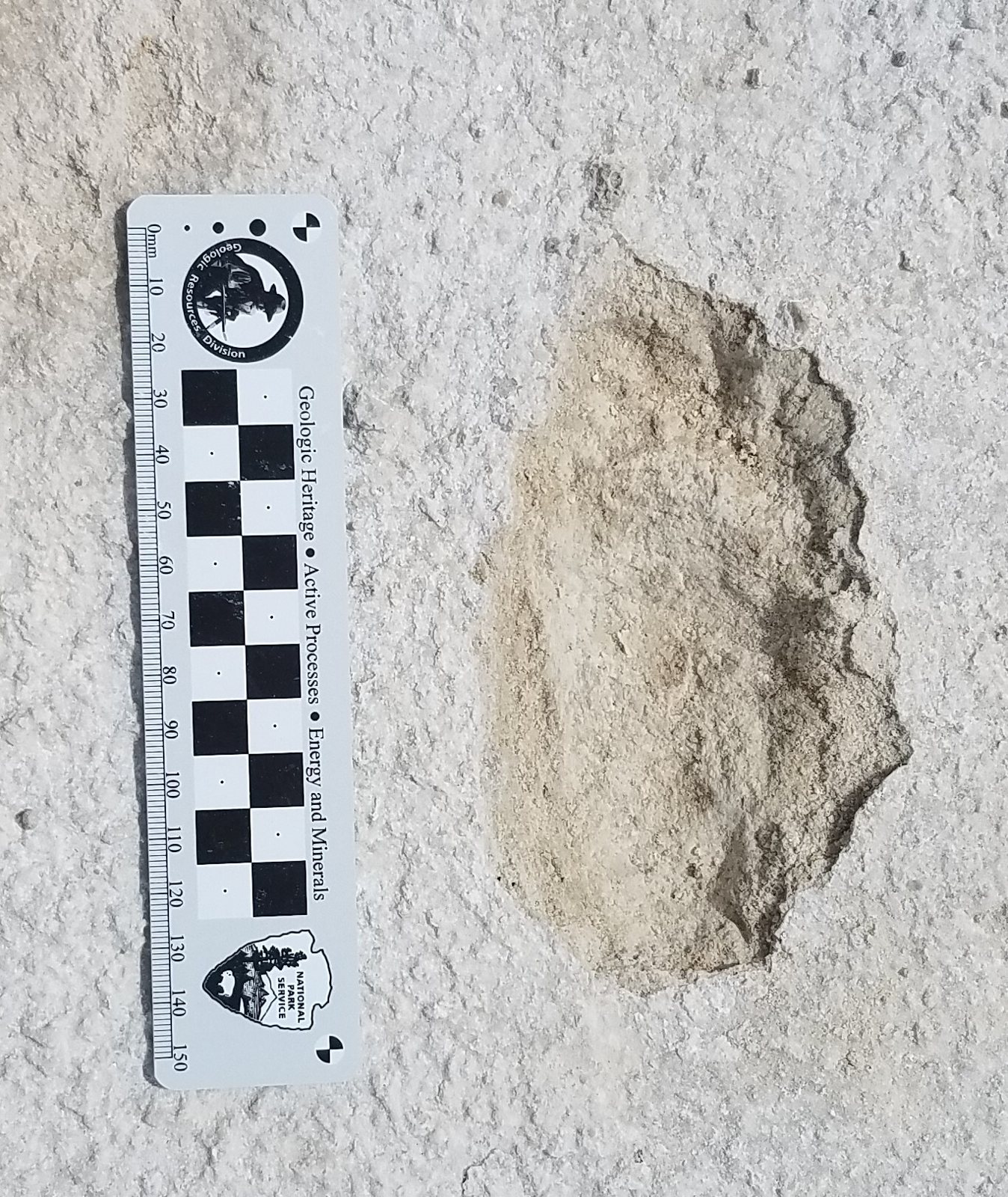
Footprints carry an intimacy that bones and stone tools rarely do. You can estimate how big a person was, and roughly how old, from the size of their foot.
Pooling all the measured prints, the team identified four size groups. Three of them belong to children: 8 prints from children under about 4 years old, 72 from children around 6, and 12 from children around 12. The other 60 came from teenagers or adults. The authors are careful to say these age estimates are approximations, not a head count of the population.
Still, the picture is hard to forget. Across nearly two thousand years, kids were part of these journeys, walking beside the grown-ups on the same muddy flats where mammoths and giant sloths left their own tracks.
How do you date a footprint?
You can’t carbon-date a footprint itself. Instead, scientists date materials in the layers above and below it. At White Sands, the earlier studies relied heavily on seeds of Ruppia, an aquatic plant.
Some researchers questioned those seed dates, arguing that ancient carbon dissolved in lake water could make seeds look older than they really are. The White Sands team has defended its dates in several papers, and in 2023 it published independent ages from conifer pollen and quartz grains that agreed with the seed ages.
For the new study, the USGS Radiocarbon Laboratory pushed the pollen method further. The team used flow cytometry, a laser-based sorting technique, to pull out up to about 75,000 individual pollen grains per sample, cleanly separated from other organic material. They also tested their procedure on pollen known to be more than 110,000 years old, from a fossil site in Snowmass Village, Colorado, to measure how much modern carbon their lab process was adding. That cut the uncertainty of the pollen dates roughly fivefold.
The pollen ages came out younger than seed ages from the same layers, which the team says confirms a hard-water effect in the lower layers. After correcting for it, and cross-checking against climate signals recorded in Greenland ice cores, they conclude the footprint layers span 23,500 to 21,700 years ago, firmly within the Last Glacial Maximum.
A world that changed within a lifetime
With a tighter timeline, the team could do something rare: reconstruct the local climate in steps of about 50 years, roughly a human generation. They combined pollen counts, chemical traces left by microbes, hydrogen isotopes in ancient plant waxes, tiny shelled creatures called ostracodes, and the minerals in each layer.
The results show a restless landscape. Lake Otero, a huge Ice Age lake that once covered much of what is now the park, was slowly shrinking as the region warmed. Mountain slopes covered in mixed conifer forest gave way to oak and sagebrush.
Then, about 23,200 years ago, came a sharp, short-lived drought. It lines up with an abrupt warming event recorded in Greenland’s ice, known as Dansgaard-Oeschger event 2. At White Sands, rain fell off, the basin got saltier, and drought-tolerant piñon and juniper spread. That event also marked a permanent shift from shallow lake to muddy lakeshore flats, and the oldest footprint layer found so far dates to this very time.
According to the University of Arizona, which co-led the climate work, the vegetation shift from pine forest to piñon and juniper happened within about 100 years. Average temperatures at the time were roughly 50°F, compared with around 60°F today.
“Even though these footprints have been buried in the gypsum mud for more than 20,000 years, they look like someone walked out on the playa yesterday,” said co-author Jessica Tierney, a geosciences professor at the University of Arizona. “This is an incredibly rare opportunity to be able to do paleoclimate reconstruction and combine it with archeology in the same exact place.”
Resilient people, and their descendants
Through all of it, people kept coming back. The paper describes the shrinking lake as “a destination that was visited repeatedly for nearly two millennia,” which the authors call a testament to how important its resources were.
“It’s remarkable that early humans in the region were real-time witnesses to a rapidly changing environment discernible within a human lifetime – that is really food for thought,” said Kathleen Springer, a USGS research geologist and co-lead author.
Co-author Ed Jolie, an anthropologist at the University of Arizona who is Oglala Lakota and Hodulgee Muscogee, said the findings “humanize the deep Indigenous past of the Americas.”
“This research continues to remind scientists and the wider public that these resilient ancient human populations are the ancestors of contemporary Indigenous peoples, providing important scientific evidence in support of sovereign Native nations’ oral traditions and reinforcing the fact that we have been here since time immemorial,” Jolie said.
The study’s authors also thank local Tribal Nations who provided support and cultural monitoring during the fieldwork.
You can walk there too
White Sands National Park is featured on the official 2026 National Fossil Day poster, and throughout October 2026 the park has been offering footprint programs, including ranger-guided walks on its 0.8-mile Ice Age Trail (formerly the Playa Trail). The fossil footprints themselves are fragile and protected, so the best way to see them is through the park’s ranger programs and exhibits.
Next, the researchers want to figure out exactly how a warming spike over Greenland could have dried out the American Southwest. For now, the White Sands record offers a rare gift: not just proof that people were here, but a sense of the weather they walked through, and the children who walked with them.
Sources
- Springer, K. B., Pigati, J. S., Tierney, J. E., et al. (2026). Humans experienced abrupt environmental changes at White Sands during the Last Glacial Maximum. Science Advances 12(42), October 14, 2026. DOI: 10.1126/sciadv.aeh0707
- University of Arizona News (Oct. 14, 2026): Footprints in the (white) sand: Humans experienced abrupt environmental shifts during the last ice age
- U.S. Geological Survey publication page: Humans experienced abrupt environmental changes at White Sands during the Last Glacial Maximum
- National Park Service, White Sands National Park (Sept. 28, 2026): Walk Through Ice Age History at White Sands National Park During National Fossil Day
- Pigati, J. S., et al. (2023). Independent age estimates resolve the controversy of ancient human footprints at White Sands. Science 382, 73–75.
Image credits
All photos: U.S. National Park Service, White Sands National Park, via NPGallery and Wikimedia Commons. Works of the U.S. federal government, public domain.