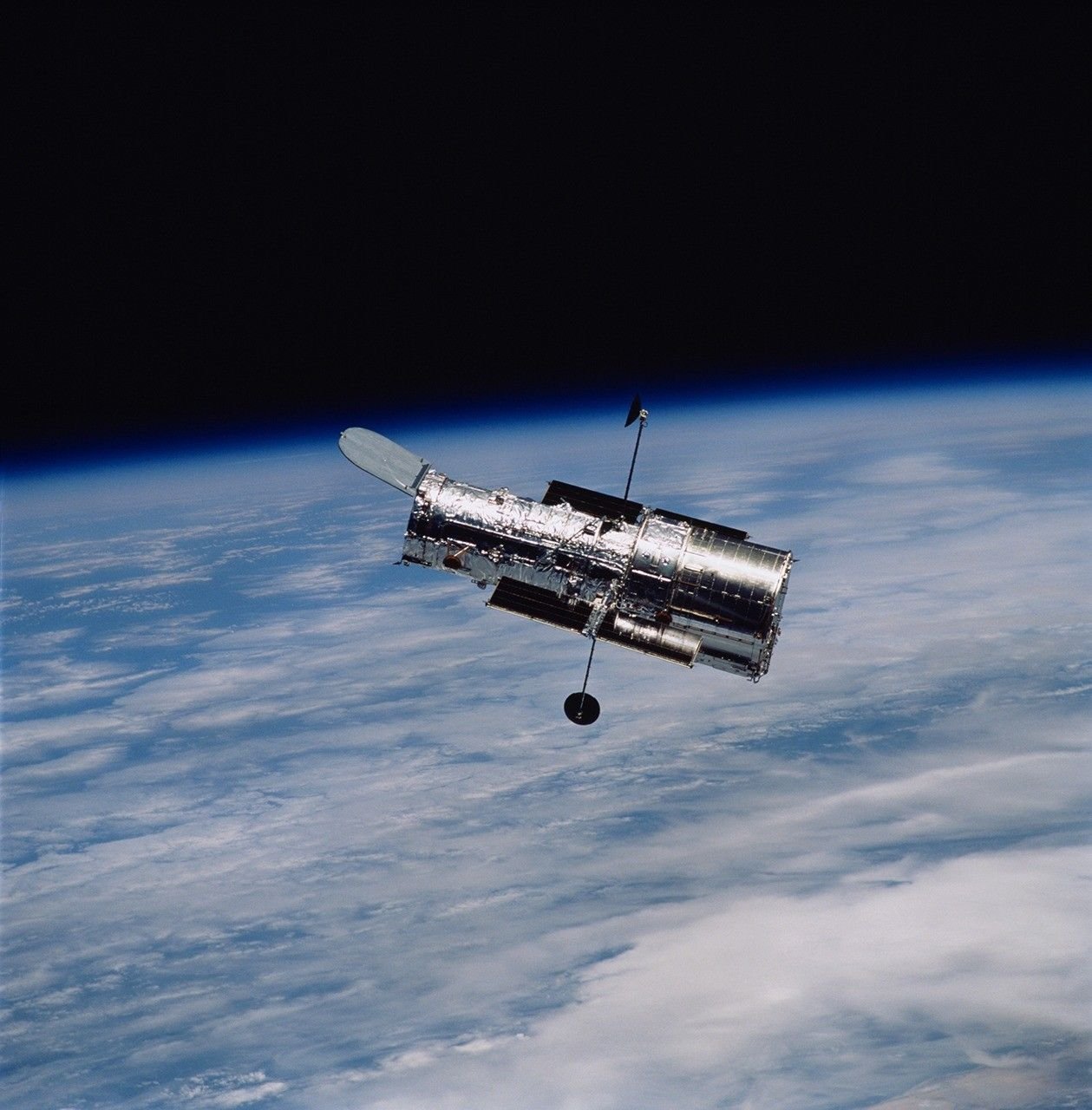
In 1999, the Hubble Space Telescope pointed at a faint, dead star called HS 0209+0832 and recorded its light. The data went into Hubble’s archive with a puzzle attached: roughly 100 chemical “fingerprints” in that starlight that nobody could identify.
For more than a quarter century, the mystery just sat there.
Then a PhD student at the University of Warwick in England went back to the old files with a better reference book. What he found suggests something astronomers had never seen around this kind of star: a planet that may have been built from the leftovers of the star’s own death.
A cold case in Hubble’s archive
NASA described the discovery, published on October 5, 2026, in the journal Nature Astronomy, as a “cold case” cracked open by “diligent sleuthing.”
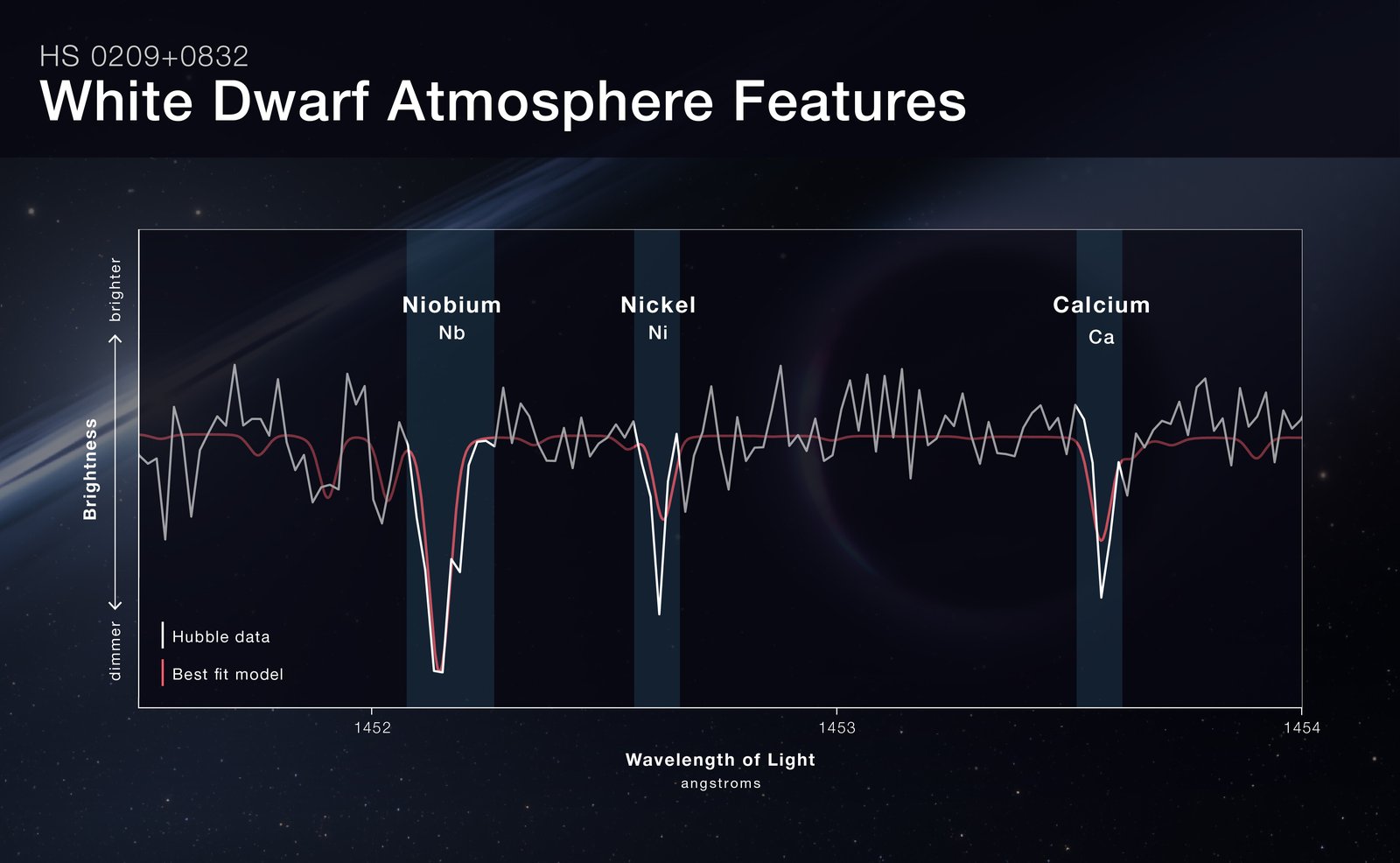
The sleuth was Jamie Williams, a doctoral candidate at Warwick and the study’s lead author. He returned to Hubble’s 1999 observations with an updated database of chemical signatures and found that one element matched many of the mystery features: niobium.
Niobium is not exotic on Earth. NASA notes it turns up in things like jewelry and medical imaging devices. But it had never been reported in a white dwarf before, and this star has a lot of it. According to the University of Warwick, the niobium levels are more than 1,000 times higher than the Sun’s.
“What Hubble is showing us in this white dwarf system is something we haven’t seen before: a high abundance of the element niobium, the signature of which I was unfamiliar with when I first found it in the archival data,” Williams said.
His co-author, Warwick astronomer Boris Gänsicke, had a more colorful reaction. “When Jamie asked me about niobium in relation to this study I was truly gobsmacked,” he said. “Once we realized it was there, everything fell into place.”
What is a white dwarf, anyway?
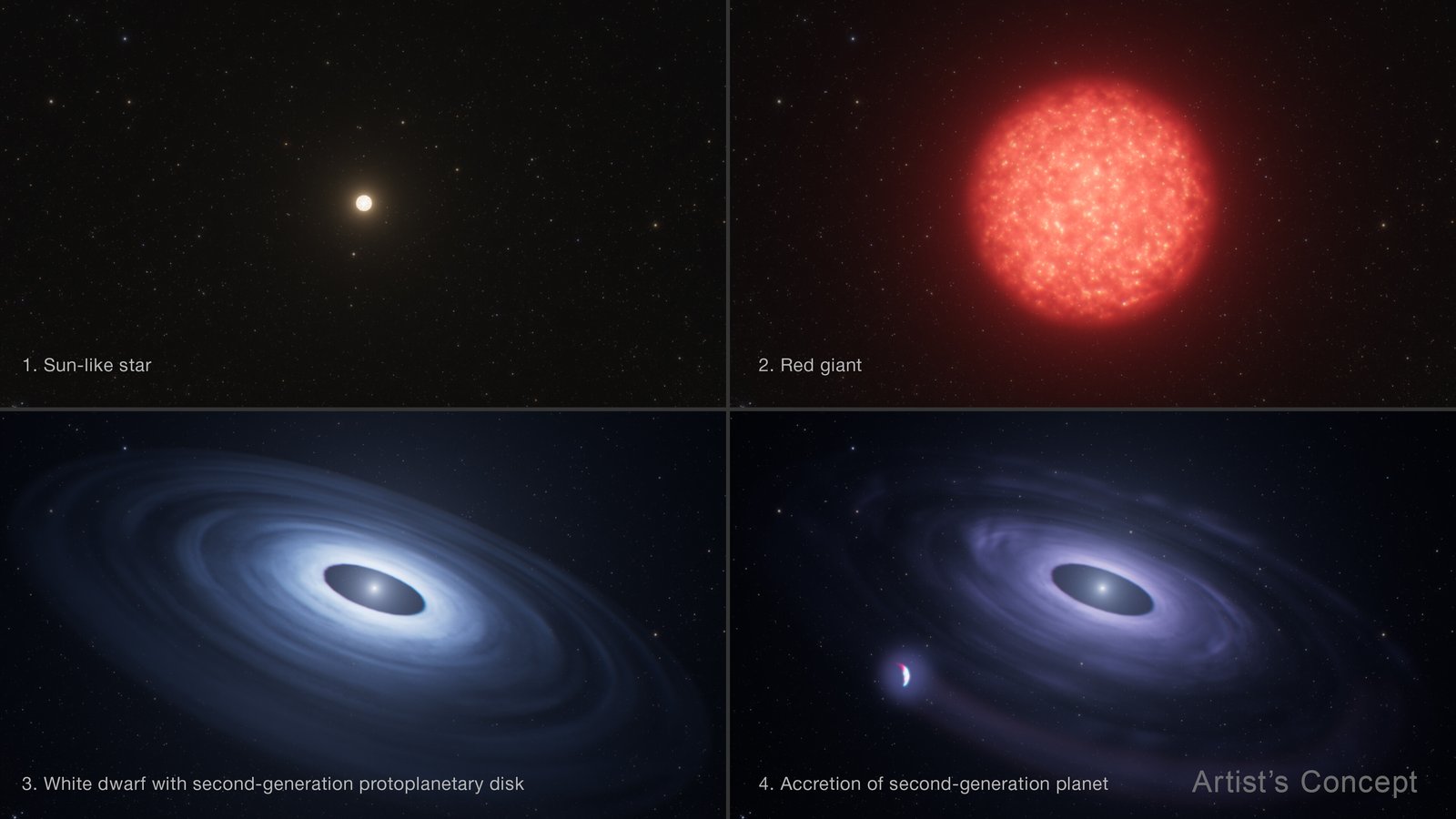
A white dwarf is what’s left when a star like our Sun runs out of fuel. Near the end of its life, the star swells into a bloated red giant and sheds its outer layers into space. What remains is a small, hot, incredibly dense core that slowly cools over billions of years.
White dwarfs are known to pull in material from planets and debris around them. That material leaves chemical traces in the star’s atmosphere, and astronomers can read those traces in its light. Usually the signal is dominated by rock-forming elements such as silicon and iron, the same stuff that makes up rocky planets and asteroids.
HS 0209+0832 broke that pattern. Its atmosphere is rich in heavier elements like zinc, copper and niobium, but low in silicon and iron.
Why niobium points to a “reborn” planet
Here’s the clever part. Most elements up to iron are forged by fusion in the cores of ordinary stars. Niobium and other elements heavier than iron are different.
“These heavy elements can only be synthesized in the exotic conditions that briefly emerge inside dying stars,” said Nicholas Stone, a theoretical astrophysicist at the University of Wisconsin–Madison and a member of the team. “The presence of niobium is a signpost of these ‘death’ throes.”
So the material falling onto this white dwarf doesn’t look like it came from an ordinary planet that formed back when the star was young. It looks like it came from something made out of the star’s own cast-off material.
That’s what astronomers call a second-generation planet. Earth and every other planet in our solar system are first-generation planets, built from material left over from the Sun’s birth. A second-generation planet forms later, from the debris of a star’s death.
The team’s best explanation goes like this: as the star died, it threw off gas enriched with freshly made heavy elements. Some of that material settled into a new disk around the star, and part of it came together into a giant planet. The rest drifted away long ago, but the planet stayed.
Building that disk isn’t easy, Williams explained in Warwick’s announcement. A lone dying star tends to shed its material evenly in all directions, so HS 0209+0832 “likely required a companion star that pulled the ejected material back into orbit, rather than letting it escape.” That may be one reason such planets are so rare.
Other telescopes backed up the story
One odd reading from one telescope wouldn’t be enough. The team checked Hubble’s results against data from NASA’s retired FUSE (Far Ultraviolet Spectroscopic Explorer) mission, which also showed strong niobium signatures.
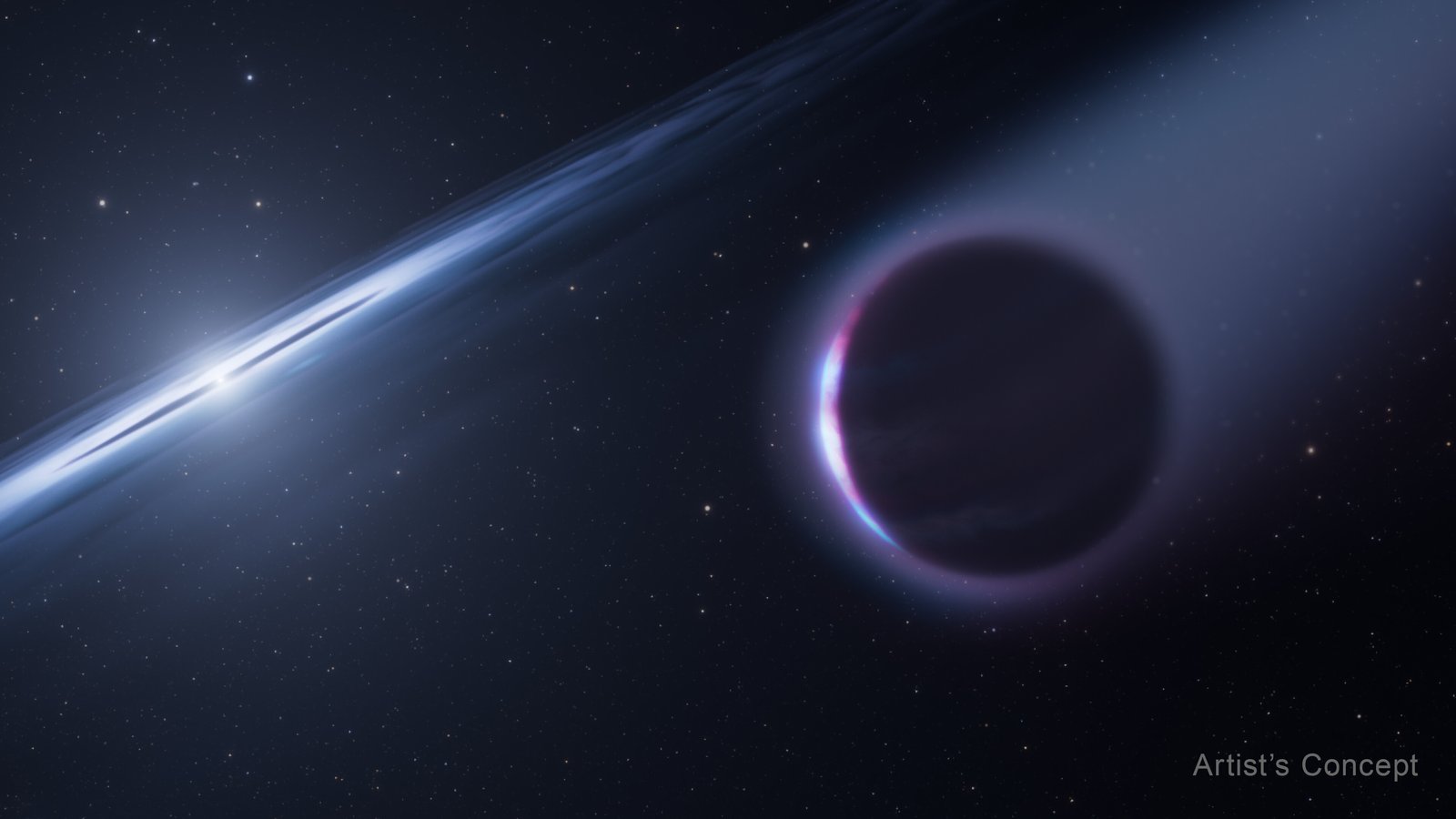
Then came another clue from NASA’s planet-hunting TESS satellite. TESS watched the white dwarf for four months and caught a tiny, regular change in its brightness, repeating about every 4.4 days. The team reads that as a sign of a planet orbiting about 3.7 million miles (6 million kilometers) from the star, far closer than Mercury is to our Sun.
The researchers estimate the candidate planet is a gas giant about the size of Jupiter. Because the white dwarf is still young and very hot, it’s likely blasting the planet with radiation and stripping away its outer atmosphere, possibly giving it a comet-like tail. That escaping gas falls back onto the star, which is exactly how Hubble could “taste” the planet’s unusual chemistry.
A planet that may stick around
Losing atmosphere sounds like bad news for the planet, but Williams doesn’t think it’s doomed.
“If the second-generation planet is there, I think it is likely to survive,” he said. “Eventually the white dwarf will cool and then maintain a consistent temperature, with the planet in its stable habitable zone for millions of years.”
It’s worth being clear about one thing: this is a candidate. The paper’s own title calls it a “second-generation planet candidate,” and nobody has photographed the planet itself. If confirmed, the University of Warwick says, it would be the first second-generation planet found around a white dwarf. Similar “reborn” worlds have been suspected around pulsars, the collapsed remains of much more massive stars. White dwarfs are far more common.
Why this one feels so hopeful
We usually think of a star’s death as the end of the story. This discovery hints that it might be the start of a new chapter.
“Rather than the white dwarf stage being a kind of epilogue to the story of a star and its planets, this research points to the systems we are familiar with only being the first chapter of a potentially much longer tale, with some new characters showing up,” Williams said.
Gänsicke put it even more simply: “In a sense, this system has given birth to a new world using the foundations of the old one.” He also raised a question that’s hard to stop thinking about once you’ve read it: might our own Solar System someday host a second-generation planet formed from the ashes of our Sun?
There’s a quieter lesson here, too. The clue was sitting in Hubble’s archive the whole time. It took a curious young researcher, better tools, and a willingness to look again at old data that everyone else had moved past. “Scientific discovery is not a straight path,” Gänsicke said. “It often needs that magical moment when people discuss big questions on their minds and realize that together they can find unexpected answers.”
Williams plans to keep using Hubble over the next several years to learn how these planets form, how common or rare they are, and how they evolve around “dead” stars.
Love space stories? Read how four astronauts flew around the Moon and brought home photos of Earth rising over another world, or browse more in our Space & Discovery section.
Sources
- NASA Science: Suspected Second-generation Planet Solves NASA Hubble Cold Case (Oct. 5, 2026)
- ESA/Hubble: Suspected second-generation planet solves Hubble cold case (heic2613)
- University of Warwick: The phoenix planet: astronomers find a world reborn from its star’s ashes
- Williams et al., “Discovery of a second-generation planet candidate accreting onto a white dwarf,” Nature Astronomy (2026)
Image credits: Hubble Space Telescope in orbit: NASA (U.S. government work, public domain), via NASA Science. Spectrum chart, evolution illustration and artist’s concept: NASA, ESA, L. Hustak (STScI), via ESA/Hubble (heic2613a, heic2613b, heic2613c), licensed CC BY 4.0; resized for web. The two illustrations are artist’s concepts, not photographs.