Some grand openings come with ribbons, speeches, and a guest list. The world’s largest wildlife crossing is getting all of that on December 2, 2026. But a few of its future users clearly didn’t check the calendar.
Weeks before the Wallis Annenberg Wildlife Crossing in Agoura Hills, California, officially opens, remote cameras have already caught its first animal visitors: a tiny lizard, and then two curious coyotes. After decades of planning and years of construction, it’s a small moment with a big message: build it, and they will come.
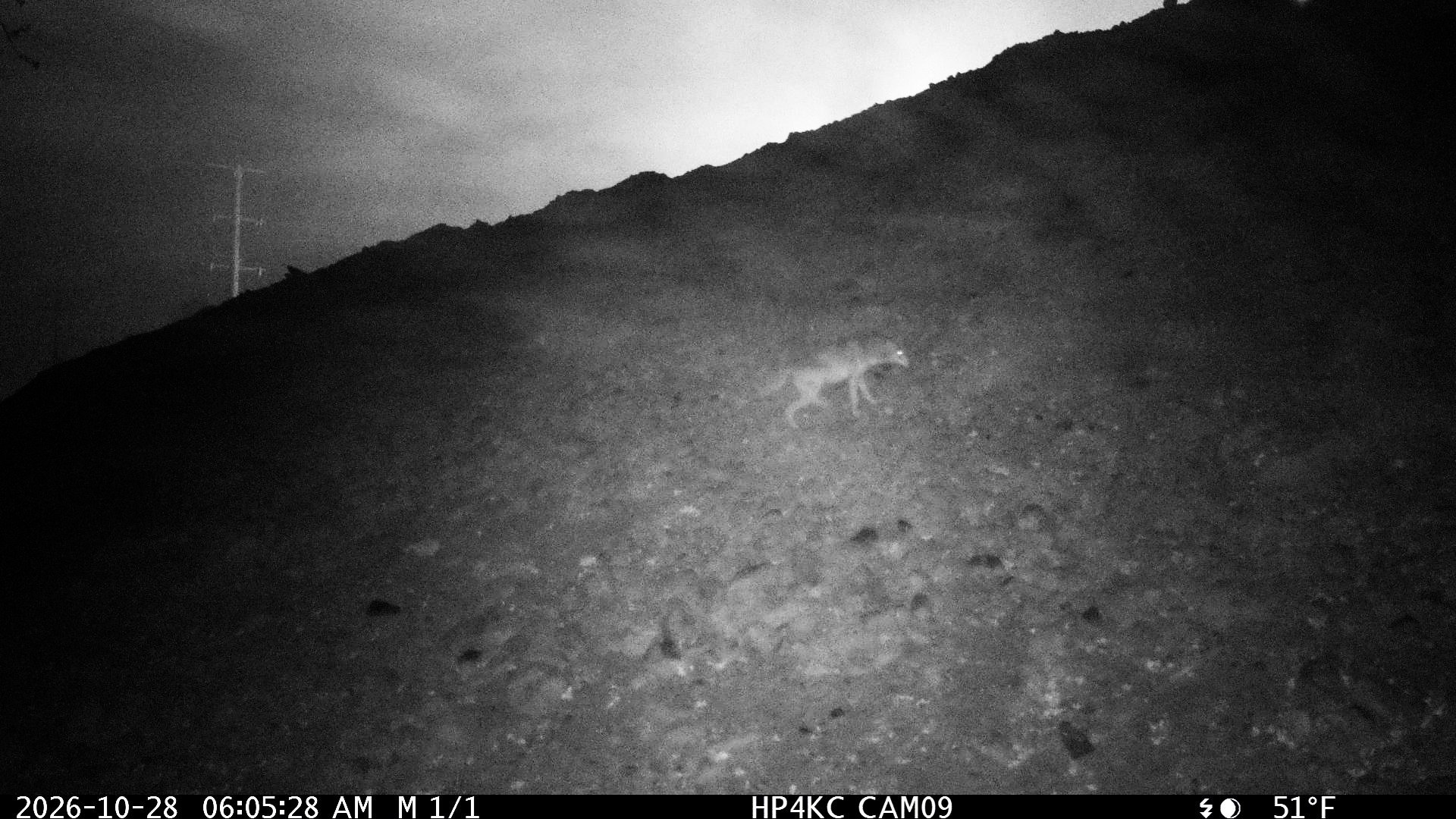
A coyote on the slope at sunrise
The National Park Service announced on November 4 that on October 28, its scientists captured the first photo of an animal on the structure: a coyote climbing the southern slope of the still-unfinished crossing. The camera timestamp reads 6:05 a.m., just as the sky was starting to brighten over the hills.
At that point, the coyote couldn’t actually make it all the way across. According to the Los Angeles Times, a steep drop-off between the crossing’s two overpasses still blocked the route. But as grading and construction continued, the path opened up, and Santa Monica Mountains National Recreation Area wildlife biologist Jeff Sikich hurried to install six cameras on the crossing itself.
He was just in time.
Then a second coyote went right over the freeway
On Thursday, November 5, at about 1:30 a.m., one of those new cameras caught a coyote on top of the crossing, moving south over the 101 Freeway. That made it the first large mammal documented on the structure itself, right above a highway that carries more than 300,000 vehicles a day.
Scientists don’t think this coyote made a full trip across. Three later photos showed it heading back the other way, and by 1:47 a.m. it was at the northern end again. Seth Riley, wildlife branch chief for the recreation area, told the Times that the animal spent roughly 20 minutes up there, and he sees that as a good sign: if light or traffic noise had spooked it, it wouldn’t have stuck around that long.
Beth Pratt of the Wildlife Crossing Fund, the public face of the project, admitted she had expected a deer to be first. But coyotes are, in her words, “bold explorers.” She now thinks a mountain lion might even use the crossing before the ribbon-cutting. “Word gets out in the animal world,” she said, “so who knows what’s going to happen?”
And technically, the coyotes weren’t even first. According to project updates reported by PetaPixel and IFLScience, a western fence lizard beat them onto the bridge, and birds and insects have already been using the growing native habitat on top.
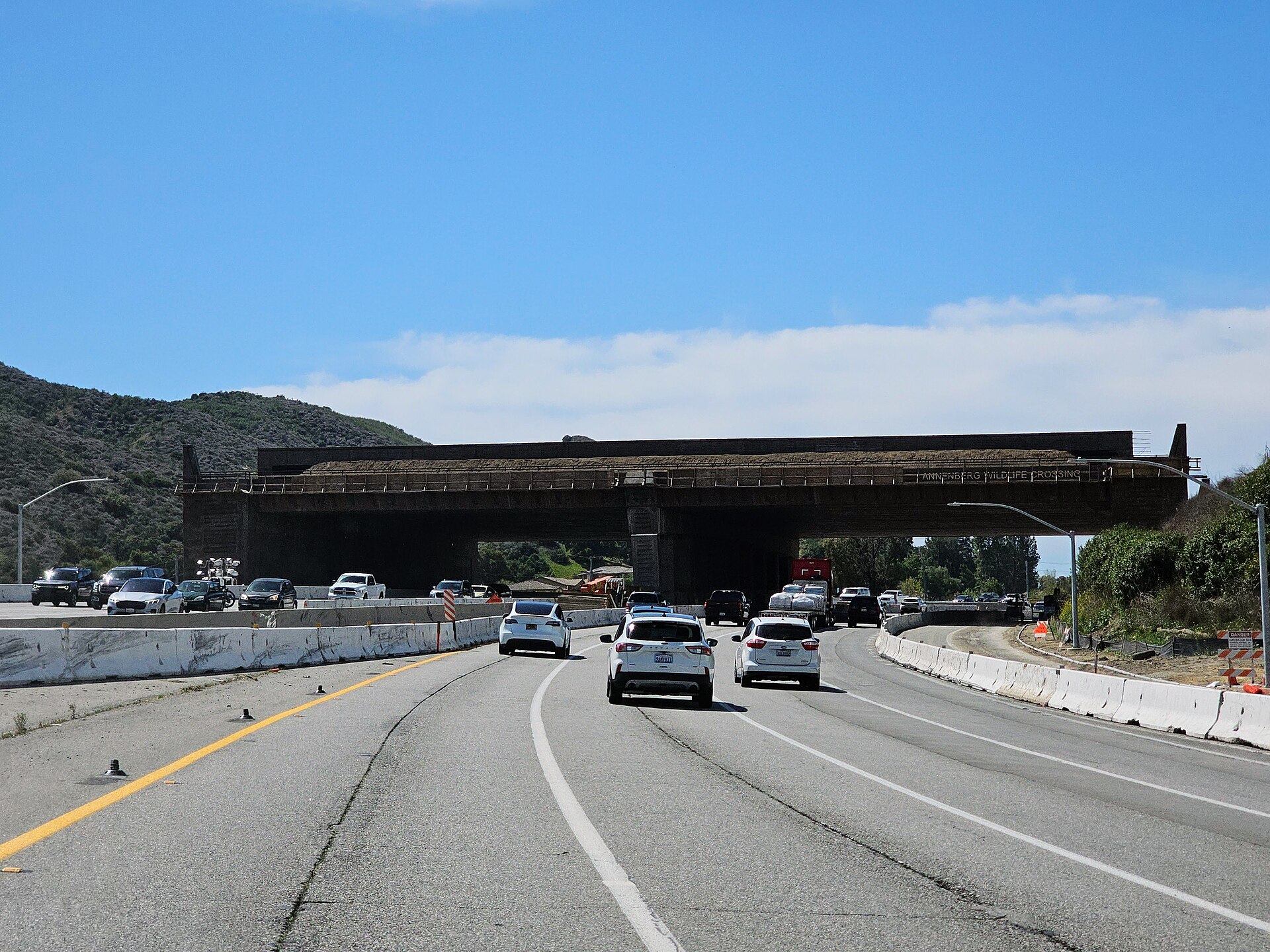
Why a bridge for animals matters so much here
The crossing spans 10 lanes of the 101 (Ventura) Freeway, plus nearby Agoura Road, near Liberty Canyon. It’s designed to reconnect the Santa Monica Mountains to the south with the Simi Hills to the north, two pieces of wild land that the freeway has kept apart for decades.
National Park Service biologists have studied wildlife in the Santa Monica Mountains since 1996. Their work showed how freeways and development hem animals in and cut off the flow of genes between populations. Mountain lions have been hit especially hard: trapped by roads, many have struggled with inbreeding because there simply aren’t enough unrelated mates within reach.
That research became the scientific backbone of the project. The crossing is meant to give animals like mountain lions, bobcats, mule deer, gray foxes, and coyotes a safe way over the highway instead of a deadly dash across traffic. Park scientists say all of those species already regularly use a trail right next to the future crossing, and PetaPixel reports that a mountain lion with two cubs has been seen nearby too.
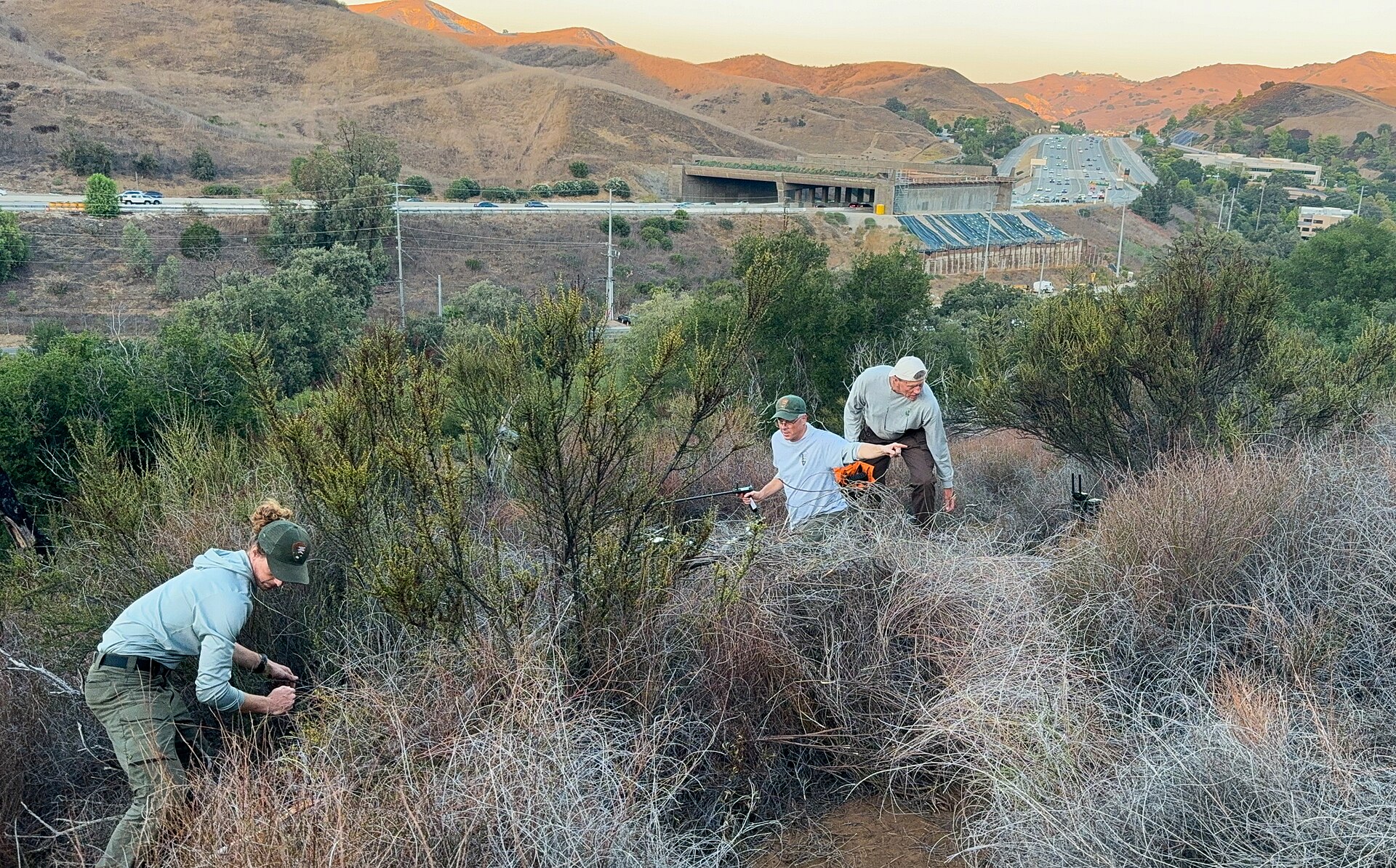
The mountain lion who inspired a movement
It’s hard to tell this story without mentioning P-22, the famous Los Angeles mountain lion who crossed two major freeways to make his home in Griffith Park, right in the middle of the city. His lonely situation, cut off from other lions by roads, made him a symbol of what freeways do to wildlife. He helped inspire many people to support projects like this one. P-22 was euthanized in 2022, but his legacy is now quite literally built into the landscape.
Fittingly, the Facebook page dedicated to P-22 celebrated the coyote sightings with a wink: “To everyone who wondered how wildlife would know where to go without signs… apparently, they’ve figured it out.”
A project 36 years in the making
The idea goes back a long way. IFLScience notes that a 1990 study first found the 101 Freeway had severed the Santa Monica Mountains from the Simi Hills. Fundraising by the National Wildlife Federation and the Santa Monica Mountains Fund began in 2014, and the finished project costs about $114 million.
It’s a true team effort. The National Park Service says the crossing is led by state, federal, and nonprofit partners including the National Wildlife Federation, the Mountains Recreation and Conservation Authority, Caltrans, and the NPS.
And it’s not just a concrete bridge with a bit of grass on top. The Los Angeles Times reports that about 6,000 native plants already cover the overpass above the 101, with more planting planned for the Agoura Road section after opening. PetaPixel says the overall project includes 13 acres of habitat restoration. The goal is to make the crossing feel as natural as possible, so shy animals feel safe using it.
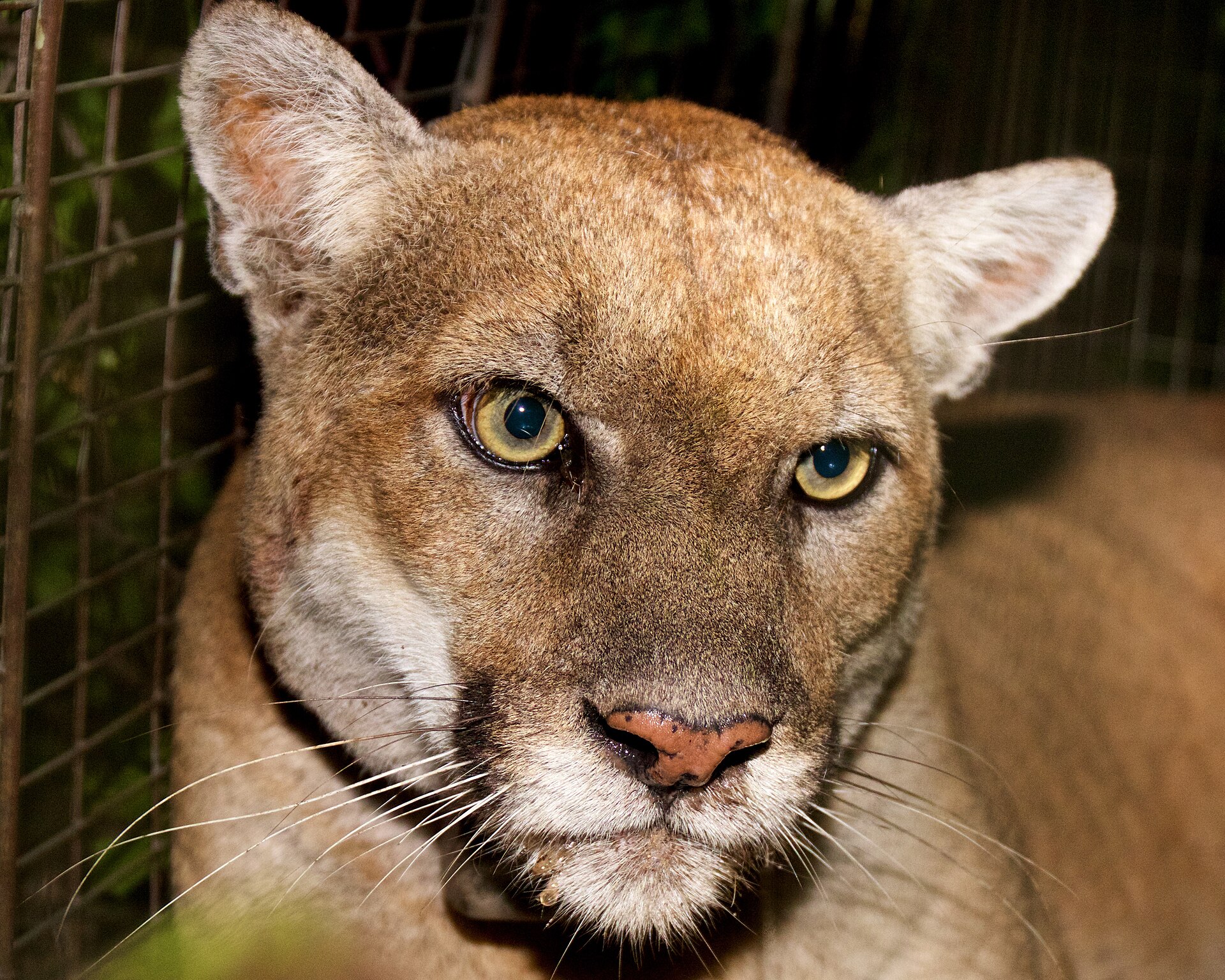
What scientists will watch next
For researchers, the first coyote is just the beginning. The National Park Service has laid out a monitoring framework with 14 objectives, from documenting whether mountain lions and mule deer use the crossing to tracking changes in genetic diversity, plant communities, and even light and sound levels.
“This is more than just about whether animals use the crossing,” Riley said in the NPS announcement. “We want to understand how effective it is in reconnecting an ecosystem that has been divided by the freeway for decades. That is a much bigger scientific question and answering it will take years.”
The good news for wildlife fans: the NPS says images from the crossing cameras will be shared publicly, just not in real time, for security reasons. According to the Times, more than 50 cameras are eventually planned.
Why this one feels so good
Big conservation projects can take so long that it’s easy to wonder whether they’ll work. Here, the animals answered before anyone even cut the ribbon. A coyote climbing a dirt slope at dawn, another poking around above the headlights at 1:30 in the morning: these are small steps, but they’re exactly the steps everyone hoped to see.
The official opening is set for December 2, 2026. Something tells us the wildlife will be there early.
Sources
- National Park Service: National Park Service to Begin Scientific Monitoring at Wallis Annenberg Wildlife Crossing (Nov. 4, 2026)
- Los Angeles Times: A second coyote spotted on the wildlife crossing over the 101 Freeway (Nov. 5, 2026)
- PetaPixel: Trail Camera Photos of the First Coyotes to Use the World’s Largest Wildlife Crossing (Nov. 8, 2026)
- IFLScience: World’s Largest Wildlife Crossing Is Set To Open Next Month (Nov. 2026)
Image credits
- Coyote on the crossing’s southern slope, Oct. 28, 2026: NPS / Jeff Sikich (public domain), via nps.gov.
- Crossing under construction over US 101, April 2025: AragonChristopherR17Z, CC BY-SA 4.0, via Wikimedia Commons.
- NPS wildlife team near the crossing: Santa Monica Mountains National Recreation Area / NPS (public domain), via Wikimedia Commons.
- Mountain lion P-22: National Park Service (public domain), via Wikimedia Commons.