During the 2017–18 spawning season, biologists walking the little creeks around Washington’s Lake Sammamish counted just 19 adult kokanee salmon coming home to spawn. Nineteen fish, for a population that once numbered in the tens of thousands.
In November 2021, two junior high science teachers from the small Texas town of Lockney went looking for the perfect route for a class field trip. Their students had energy to burn, and Rick and Susan Day thought a geology tour of nearby Caprock Canyons State Park might be just the thing.
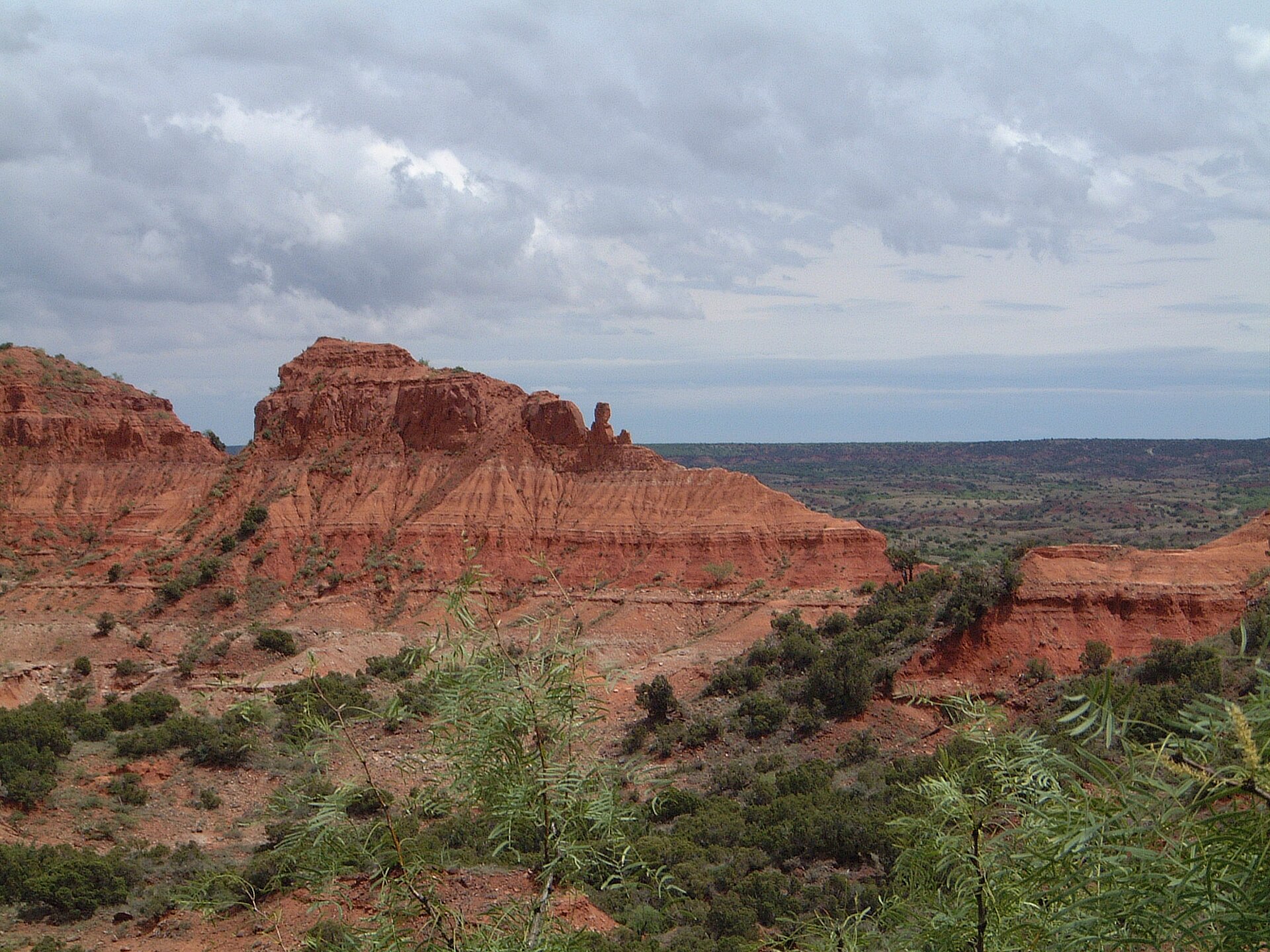
With the park’s permission, the couple left the trail and followed a bend in the canyon. They scrambled up onto a ledge at the foot of a red cliff to look at an interesting rock. That’s when Rick saw the bones: a long line of them, hundreds at least, sticking out of the cliff face like a stripe in the rock.
Five years later, that chance find has become a scientific paper. Published online on Nov. 9 in the journal American Antiquity and announced by Rice University on Nov. 20, the study shows that Indigenous hunters drove bison off this same cliff at least seven times over roughly 3,000 years. It is only the second bison jump ever documented in Texas, and it is changing what archaeologists thought they knew about the Southern Plains.
“If this is not a jump, then I don’t know what a jump is”
Rick Day wasn’t just any hiker. He had explored this country since childhood and had spent about 15 years as a volunteer steward for the Texas Historical Commission. He knew right away what he might be looking at.
I looked at the cliff and I saw the way the bone was oriented. When I saw it, it seemed to me that if this is not a jump, then I don’t know what a jump is.
Rick Day, speaking to Texas Parks & Wildlife Magazine in 2023
A bison jump is a place where people on foot steered a herd of bison toward a cliff edge, so the fall would kill or disable the animals. It was one of the most productive hunting methods in human history, and one of the most demanding. It took scouts to find the herd, people to guide it, people hidden along the way to turn it, and then a large crew to butcher hundreds of pounds of meat before it spoiled.
Day reported the find, and soon archaeologists from Texas Parks and Wildlife, Texas Tech University and other partners were at the cliff. Texas Tech students dug there in a field school, and a bigger dig followed in spring 2024, funded by the Summerlee Foundation and Texas Parks and Wildlife. The site was named Nighthawk, after the nighthawks, a kind of nightjar bird, that nest nearby.
How do you prove bison fell from a cliff?
Bones under a cliff aren’t enough on their own. Hunters also trapped bison in narrow gullies, or simply shot them. So the team looked for clues that only a fall could explain.
They found plenty. The main bone beds sit on a ledge about 20 meters (roughly 65 feet) below the cliff top, and about 50 meters above the valley floor. As lead author August “Gus” Costa, a geoarchaeologist and adjunct lecturer at Rice, told KFDA NewsChannel 10: “There was no way that those animals could have gotten to that place unless they fell from above.”
Many bones show compression fractures from a hard landing. Others carry cut marks from butchering, and one jaw shows a mark left when the tongue was removed. The diggers also found spear and arrow points, chipped stone flakes and burned rock. In all, the team recovered 2,143 bone specimens, representing at least 27 bison.
- Seven hunts, three millennia: 27 radiocarbon dates on bone and charcoal sort into at least seven kill events, from about 3,500 years ago to roughly 400 years ago.
- The biggest hunt: about 1,700 years ago, accounting for 1,436 of the bone pieces and at least 17 animals.
- The latest hunt: sometime between A.D. 1520 and 1665, around the time Spanish colonists were first entering the region.
- Long-distance stone: a few tools were made from Alibates flint from about 130 km (81 miles) away, and some from Edwards chert from Central Texas, roughly 500 to 600 km (310 to 370 miles) away.
Like walking the plank
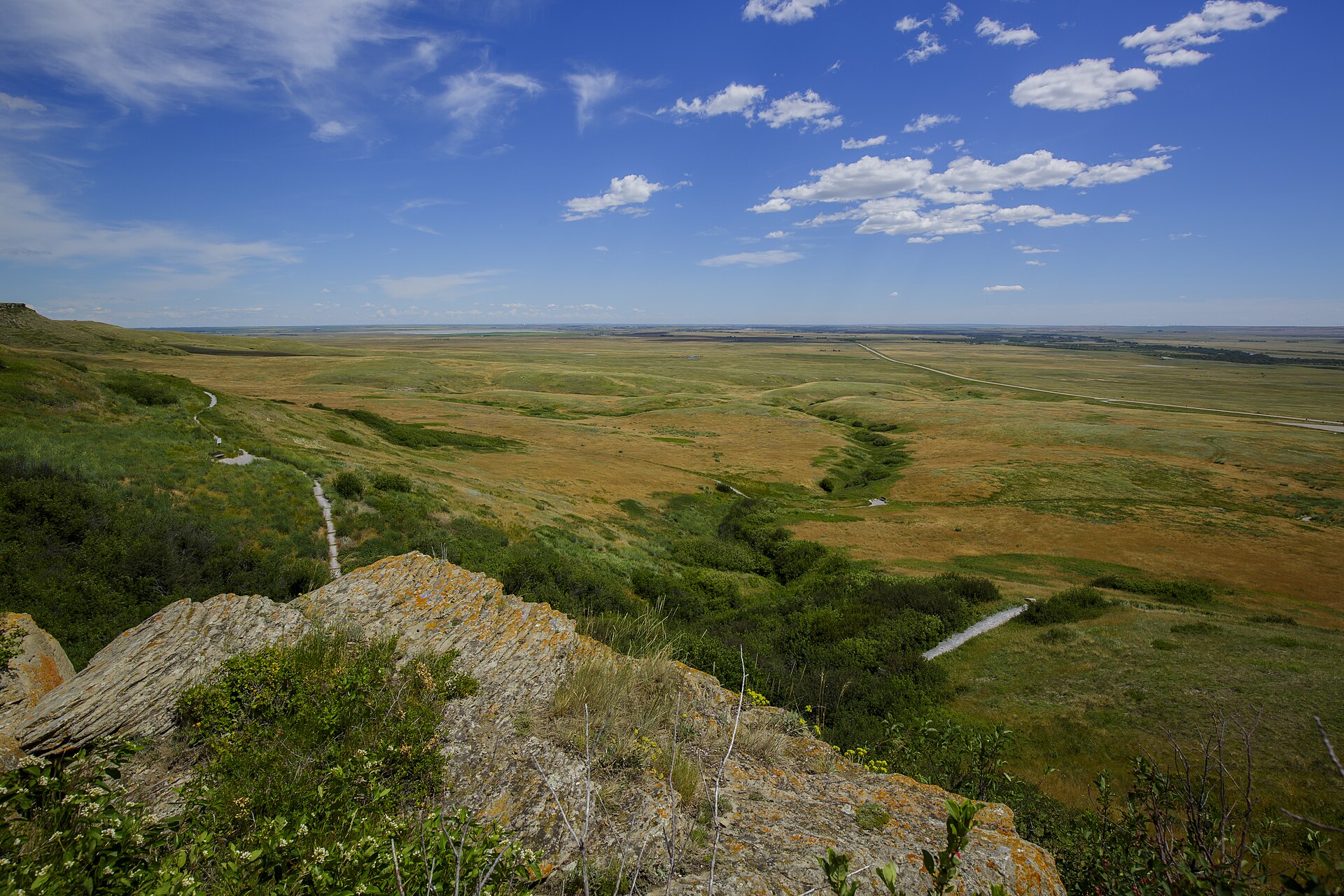
Most famous bison jumps, like those in Montana and Alberta, use long, straight cliffs where a gentle slope hides the drop until it’s too late. Nighthawk is different. The cliff juts out like a narrow peninsula. The researchers think bison were guided out onto this spur, where they had nowhere to go but over, more like “walking the plank,” as the paper puts it. No stone drive lines were found, so brush, logs or hide barriers may have helped steer the animals.
Here’s the part that amazed the team most. The cliff kept moving. The Caprock Escarpment wears back fast, by an estimated 60 to 190 meters every 1,000 years. After about 2,900 years ago, erosion cut the spur away from the plateau, and the jump-off point shifted more than 100 meters west. That’s about the length of a football field. People kept coming back anyway.
Returning to the same place over and over again over 3,000 years shows that people had a significant connection to the Nighthawk hunting facility.
August “Gus” Costa, Rice University
Giving the Southern Plains its due
Hundreds of bison jumps are known from the northern Plains. In the south, there were only a handful of candidates, and Bonfire Shelter, in Val Verde County near the Rio Grande, identified more than 60 years ago, was the only scientifically verified jump in Texas. Some researchers had suggested the south simply didn’t have the right cliffs.
The Nighthawk team disagrees. The cliffs are there, they argue. Erosion has been quietly wiping away the evidence, and jumps sit on steep slopes below cliffs, where archaeologists don’t usually look because people didn’t camp there. Costa and colleagues have now spotted eight more possible bison jump sites in and around Caprock Canyons. “The jump was hidden in plain sight,” Costa said.
For Costa, the result is about more than one hunting method. “For a long time when it comes to Indigenous bison hunting culture, the Southern Plains hasn’t received much respect, at least when compared to the north,” he said. “It’s about respect. Bison jumping is a complicated community effort, and getting that incorporated into the story of Southern Plains people is important.”
The hunts were probably about more than food. Texas was likely too warm to store meat as pemmican, the dried-meat-and-fat mix that northern hunters stocked up for winter. So the researchers suggest these big gatherings also served social purposes: ceremonies, trade, celebration and strengthening ties between groups. The land around the park was used by many peoples, including ancestors of today’s Kiowa, Comanche and Lipan Apache.
The bison are still here
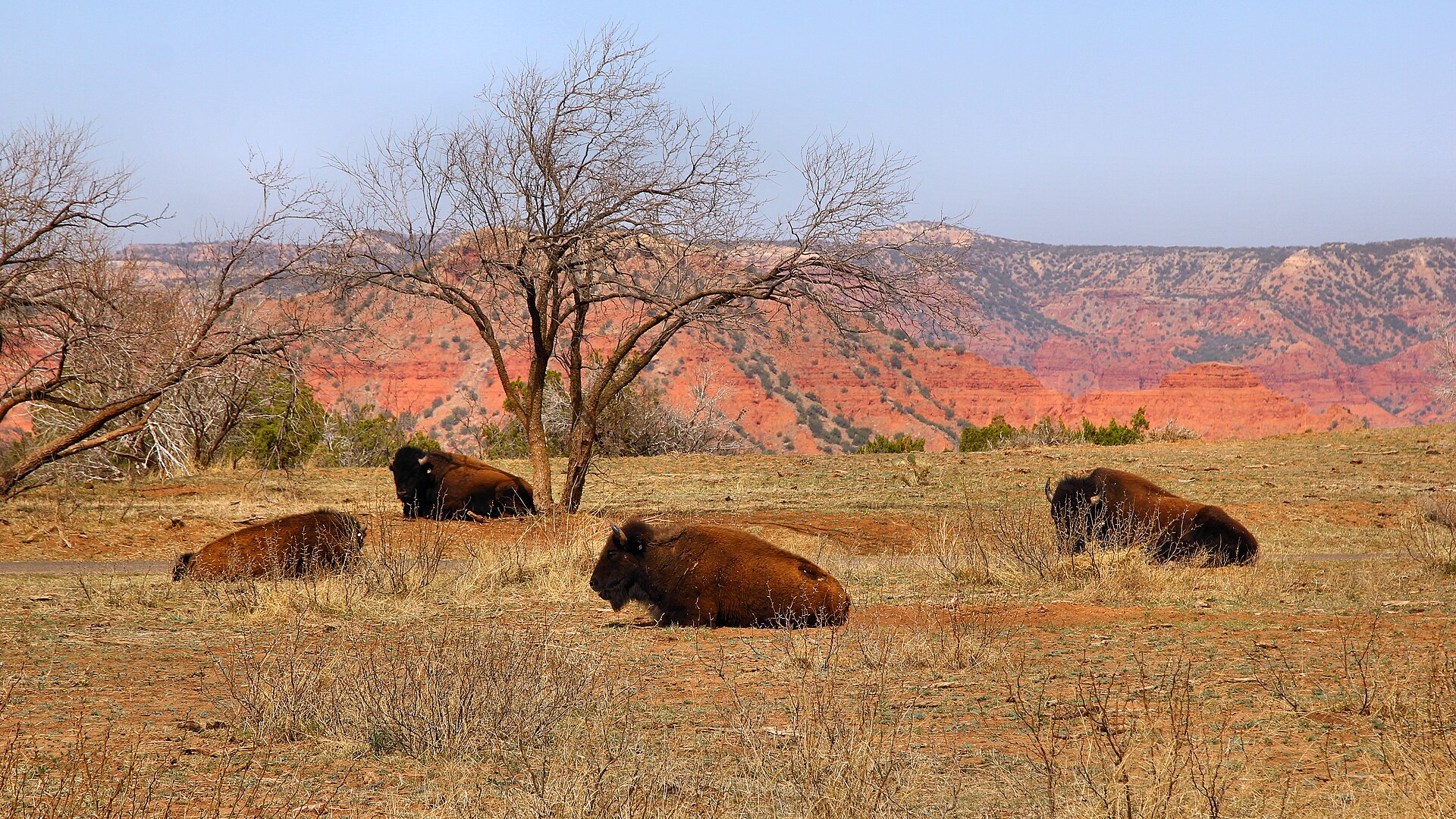
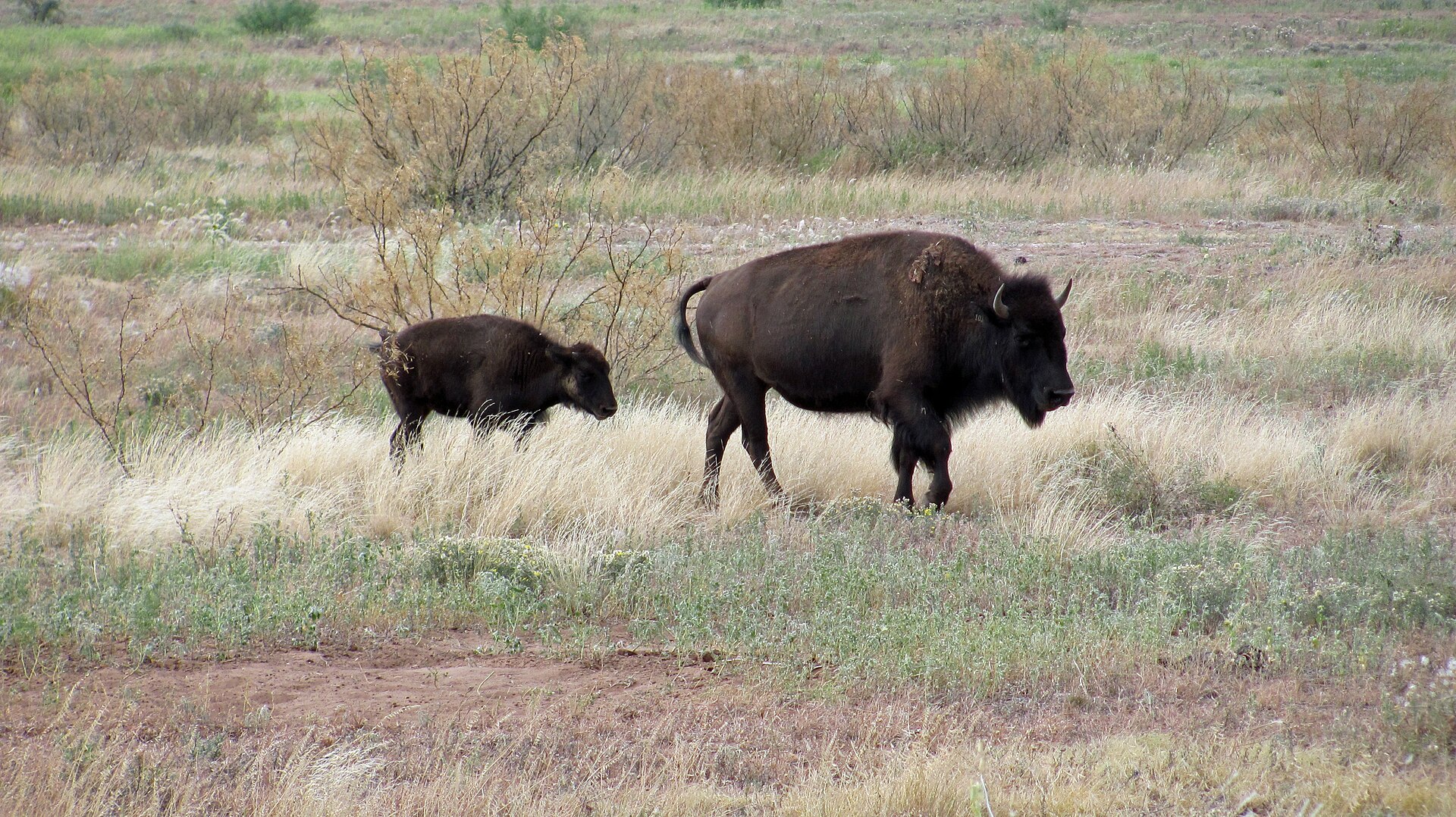
There’s a lovely twist to this story. Caprock Canyons is home to the Texas State Bison Herd, descendants of Southern Plains bison saved by ranchers Charles and Mary Ann Goodnight in the late 1800s, when the great herds had been all but wiped out. Today, visitors can watch bison grazing on the same red land where people hunted their ancestors thousands of years ago.
The team is now studying ancient bison DNA and the chemistry of bones and teeth from Nighthawk to learn how herds moved and what their world was like, and whether they’re related to the park’s living herd. “The unique lineage of the Southern Plains bison that live in the park, how far back can we chase that?” Costa told KFDA.
Nighthawk is now a protected State Antiquities Landmark, and park staff keep watch for erosion and vandalism. Its exact location isn’t published. About 70 percent of the site had already crumbled away before anyone knew it was there, which is why the team moved so quickly.
It’s a good reminder that big discoveries don’t always come from big expeditions. Sometimes they come from two teachers trying to plan a field trip for a restless class, paying attention, and knowing who to call. As Lucille Contreras, a Lipan Apache member and leader of the Texas Tribal Buffalo Project, told Texas Parks & Wildlife Magazine: “What an amazing, amazing gift that those hikers received when they found [the site] and realized what it was.”
Sources
- Rice University: Ancient bison hunting site in Texas challenges long-held assumptions (Nov. 20, 2026)
- Costa et al., “The Nighthawk Bison Jump,” American Antiquity (published online Nov. 9, 2026)
- KFDA NewsChannel 10: Archaeologists uncover rare ancient bison jump hunting site at Caprock Canyons (Nov. 20, 2026)
- Smithsonian Magazine: Indigenous hunters drove bison off this tall cliff for 3,000 years (Nov. 25, 2026)
- Archaeology News Online Magazine: 3,000 years of bison jump hunting at Texas cliff site (Nov. 21, 2026)
- Texas Parks & Wildlife Magazine: Bison Death Plunge at Caprock Canyons (November 2023)
Image credits
All photos via Wikimedia Commons: Larry D. Moore (CC BY 4.0); Leaflet (CC BY-SA 3.0); Thomas Fuhrmann (CC BY-SA 4.0); RichieB_pics (CC BY 2.0). Photos show the park, its modern bison herd and a comparable Canadian jump site, not the Nighthawk excavation itself. Links to each file and license are in the captions.