Some comeback stories star wolves, whales, or sea turtles. This one stars a beetle that makes its living burying dead mice.
Stay with me, because it’s genuinely lovely.
The American burying beetle is one of the most devoted parents in the insect world, and for decades it was in serious trouble. Now the people who have spent more than 30 years helping it are reporting their best numbers yet. On October 23, Rhode Island’s Roger Williams Park Zoo announced that its reintroduced population on Nantucket Island just had a record-breaking year. And in Ohio, where wild burying beetles vanished decades ago, researchers caught the first beetles born at a brand-new release site.
Meet nature’s undertaker
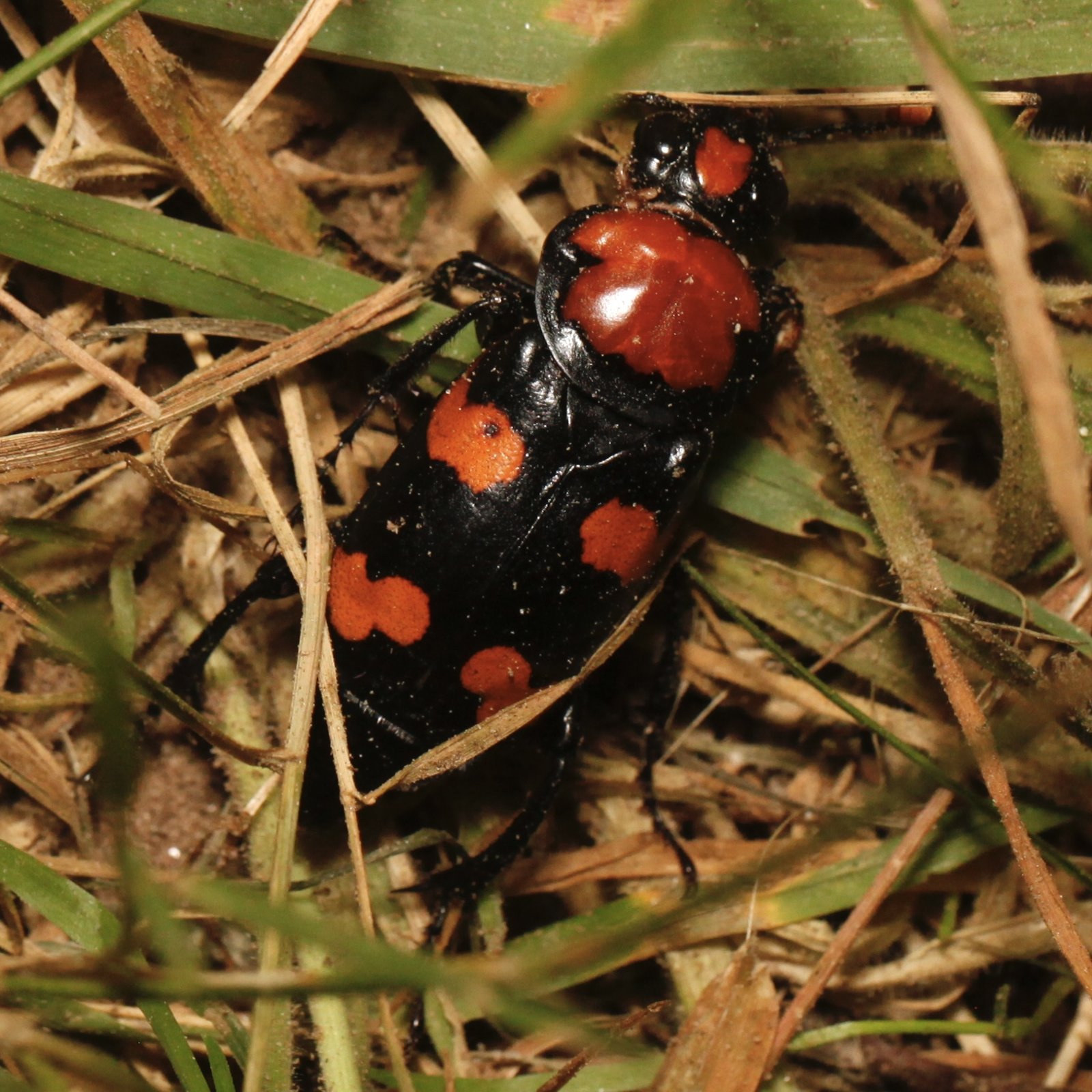
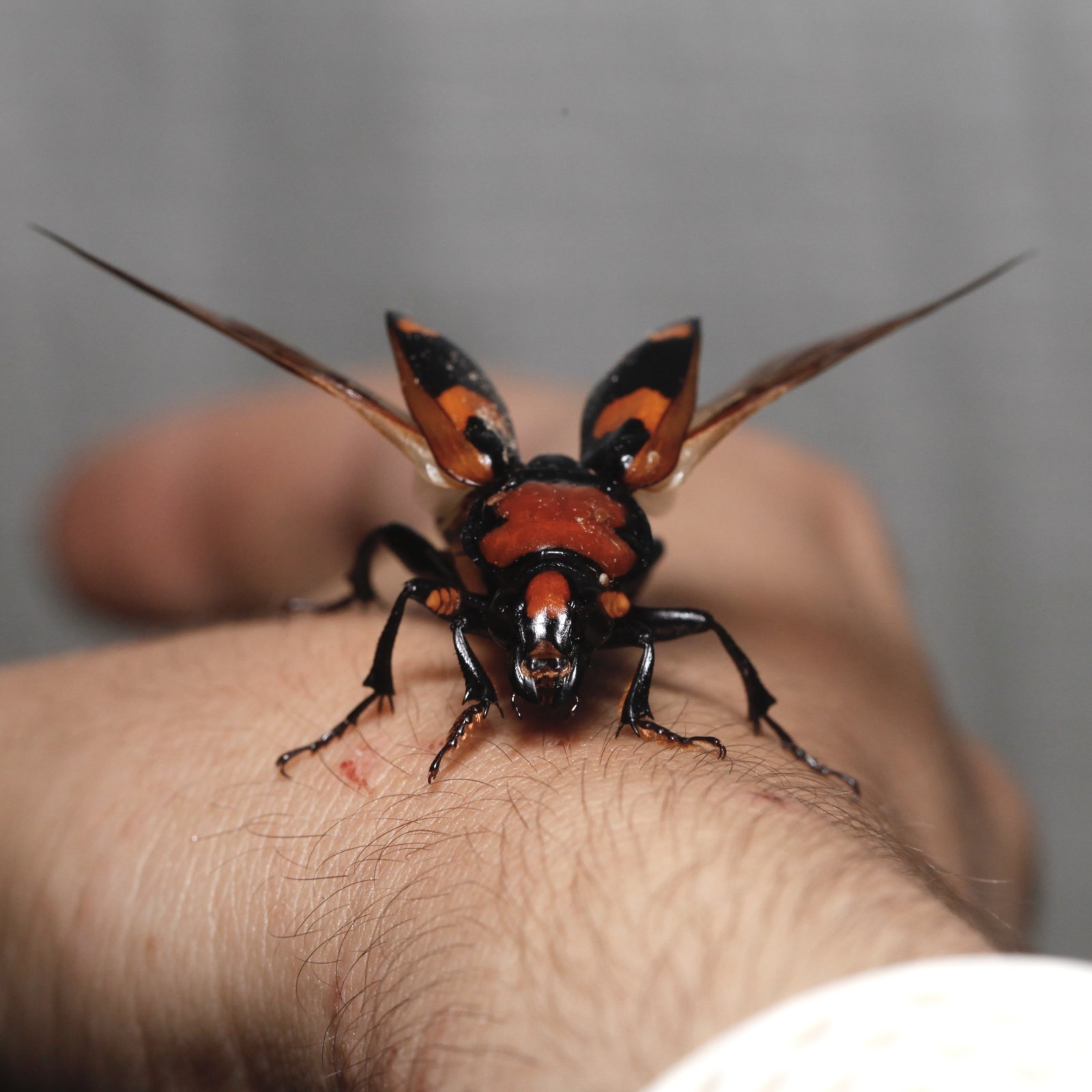
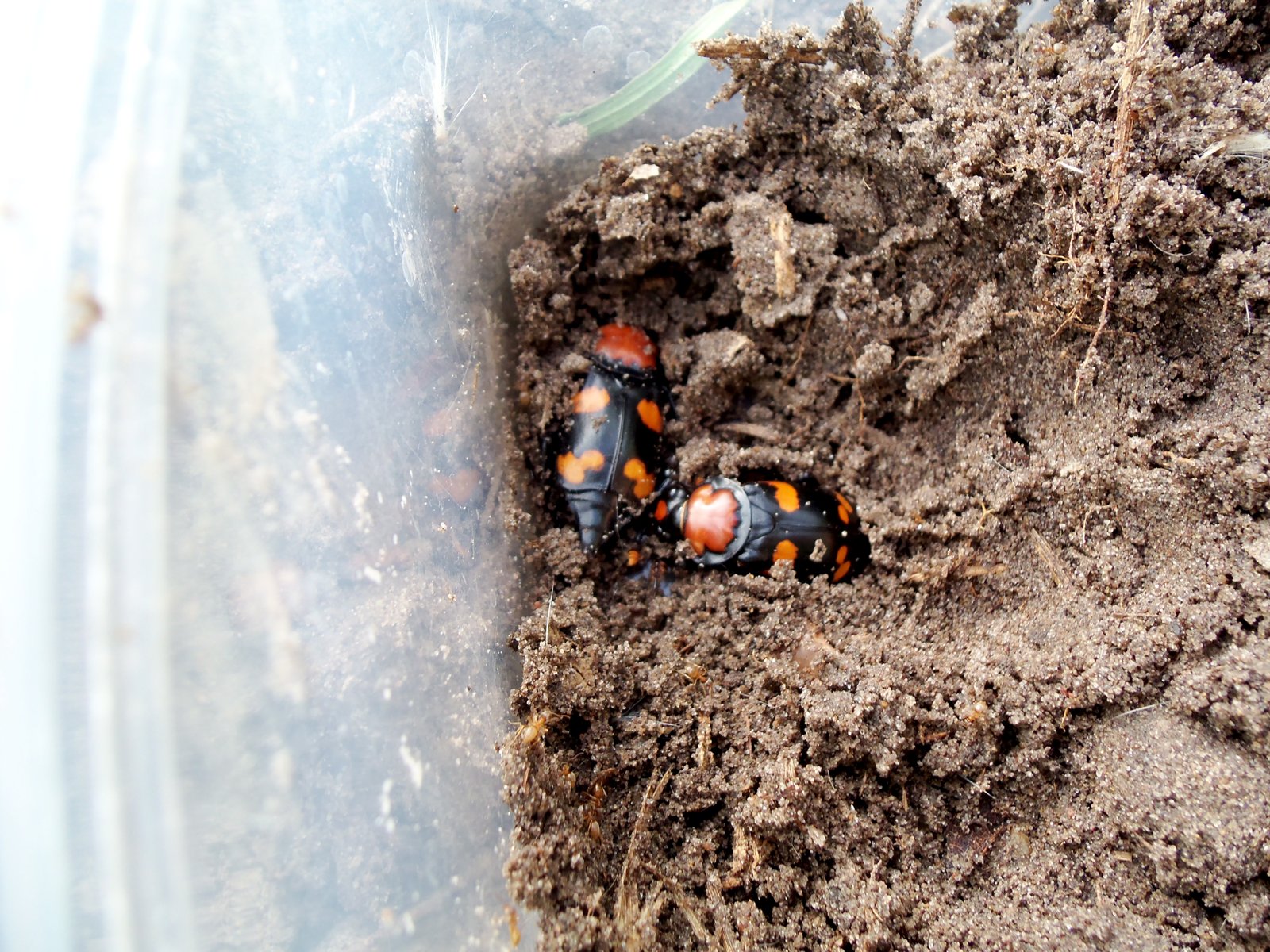
The American burying beetle is the largest carrion beetle in North America, growing 1 to 1.8 inches long. It’s glossy black with scalloped orange-red patches on its wing covers and a bright orange shield just behind its head. It flies at night and lives for only about a year.
Its whole life revolves around one thing: finding a freshly dead animal of exactly the right size. According to the U.S. Fish and Wildlife Service, the ideal carcass weighs about 80 to 200 grams, roughly the size of a dove, a quail, or a small rat.
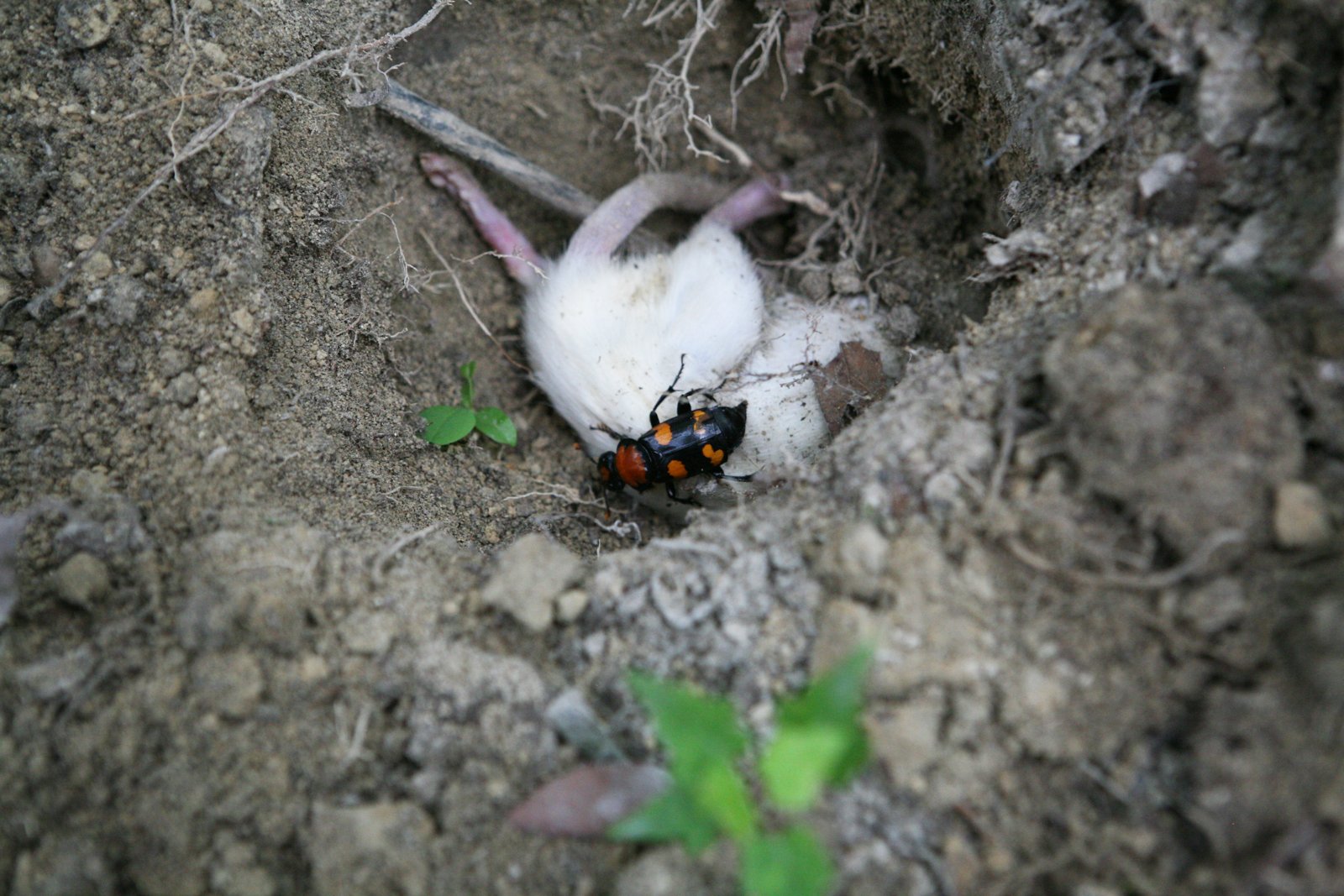
When a male and female find one, they bury it, often in a single night. A Fish and Wildlife Service story notes the beetles can bury something about 80 times their own weight in under 24 hours. Underground, the pair strips off the fur or feathers, rolls the carcass into a ball, and coats it with secretions that slow mold and bacteria. That little preserved ball becomes the nursery and pantry for their young.
Then comes the sweet part. Both parents stay to raise the brood, and the larvae actually beg to be fed, with the adults regurgitating food for them. A typical brood is about 12 to 18 larvae. For an insect, that level of shared parenting is unusual.
It’s also useful work for the rest of us. By whisking carcasses underground, burying beetles recycle nutrients into the soil and help keep fly populations in check.
“One of the most disastrous declines” ever recorded
This beetle once lived in at least 35 U.S. states and parts of three Canadian provinces. Over the 20th century, it disappeared from most of that range. In 1983, an international review of threatened invertebrates described its trajectory as one that “must represent one of the most disastrous declines of an insect’s range ever to be recorded.”
There was no single cause. Scientists point to habitat fragmentation, more competition from scavengers, and fewer carcasses of the right size. Some of the birds the beetles may once have relied on, like the passenger pigeon and heath hen, are now extinct.
In 1989, the American burying beetle was listed as federally endangered. In the East, it hung on in just one natural population: Block Island, about 12 miles off the coast of Rhode Island.
30 beetles, one zoo, and a lot of dead quail
In 1994, the Fish and Wildlife Service asked Roger Williams Park Zoo in Providence to become the breeding facility for the beetle’s recovery. The zoo’s colony started with just 19 males and 11 females collected from Block Island. Since then, it has raised more than 5,000 beetles over many generations and released more than 3,000 on Nantucket, where the species hadn’t been recorded since 1926.
Lou Perrotti, the zoo’s director of conservation programs, has led the effort since the beginning. He’s so devoted that he has a giant burying beetle tattooed on his forearm. Jane Goodall even gave the species its own chapter in her 2009 book Hope for Animals and Their World.
On Nantucket, the team gives beetle pairs a head start. They dig a hole, tuck in a pair with a quail carcass, replace the turf, and cover it with screen to keep crows out. About a week later, they check for larvae.
It hasn’t been a straight line. In 2012, the team cut back on these “provisioned” carcasses to see if the island population could make it on its own. The numbers dropped, so the provisioning came back. As the Service’s Cynthia Corsair put it, the reintroduction is a success, “but we now know that management will be necessary until we figure out what is missing in the ecosystem.”
Nantucket’s record-breaking summer
The zoo’s new numbers for 2026 are the most encouraging yet. For the fifth year in a row, zoo-bred beetles were released on Nantucket. Here’s what the team reported:
- 320 beetles, a mix of zoo-bred and wild-caught, were paired up and given carcasses to breed on.
- When the team dug up about 30% of those breeding chambers to check on them, they counted 1,274 larvae.
- In late summer, the team trapped for the new generation of freshly emerged adults. Over just four nights, they processed 490 new beetles and 191 recaptured beetles. The zoo called it a record-breaking year.
Those new adults matter most. Burying beetles born in summer spend the winter underground and become next year’s breeders. A big crop of young adults in late summer is the best sign that the population is building on itself.
The zoo is also running new research on how much carrion is available on the island and how climate change affects the beetles’ survival and breeding. The goal is to understand what a self-sustaining population really needs.
Meanwhile in Ohio: the first homegrown beetles
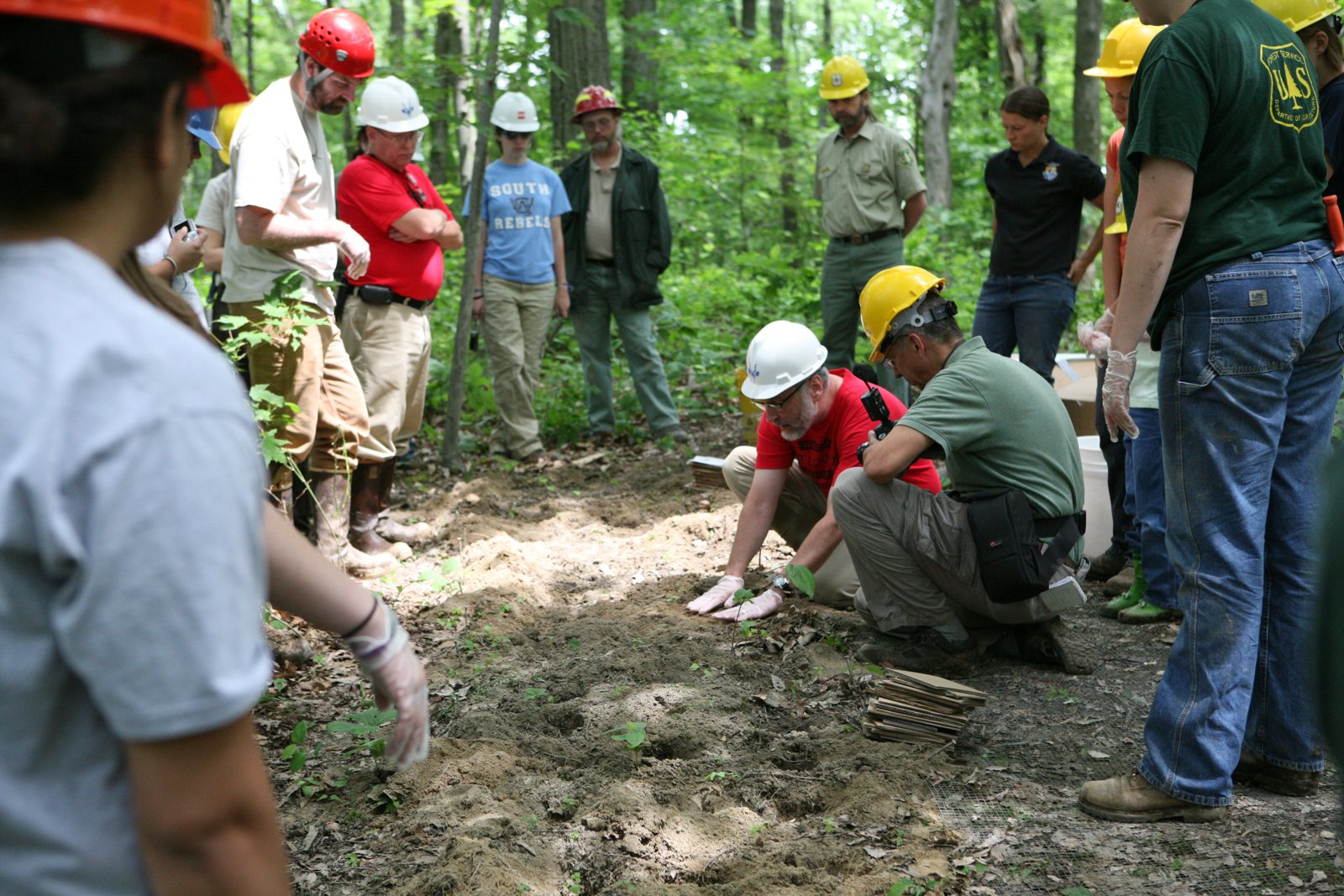
A few hundred miles west, a second effort is just getting started. In late June 2026, the Cincinnati Zoo & Botanical Garden released 312 zoo-raised beetles, or 156 breeding pairs, at Greenacres Foundation land in Indian Hill, Ohio. Each pair went into its own underground chamber with a rat carcass, and fencing went up to keep scavengers out.
“The soil is fantastic out here, and we think the beetles stand the best chance they ever have at this location,” said Mandy Pritchard, the zoo’s team leader of insects. She noted the last recorded specimen in Ohio dates to sometime in the 1950s.
The beetles got right to work. When researchers checked a subset of chambers on July 2, they found 372 larvae.
Then came the real test: would any of those larvae make it to adulthood? Trapping ran from August 10 to September 4, and the team caught two beetles, one male and one female, that were born and emerged at Greenacres. The female had traveled about three-quarters of a mile from where she started.
Two beetles might sound small, but they’re proof that the site works from egg to adult. That’s a big deal for a site in its very first season. Earlier Ohio releases at places like Wayne National Forest and The Wilds didn’t produce populations that could survive on their own. That makes these first homegrown beetles especially welcome.
This fall, the Cincinnati Zoo is trying a couple of new things at Greenacres. It is releasing single retired breeding beetles in cooler weather, and it is piloting staggered breeding releases to answer an open question: can American burying beetles overwinter as larvae?
Why a beetle comeback is worth cheering
The bigger picture has been improving too. Surveys over the past few decades found the beetle in more places out West than anyone knew in 1989: parts of Arkansas, Kansas, Oklahoma, Nebraska, South Dakota, and Texas. A reintroduced population was also established in southwest Missouri. In 2020, the Fish and Wildlife Service reclassified the species from endangered to threatened.
It’s not out of the woods. The Service lists changing climate and rising temperatures as the most significant threat to most populations, along with habitat loss and artificial light. And Nantucket’s beetles still need help from people.
Still, there’s something wonderful about this one. An insect most people have never heard of, raised in buckets by zookeepers, released by volunteers with shovels, and counted one beetle at a time on summer nights, just had a record-breaking year, more than three decades after the rescue began. As Perrotti told the Fish and Wildlife Service, “These are the little things that run the planet.”
Sources
- Roger Williams Park Zoo: American Burying Beetle Recovery: A Conservation Success Story (Oct. 23, 2026)
- Roger Williams Park Zoo: American Burying Beetle Recovery Program
- Greenacres Foundation: American Burying Beetle Conservation at Greenacres (Oct. 2026)
- Cincinnati Zoo & Botanical Garden: Hundreds of American Burying Beetles Released to Help Restore Rare Species in Ohio (July 8, 2026)
- WKRC Local 12: Cincinnati Zoo helps American burying beetle return to Ohio after 75-year absence
- U.S. Fish and Wildlife Service: American burying beetle species profile
- U.S. Fish and Wildlife Service: Beetles get by with a little help from their friends
- Federal Register: Reclassification of the American Burying Beetle From Endangered to Threatened (Oct. 15, 2020)
Image credits
- Female American burying beetle resting on grass, Block Island: Blocky1OOO / Wikimedia Commons, CC BY-SA 4.0. Resized.
- American burying beetle taking flight: Blocky1OOO / Wikimedia Commons, CC BY-SA 4.0. Resized.
- Beetle on a carcass in a release chamber, Ohio, 2011: Wayne National Forest / Wikimedia Commons, CC BY 2.0. Resized.
- Volunteers digging release chambers, Perry County, Ohio, 2011: Wayne National Forest / Wikimedia Commons, CC BY 2.0. Resized.
- American burying beetles in Nebraska, 2012: Jamie Jones / U.S. Fish and Wildlife Service, public domain (work of the U.S. federal government).