Six years ago, the world’s only wild red wolves were down to a handful of animals on a quiet stretch of coastal North Carolina. Federal biologists counted just seven known wolves in the wild and not a single breeding pair. No pups had been born in the wild for three springs in a row.
This spring, four wild red wolf families had 23 pups between them.
That’s the most wild-born pups the program has recorded in more than a decade, and it’s part of a steady climb that’s been building since 2022. The U.S. Fish and Wildlife Service now estimates the wild population at about 34 to 35 wolves. That’s still a tiny number, but for one of the most endangered canids on Earth, it’s the best news in years.
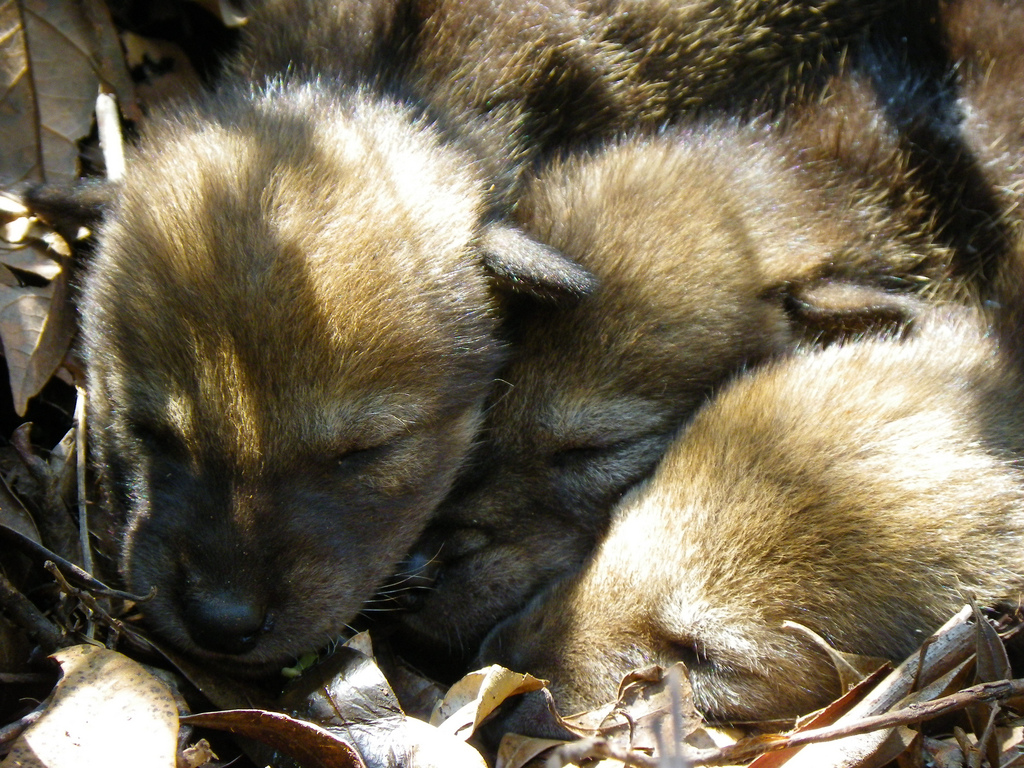
A wolf that vanished from the wild once already
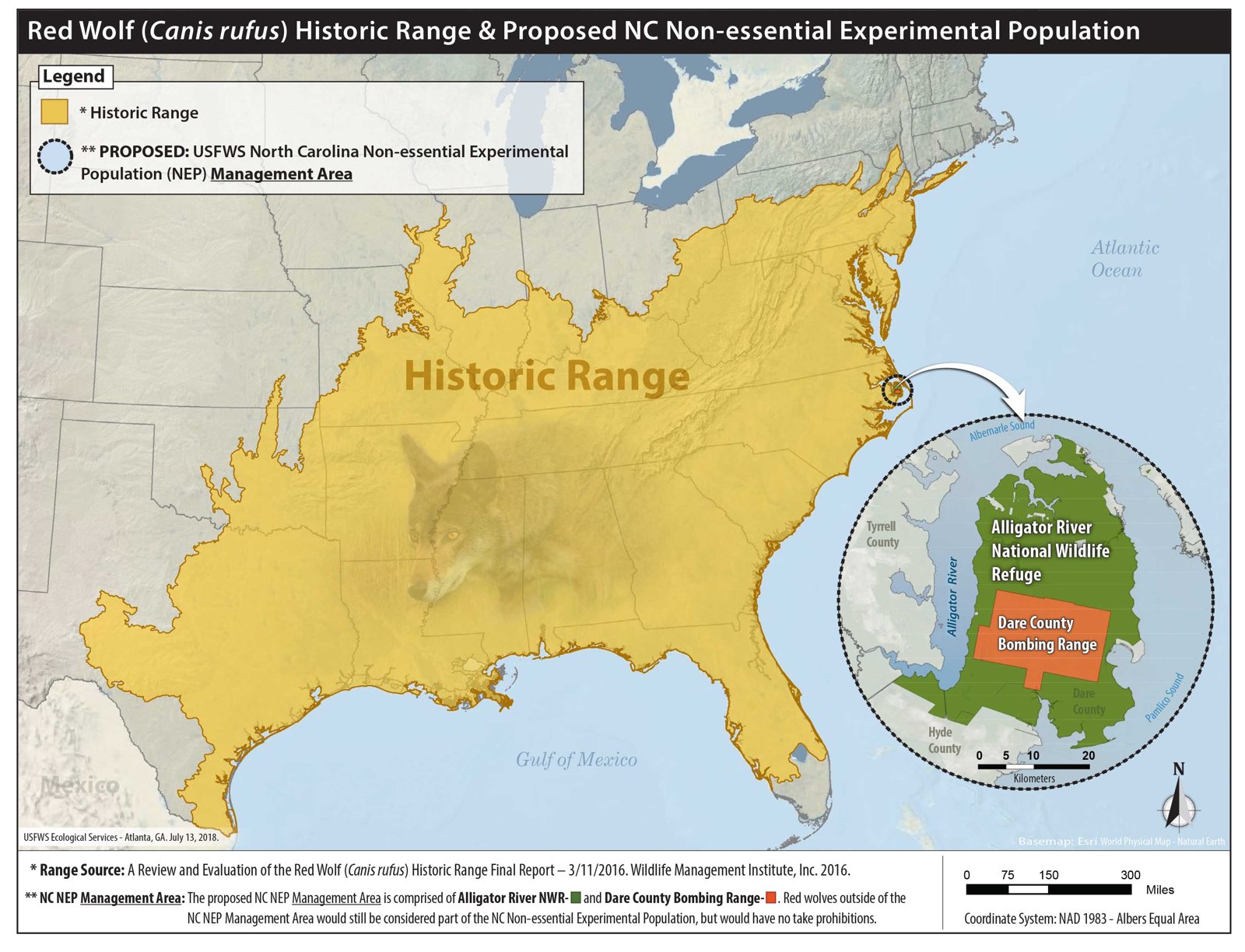
Red wolves are smaller and leaner than gray wolves, with long legs, big ears, and a reddish tint to their coats. They once ranged across much of the eastern and south-central United States. By 1972, hunting, persecution, and habitat loss had pushed the last of them into a small coastal pocket of southeast Texas and southwest Louisiana.
Between 1973 and 1980, the Fish and Wildlife Service made a bold call: trap the remaining wild animals before they disappeared for good. Fourteen of those wolves became the founders of a captive breeding program, and in 1980 the red wolf was officially declared extinct in the wild.
Every red wolf alive today, wild or in a zoo, descends from those 14 animals.
The first comeback, and the fall
In 1987, biologists released eight captive-bred red wolves onto Alligator River National Wildlife Refuge in northeastern North Carolina. It was the first time a large carnivore declared extinct in the wild had been reintroduced anywhere in the United States. Over the next several years, more than 60 adults were released.
The wolves took to it. They claimed territories, formed packs, and raised pups. By 2012, the wild population had grown to an estimated 120 wolves across five counties on the Albemarle Peninsula. The program became a model for later reintroductions, including gray wolves in Yellowstone, California condors, and black-footed ferrets.
Then things went badly wrong. Human-caused deaths, especially gunshots and vehicle strikes, rose sharply, and the population crashed. By 2020, the estimate had fallen to somewhere between 17 and 20 wolves. In 2019, 2020, and 2021, the Service recorded zero pups born in the wild.
How the pups came back
Starting in 2021, the recovery team began releasing more wolves from the captive population, which is managed by zoos and wildlife centers under the Saving Animals From Extinction (SAFE) American Red Wolf program. They also paired lonely wild females with captive-born males in large acclimation pens, hoping new couples would bond before being set free.
The results show up clearly in the program’s own records of wild-born pups:
- 2019 to 2021: no known pups born in the wild
- 2022: 6 pups
- 2023: 13 pups
- 2024: 13 pups
- 2025: 20 pups
- 2026: 23 pups, from four litters
Pup survival in the wild is only about 50 percent, and the program has lost some of this year’s young. Still, by mid-2026 biologists confirmed at least 12 pups on the landscape and possibly as many as 16.
Meet the four families of 2026
The Milltail family. In early April, breeding pair 2503F and 2191M had six pups on Alligator River refuge. The male was born at Wolf Haven International and released into the wild in 2024, so this family is a living link between zoo and wilderness.
The West Alligator River family. Female 2412F, herself born in the wild in 2022, had seven pups. Her litter got a remarkable visitor: three pups flown in from the Saint Louis Zoo. Biologists tucked them into the wild den, a technique called cross-fostering, and moved four wild-born pups to the zoo in exchange. The two litters were born eight days apart, the biggest age gap the program has ever tried. It worked. Since fostering began in 2002, a wild red wolf mother has never rejected a fostered pup when the team’s careful methods are followed, including rubbing the newcomers with the scent of the wild pups.
The Boundary family. Both parents of this little litter of two were born in captivity and later released into the wild, proof that zoo-born wolves can make it out there. Their pups were born on private land owned by someone who welcomes the wolves, through a program called Prey for the Pack that helps landowners improve wildlife habitat in exchange for letting red wolves live there undisturbed.
The Pungo family. Pair 2361F and 2411M had their first litter together, and it was a big one: eight pups. Seven were still doing well at last check.
Tiny transmitters and a lot of patience
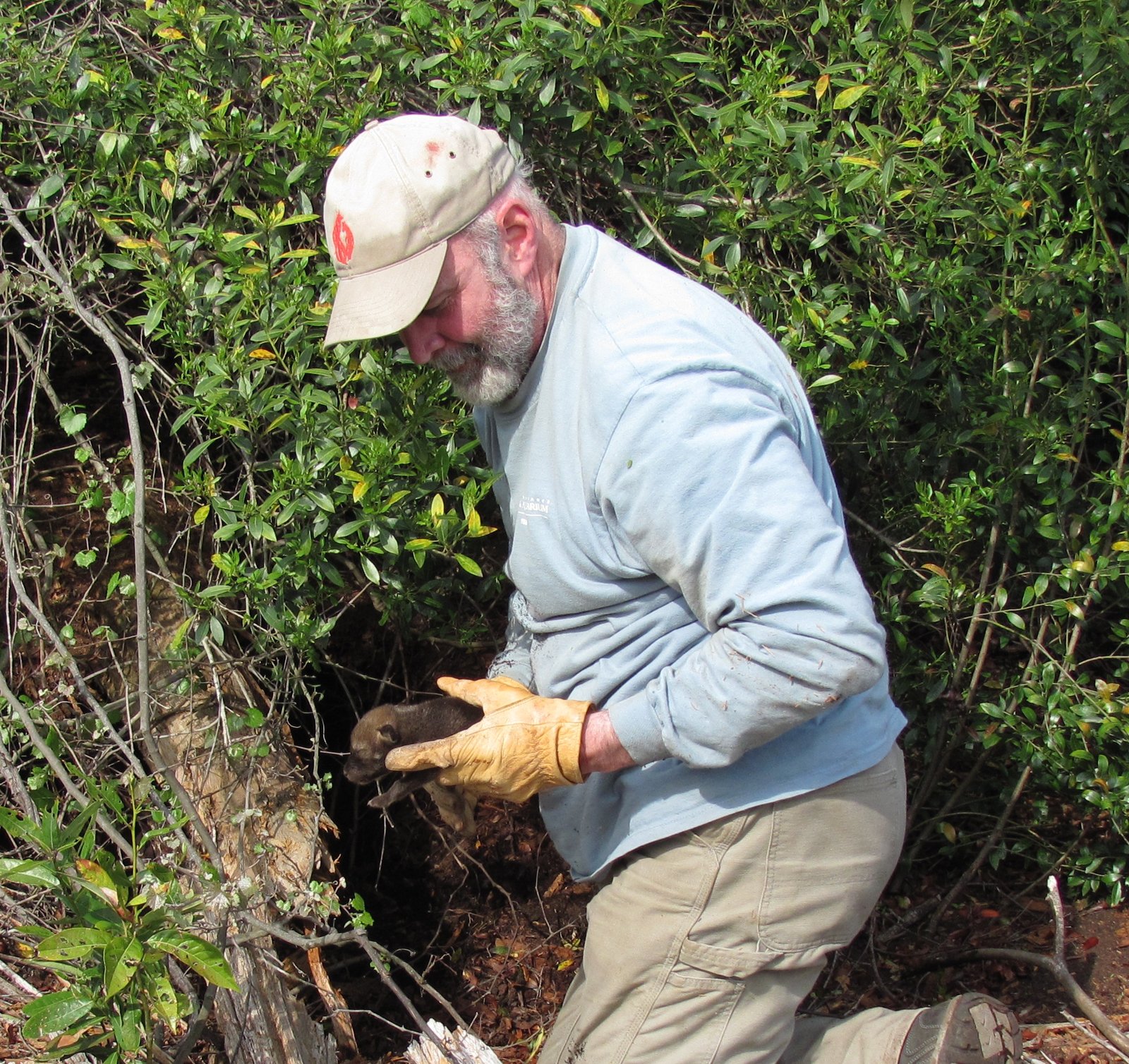
When the pups are about five weeks old, biologists carefully collect them by hand from the den, which is often just a bowl-shaped hollow under thick brush rather than a burrow. A local veterinary team gives them their first vaccines, and each pup gets a small transmitter implanted in its belly. Those signals let the team follow the young wolves from a distance, keep people away from active den sites, and learn quickly when something goes wrong.
Behind every wild wolf stands a much larger safety net. About 295 red wolves live in the SAFE program at 53 zoos and conservation facilities across the country. There’s also an island in Florida’s Gulf Coast, St. Vincent National Wildlife Refuge, where young wolves grow up in a wild setting before being moved north. Biologists plan to capture young wolves there this November for possible release in North Carolina next spring.
Why the story isn’t finished
The recovery team is honest that this is a fragile win. Six adult wolves died in 2026, two of them hit by vehicles. One of those was the Milltail family’s breeding female, killed on the road in July. The wild population also has five unpaired females of breeding age and no unpaired males, which makes new pairs hard to form without more releases.
“Successful recovery requires more than just achieving biological targets,” Red Wolf Recovery Program Coordinator Emily Weller said at a public meeting in late September, pointing to the importance of good relationships with the people who share the land.
That’s what makes this year special. The pups of 2026 weren’t produced by luck alone. They came from zoo staff flying newborns across the country, biologists crawling through brush to find dens, a local veterinary team vaccinating pups, and landowners who decided that wolves were welcome neighbors.
From seven known wild wolves and no breeding pairs to four families and a den full of pups, the red wolf is still hanging on, and this year it gained ground.
Sources
- U.S. Fish and Wildlife Service, Red Wolf Recovery Program (2026 updates, program history, and population table)
- Carolina Journal: NC red wolf population growing, but recovery challenges remain (Oct. 8, 2026)
Image credits
- Featured image: Red wolf at Alligator River National Wildlife Refuge, John and Karen Hollingsworth/USFWS, public domain, via Wikimedia Commons.
- Red wolf pups: DJ Sharp/USFWS, public domain, via Wikimedia Commons.
- Range map: USFWS Southeast, public domain, via Wikimedia Commons.
- Biologist with pup: A. Beyer/USFWS Red Wolf Recovery Program, CC BY 2.0, via Wikimedia Commons.