Here’s a number worth smiling about: 697. That’s how many Kemp’s ridley sea turtle nests biologists and volunteers found on the Texas coast during the 2026 nesting season, according to a joint announcement from the U.S. Fish and Wildlife Service and the National Park Service on November 9, 2026.
That’s a 55% jump from the 449 nests found in 2025. And it’s a long, long way from 1978, when the Texas coast saw roughly one nest every three years.
The Kemp’s ridley is the world’s smallest sea turtle and is often called the most endangered one. Its comeback on Texas beaches is one of the longest-running, most patient rescue efforts in wildlife conservation, and this year it paid off in a big way.
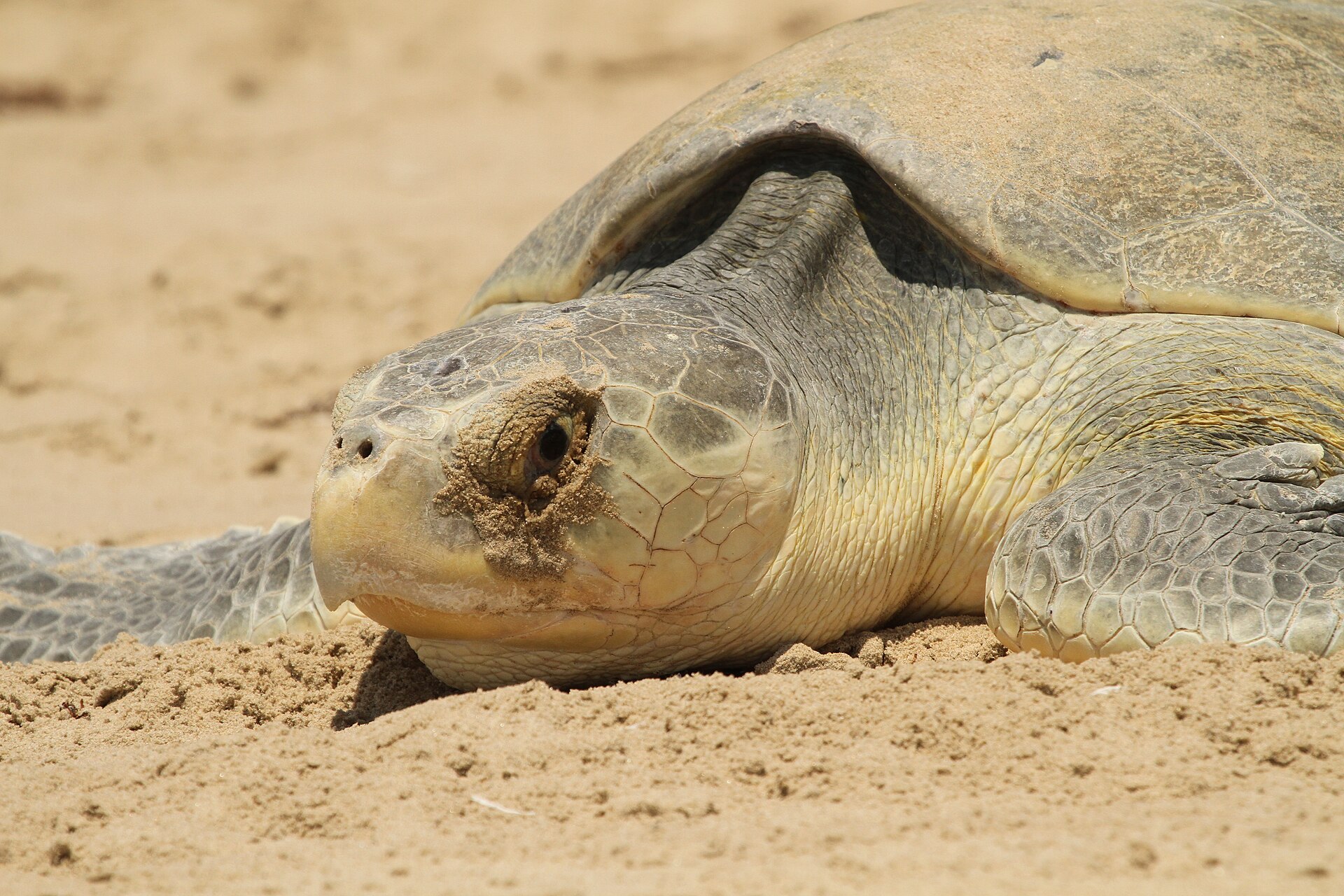
Meet the Smallest Sea Turtle in the World
Adult Kemp’s ridleys weigh about 70 to 100 pounds and measure around two feet long, according to NOAA Fisheries. They have a triangular head, a slightly hooked beak, and a grayish-green shell that’s often about as wide as it is long.
They’re also a little unusual among sea turtles:
- They nest in the daytime. Kemp’s ridleys are the only sea turtle species that routinely nests during the day, while most others come ashore at night.
- They arrive in crowds. In Mexico, females gather offshore and storm the beach together in mass nesting events called arribadas, Spanish for “arrivals.” Scientists still haven’t pinned down exactly what triggers them; wind, the moon and chemical signals are all theories.
- They come home. Like other sea turtles, females usually return to nest near the beach where they hatched, sometimes decades later.
That last trait turned out to be the key to the whole Texas story.
A Species That Nearly Vanished
NOAA notes that an amateur film from 1947 captured tens of thousands of Kemp’s ridleys nesting near Rancho Nuevo, Mexico, in a single day. It’s hard to picture now: a beach so crowded with turtles that they were practically climbing over each other.
Then the population collapsed. Egg collection, drowning in fishing nets and habitat loss pushed the species toward extinction. By 1985, nesting hit a record low of just 702 nests across the species’ range, representing fewer than 250 nesting females, NOAA says.
Here’s the part that gives us goosebumps: this year, Texas alone recorded 697 nests. One stretch of coastline came within a handful of nests of what the entire species managed at its lowest point.
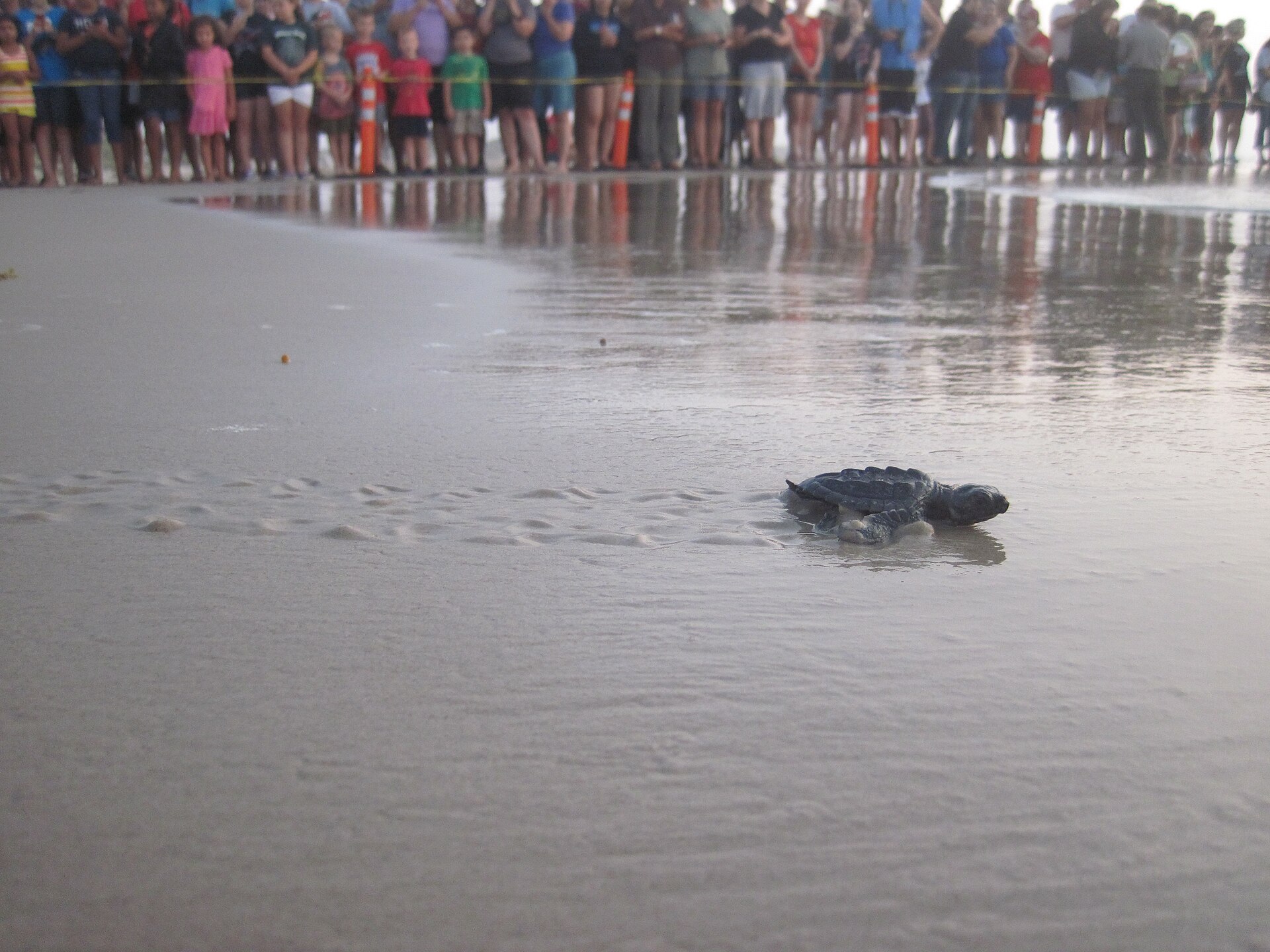
The 1978 Gamble: Teaching Turtles a New Home
In response to the crisis, the U.S. Fish and Wildlife Service, the National Park Service, the National Marine Fisheries Service, Texas Parks and Wildlife and Mexico’s Instituto Nacional de Pesca drew up a restoration plan. One of its boldest pieces started in 1978.
Biologists collected a portion of the eggs laid at Rancho Nuevo, the species’ main nesting beach, and brought them to Padre Island National Seashore in South Texas. There the eggs were incubated and the hatchlings were released onto the sand, so they could “imprint” on Padre Island and, the hope was, one day return to nest there.
After a short swim, the hatchlings were scooped back up and raised in Galveston until they were big enough to be tagged and released. The goal was a self-sustaining nesting colony on the Texas coast.
It was a long bet. Sea turtles take years to mature (NOAA estimates about 13 years for Kemp’s ridleys), so nobody would know for a long time whether it had worked.
Then, in 1996, the first tagged Kemp’s ridleys were found coming back to Padre Island to nest. The turtles had remembered. According to the agencies, some of this year’s nesting mothers trace their family line back in part to those original reintroduced turtles.
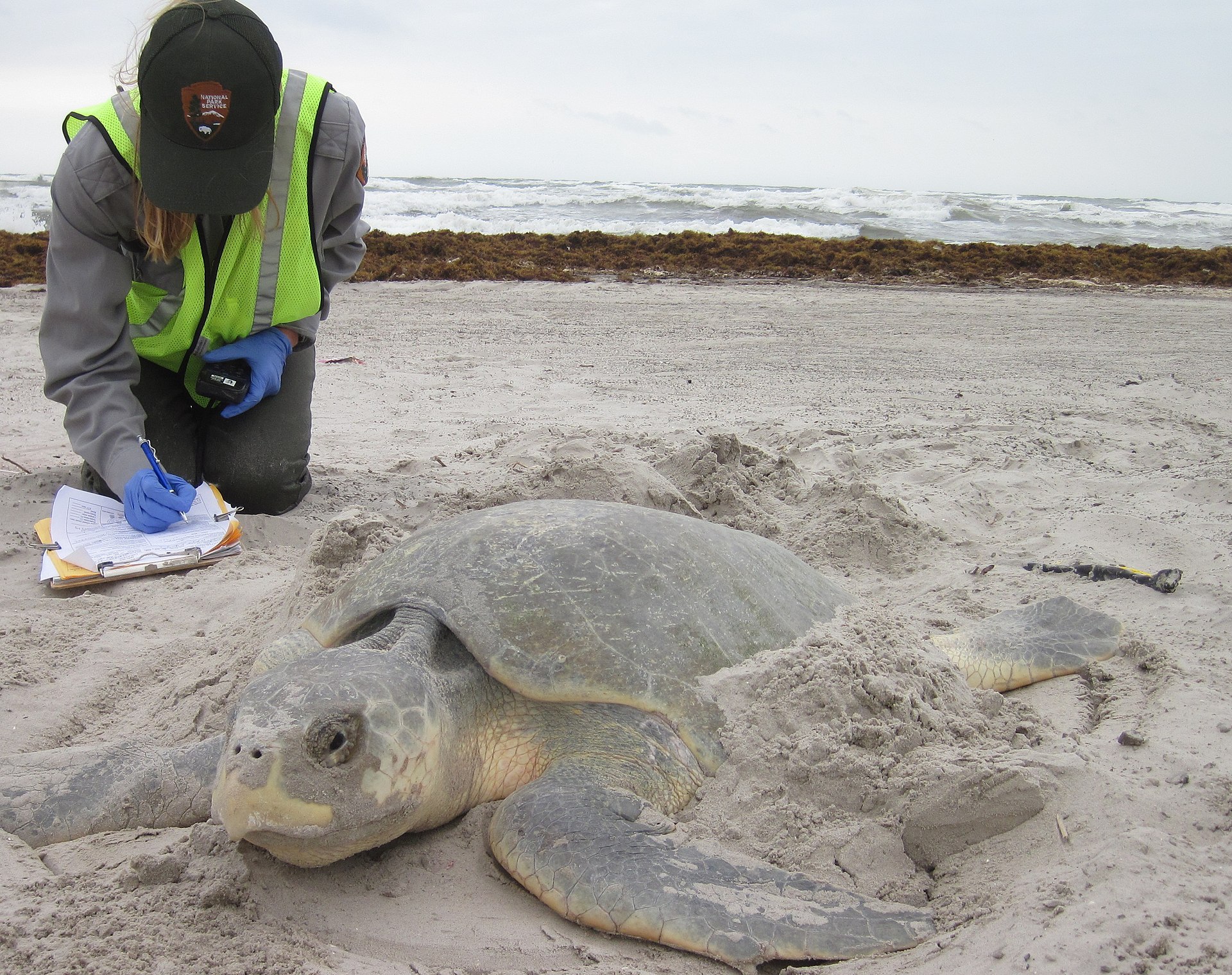
“A Remarkable Success Story”
Dr. Donna J. Shaver, Chief of the Division of Sea Turtle Science and Recovery at Padre Island National Seashore, has been part of this work for decades. Here’s how she put it in the announcement:
“What began as a conservation emergency has become a remarkable success story. On the Texas coast, growing from about one nest every three years in 1978 to nearly 700 nests in 2026 would not have been possible without decades of partnership among thousands of people and organizations across the U.S. and Mexico.”
Every nest found in Texas is counted by trained staff and volunteers who patrol the beaches, plus members of the public who call in sightings. At Padre Island, eggs from reported nests are collected by trained professionals, incubated, hatched and later released on the island’s beaches, which gives each clutch its best shot at survival.
Why 2026 Is Such Good News
The Kemp’s ridley recovery hasn’t been a smooth upward line. NOAA says nesting grew about 15% a year through 2009, but that steady climb stopped abruptly in 2010, and numbers have bounced up and down since. That’s exactly why a 55% year-over-year jump in Texas is so encouraging.
The agencies say biologists are optimistic about where the species is heading and how it’s tracking against the goals in the Binational Recovery Plan shared by the U.S. and Mexico. It’s worth remembering that Mexico remains the heart of the species’ range: NOAA says about 95% of all Kemp’s ridley nesting happens in the state of Tamaulipas.
The turtles still face real threats. Accidental capture in fishing gear is the biggest one, and others include boat strikes, ocean trash, beach driving and changing ocean conditions. But tools like turtle excluder devices in shrimp nets, protected beaches in both countries and an army of volunteers have given the species a fighting chance.
How Beachgoers Help
One of the loveliest parts of this story is how much ordinary people matter. During nesting season, from March to September on the Texas coast, the agencies ask beachgoers to:
- Drive slowly on Texas beaches, since nesting turtles are easy to miss and can’t move out of the way quickly.
- Keep at least 100 feet away from any turtle.
- Call 1-866-TURTLE-5 to report stranded, injured or nesting sea turtles, as well as nests and tracks.
“Seeing a nesting turtle is an amazing life experience, and by reporting them you help ensure the species’ future,” said Cynthia Rubio, a U.S. Fish and Wildlife Service biologist.
Alicia Walker, a Texas Parks and Wildlife biologist who coordinates the state’s Sea Turtle Stranding and Salvage Network, added that “every report of a nesting, cold-stunned or stranded sea turtle helps us respond quickly and give these species their best chance at survival.”
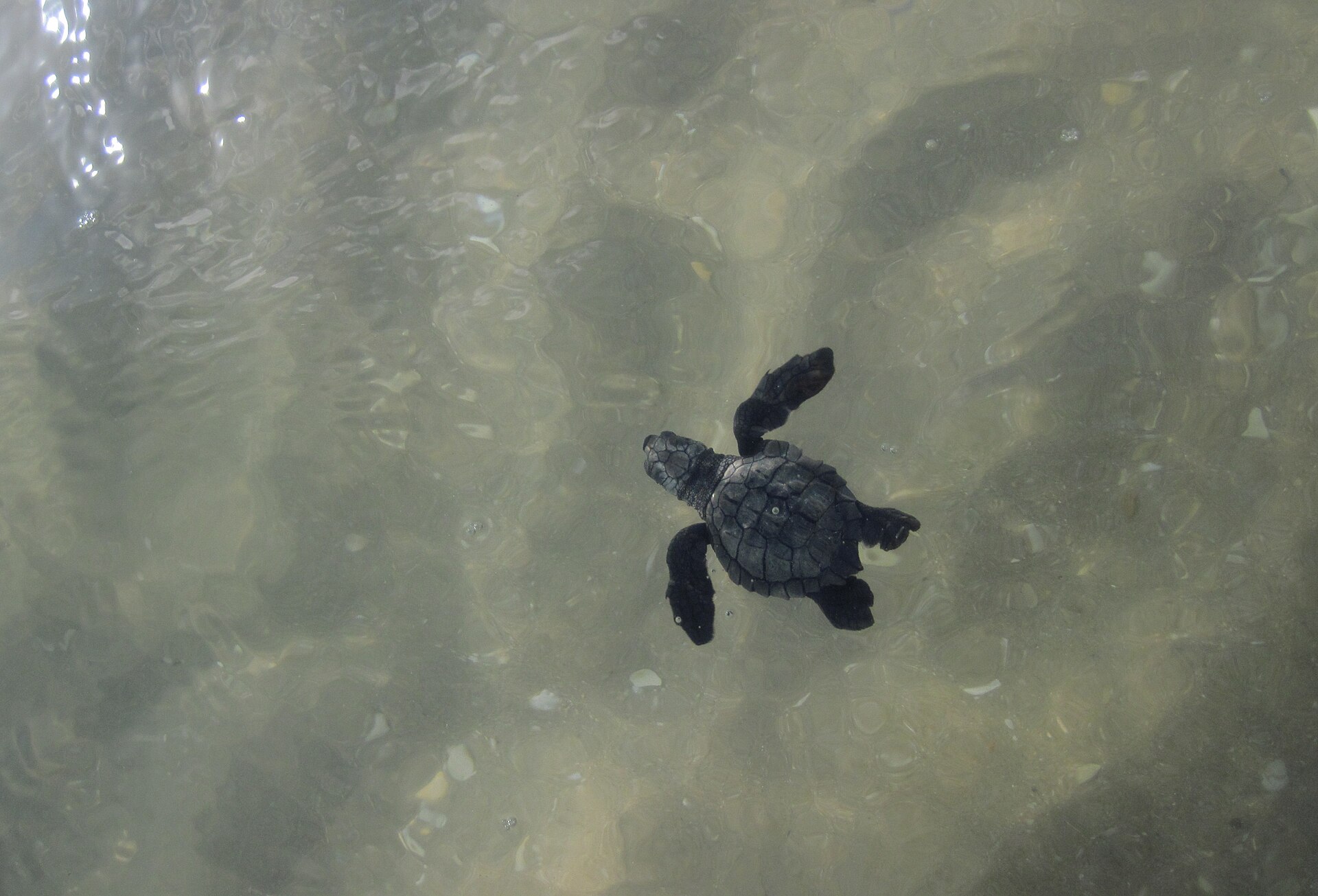
The Bottom Line
Nearly 50 years ago, a group of scientists carried turtle eggs across a border and hoped the babies would remember a beach they’d only touched for a few minutes. It took almost two decades to learn the plan worked. Now, nearly 700 nests later, the smallest sea turtle in the world is turning Texas beaches back into a nursery.
Sometimes the best conservation stories are the slow ones. This is one of them.
Sources: National Park Service / U.S. Fish and Wildlife Service news release, Nov. 9, 2026; NOAA Fisheries, Kemp’s Ridley Turtle species profile.
Photo credits: All photos by NPS Staff, Padre Island National Seashore, Division of Sea Turtle Science and Recovery (public domain), via Wikimedia Commons: nesting female, Dr. Donna Shaver documenting a nest, hatchling crawling to the water, hatchling swimming out to sea. Photos are from 2011 and illustrate the program; they are not from the 2026 season.