On an ordinary Tuesday in Panama City, Florida, NOAA biologists were deep in their usual work—shark data, fish surveys, the steady rhythm of a coastal science lab. Then came a sound that did not belong: a sharp, insistent tapping at the glass entryway.
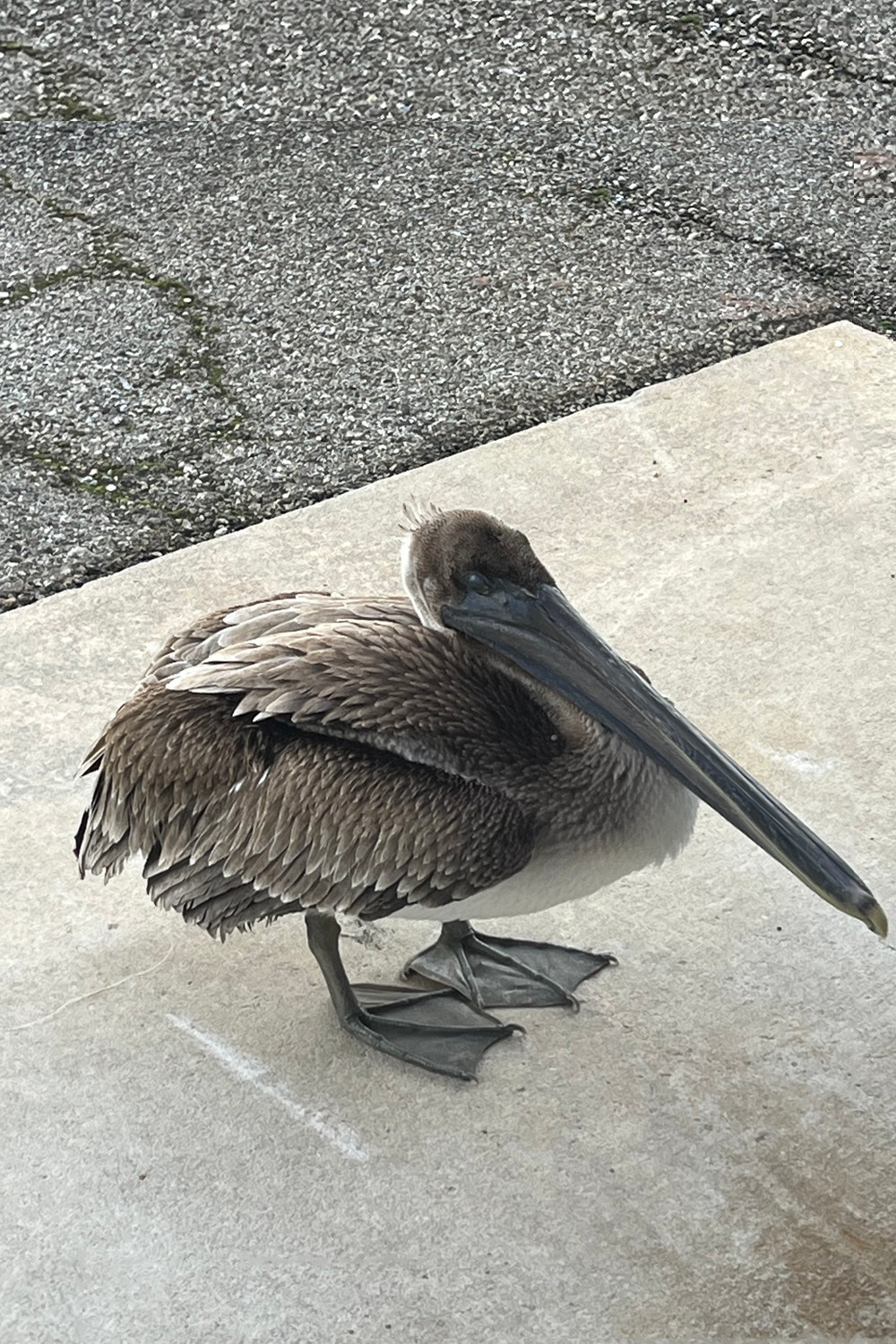
Standing on the stoop was a brown pelican, rapping its beak against the door.
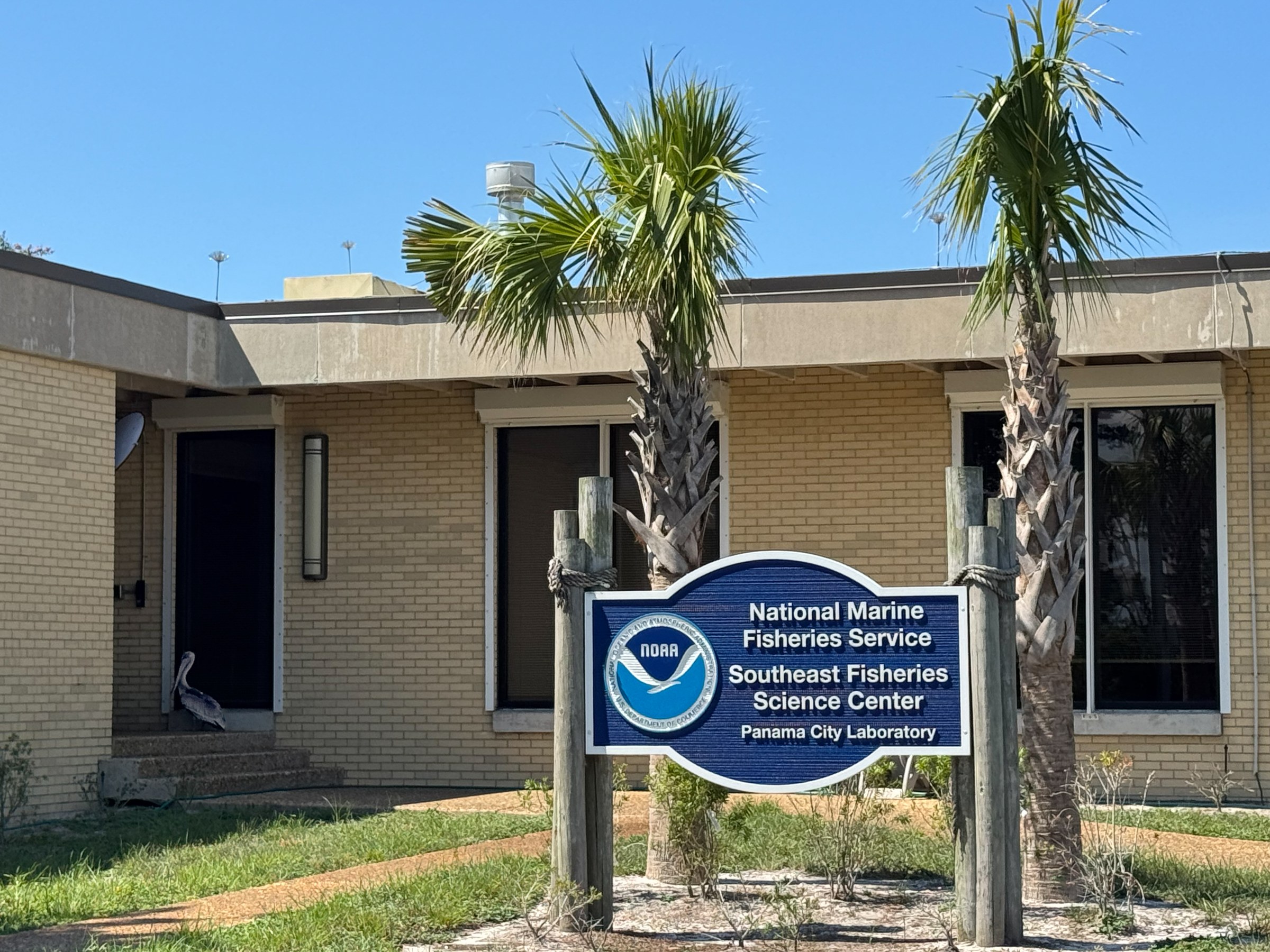
A walk-in patient with a fishing-line problem
When a staff biologist opened the door, the emergency was obvious. The pelican was tangled in heavy-duty fishing line. A double-barbed treble hook was deeply embedded in its right wing. Cactus spines stuck in its left foot. Monofilament trailed behind the bird like an invisible leash.
Fishing gear like this is a known hazard for coastal wildlife, and this pelican had made its way to the front steps of NOAA’s Southeast Fisheries Science Center Panama City Laboratory.
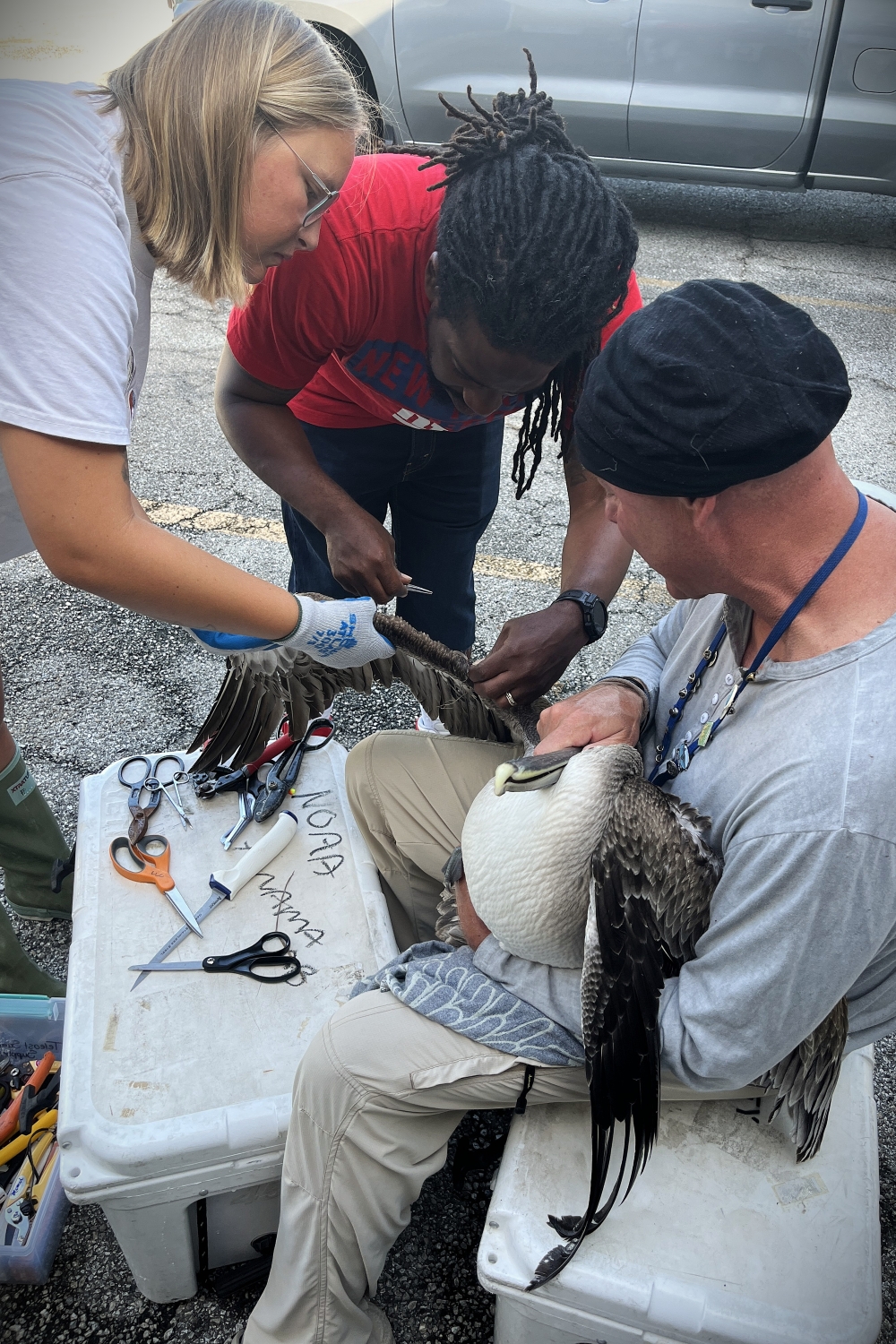
Shark biologists, steady hands, ten minutes
NOAA’s Panama City team spends a lot of time handling powerful marine animals—tagging sharks, implanting acoustic transmitters, working carefully around thrashing predators at sea. A calm seabird on the doorstep was a different kind of challenge, but the skills transferred.
Biologists Annsli Hilton, Naeem Willett, and Dr. John Carlson restrained the pelican safely. They snipped the hook’s barb, eased the treble hook free of the wing, and unspooled several feet of monofilament wrapped around the bird. The whole operation took about ten minutes.
Through it all, staff reported, the pelican stayed surprisingly calm—almost as if it understood it was finally in the right place.
Clean bill of health—and a free flight home
Once the gear was gone and the bird checked out healthy, the pelican took to the sky, free of hook and line.
That ending is rare enough to celebrate. Not every entangled animal gets help. Discarded monofilament is nearly invisible in water and on docks. Over time it frays into smaller pieces that can last for years, forming deadly tangles that snare wings, bills, feet, and necks. NOAA’s warning is blunt: those tangles can strangle, injure, or kill coastal wildlife.
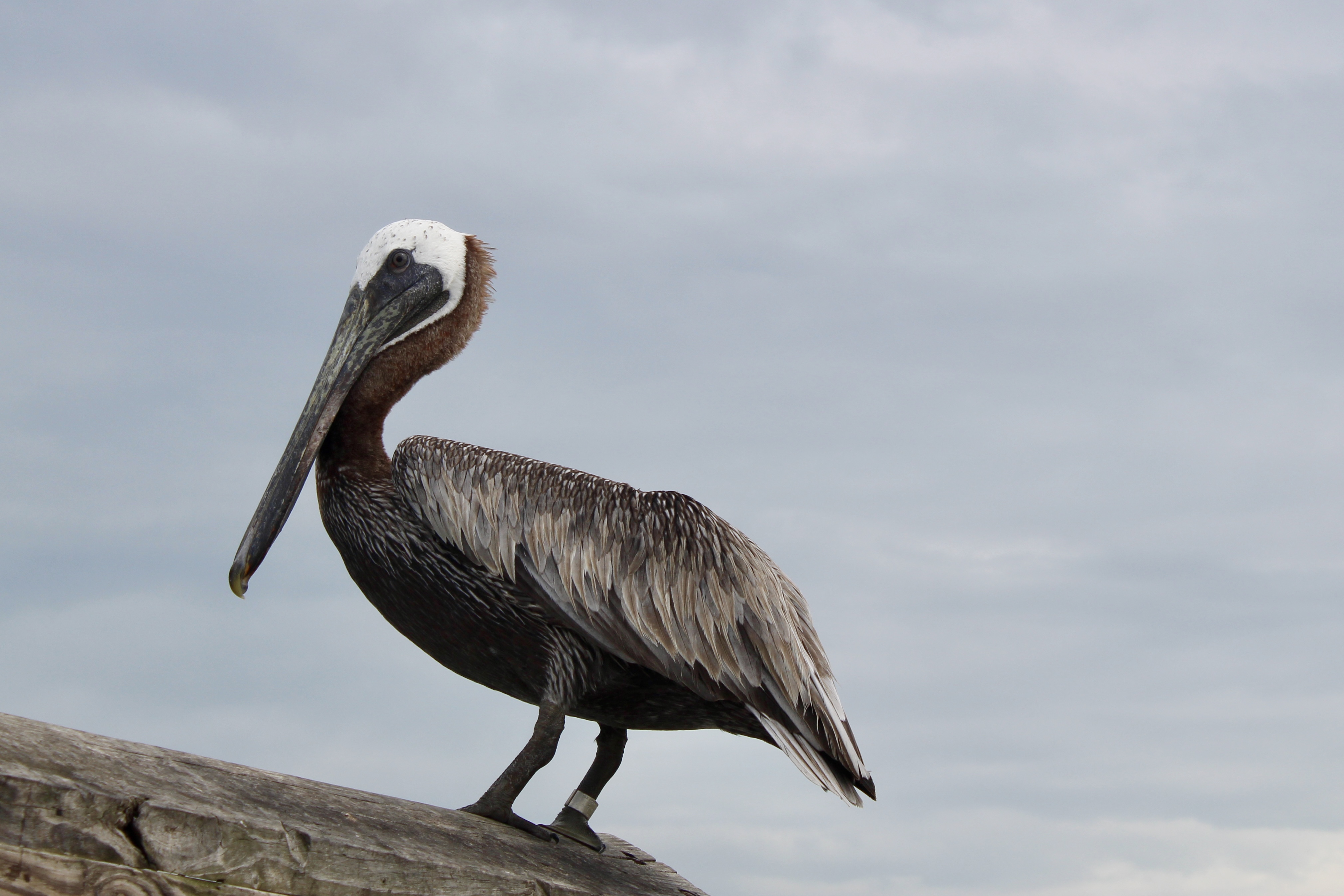
Why this bird’s knock matters
Brown pelicans are one of North America’s great conservation comebacks. Driven toward collapse by DDT and other pressures in the mid-20th century, they recovered enough for the U.S. Fish and Wildlife Service to remove the species from the federal Endangered Species List in 2009. Seeing one knock on a federal lab door in 2026 is a reminder that recovery is never finished—it still depends on cleaner coasts and careful people.
NOAA’s feature story on the Panama City rescue puts the hazard plainly: improperly discarded fishing line remains a silent, deadly threat to coastal wildlife. The biologists’ advice is simple and practical:
- Stow used line in a secure container instead of tossing it.
- Drop scrap monofilament in designated recycling bins at boat ramps when they are available.
- Consider barbless hooks, which are far easier to remove if a bird or person is snagged by accident.
Florida’s Fish and Wildlife Conservation Commission also urges anglers who hook a bird not to cut the line and leave it trailing. Their guidance is short: reel, remove, release—then get help if you need it.
A small doorstep story with a big coastal lesson
There is something almost storybook about a pelican knocking for help. What matters is that the people inside were ready: calm hands, the right tools, and a few careful minutes that put a wild bird back in the sky.
Most rescues will never look this cinematic. They start with small habits: a secure container for old line, a recycling bin at the ramp, a barbless hook. This Panama City pelican got the fairy-tale version—and flew away free.
Source: NOAA Fisheries, “Knocking for Help: A Pelican’s Unlikely Rescue,” Sept. 15, 2026. Photos from the rescue are U.S. government work (public domain). Species photo credited above.