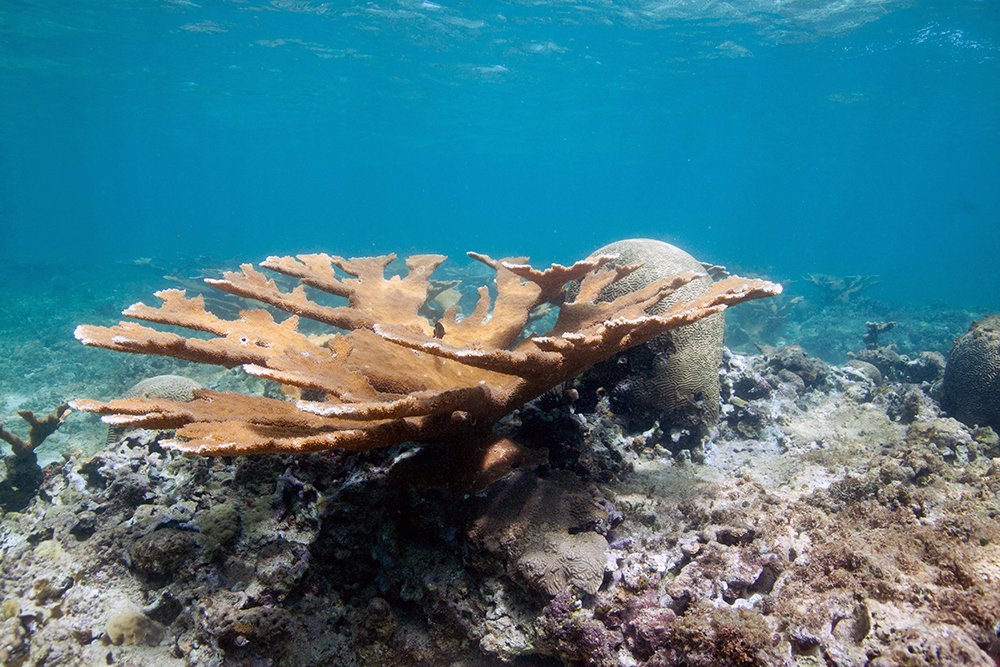
Earlier this year, coral biologist Manuel Nieves dropped beneath the waves off Fajardo, on Puerto Rico’s east coast, to check on some corals he and his team had planted. What he found made the dive worth it: a flash of bright orange, the color of healthy elkhorn coral, with pale white tips that meant the branches were still growing. Plots planted last year and plots planted this year had started to grow into each other, forming a wall of thriving coral.
That reef is Cayo Largo, and it’s now the site of one of the biggest coral restoration pushes in Puerto Rico. NOAA Fisheries shared the story on November 2, 2026, and it’s a good one: a reef that came through brutal heat waves better than its neighbors, a team planting hundreds of corals a day, and a plan to turn it into a nursery for the rest of the island.
A $5 million bet on one reef
With $5 million from NOAA Fisheries’ Office of Habitat Conservation, the Puerto Rico restoration group Sea Ventures is restoring about 30,000 square meters of reef habitat at Cayo Largo. NOAA puts that at roughly five and a half football fields of seafloor.
The goal is big too. By 2028, the team plans to plant 30,000 individual elkhorn corals across 60 restoration plots. In September they finished the first year of this expanded effort.
This isn’t a brand-new project, though. Sea Ventures and NOAA have been working on Cayo Largo since 2018. Some of the corals they planted in those early years have grown big enough to be trimmed for fragments, which then go on to start new colonies elsewhere on the same reef. Restoration is literally feeding more restoration.
The reef that held on
Here’s the part that makes Cayo Largo special. During the marine heat waves of 2023 and 2024, elkhorn populations at some restoration sites in southwestern Puerto Rico suffered what NOAA calls catastrophic losses. At Cayo Largo, both the wild elkhorn and the restored corals fared much better.
Nobody knows exactly why yet. It could be the corals’ genetics, local conditions on that part of the coast, or something else entirely. But a reef full of survivors is exactly where you’d want to invest, and healthy natural elkhorn thickets still grow in parts of Cayo Largo.
“I think the fact that we have remaining healthy corals shows a potential for recovery,” said Michael Nemeth, a NOAA marine habitat resource specialist contracting with Entarian. “And the work that Sea Ventures is doing is helping that and speeding up recovery.”
Why elkhorn coral matters so much
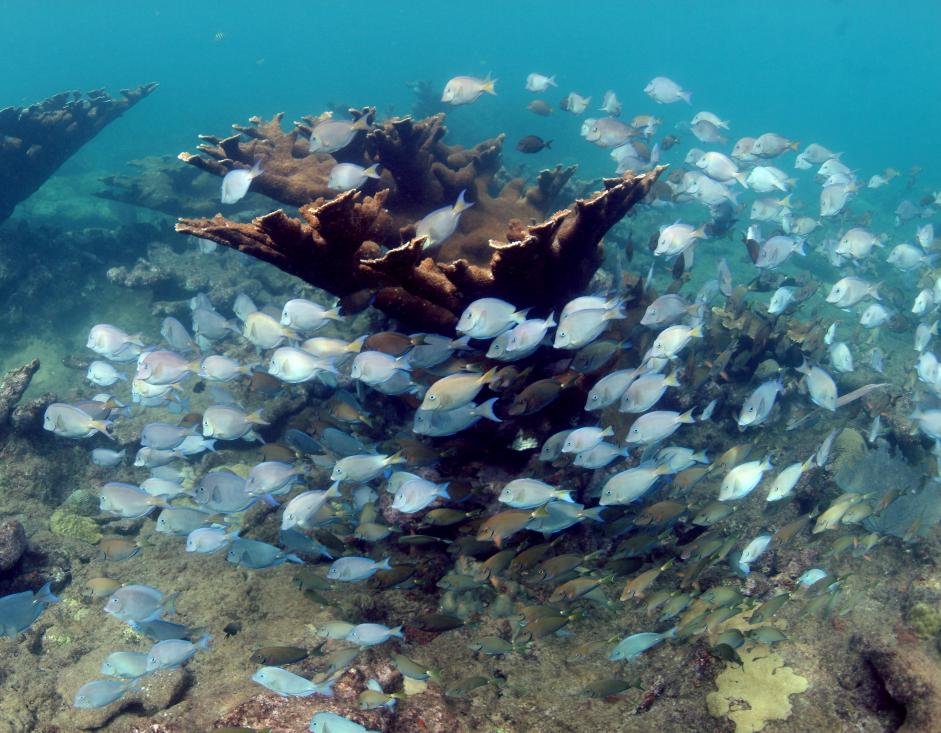
Elkhorn coral (Acropora palmata) was once the dominant reef-building coral across the Caribbean. Its thick, flattened branches look a bit like a moose’s antlers, and they build the kind of three-dimensional structure that fish, lobsters, and countless other animals depend on. Today it’s a threatened species.
It doesn’t grow as fast as some other branching corals, but it’s tough. “We found that over the longer term, elkhorn are the ones surviving the hurricanes and withstanding these big swells, and they grow more significant reef structure,” said Sea Ventures project manager Sean Griffin. “Even if they die, they’re leaving behind hardier substrate that survives storms as well.”
That toughness matters on this coastline. Cayo Largo sits off one of the most hurricane-battered parts of Puerto Rico, and reefs act like natural breakwaters. NOAA notes that some studies suggest coral reefs can reduce wave energy by as much as 97 percent. A healthy reef isn’t just pretty; it’s coastal protection for the people living behind it.
How you plant a coral reef
The planting itself is surprisingly hands-on. On a good day, a crew of six divers, a boat captain, deckhands, and scientists can place 300 to 500 coral fragments.
Up on the boat, deckhands mix buckets of a special cement mortar and pass them down to the divers. “We make a little dome of cement,” Nieves explained. “The size depends on the fragment. They can range from tennis ball-sized to almost basketball-sized. Then we place the coral on top and set it on the reef.” The cement hardens into an inert part of the reef and holds the young coral firmly in place.
To keep their bets spread out, the team plants at least 10 different elkhorn genotypes in every plot. That way, if disease, bleaching, or a storm hits, some corals are more likely to pull through than others. They’re also adding boulder and other massive coral species so the reef doesn’t end up as a single-species monoculture.
Mowing the lawn, underwater
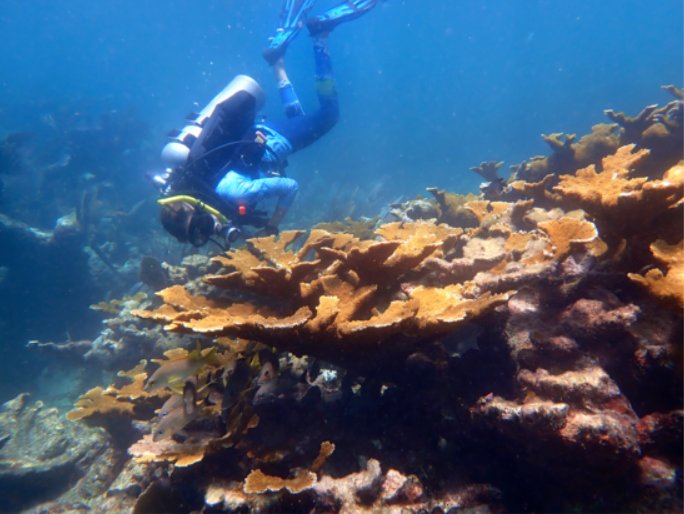
Once the corals are in, the team keeps watch using photomosaics. Divers swim over each plot in a lawnmower pattern with cameras, snapping 2,500 to 4,000 photos. Back on shore, those images are stitched into a high-resolution 3D map of the reef. Repeat the survey over time, and scientists can measure exactly how much each coral grew, which ones survived, and how the reef’s shape is changing.
David Repollet, a University of Puerto Rico Ph.D. student and Sea Ventures scientist, is analyzing that data for his dissertation. The numbers are still being crunched, but what he’s seen underwater has him excited. “It’s very impressive, it goes from a small bit of palmata on cement to having branches and the whole cement mound overgrown in the first year and a half,” he said. “That’s healthy, very motivated-to-grow palmata.”
He’s honest about the limits, too: not every outplant survived, and future bleaching events remain a real threat.
Rescued corals and a frozen backup plan
Planting 30,000 corals takes a lot of starter material, and it has to be genetically diverse. So Sea Ventures goes looking for corals that need rescuing: fragments knocked loose by storms or waves, and young corals that settled on loose rubble where they’d likely die.
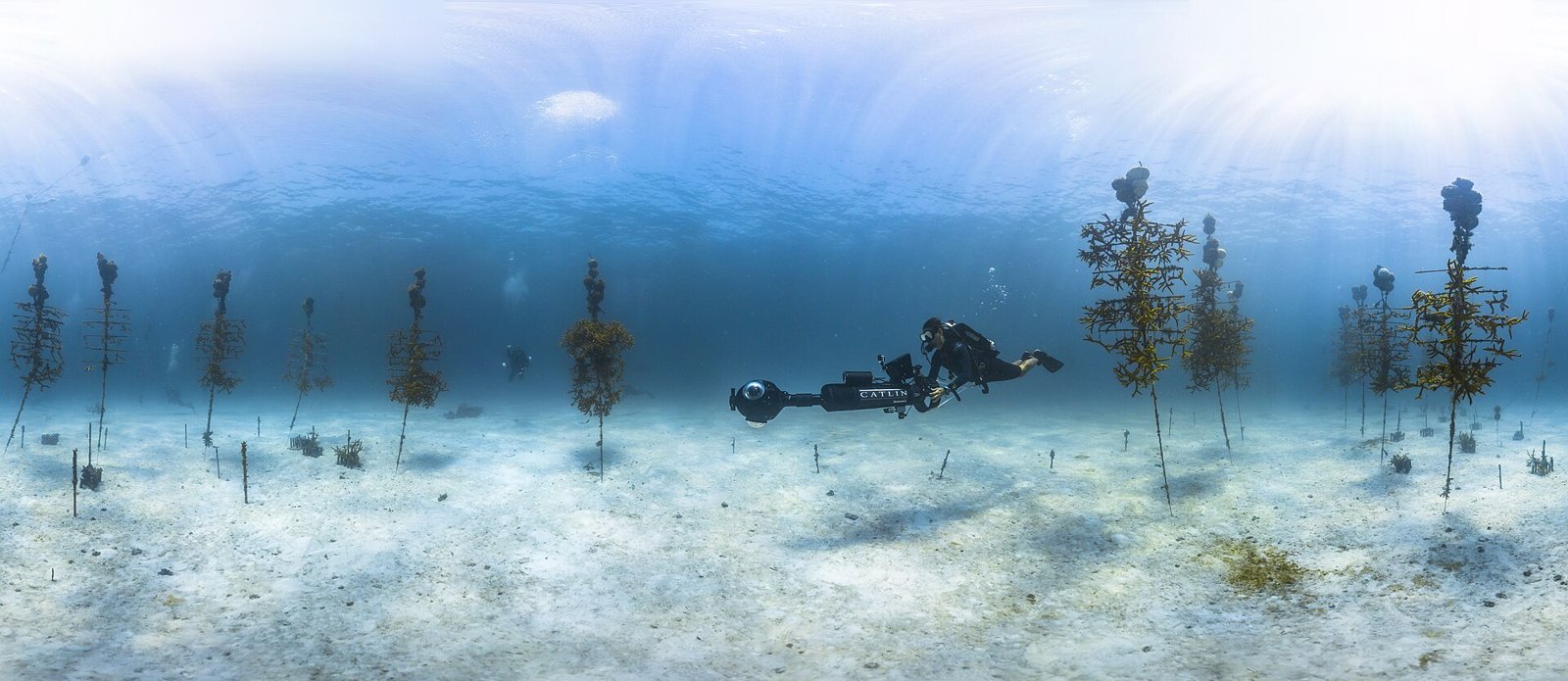
One of the more unusual sources is an abandoned Navy dry dock, where healthy brain corals and other massive corals have grown on the dock’s vertical concrete walls. Because the dock’s future is uncertain, the team is moving those corals to new homes. Rescued corals are cut into fragments and grown in ocean nurseries until they’re sturdy enough to plant.
There’s also a backup plan. With NOAA funding, Sea Ventures is biobanking coral genetics from around Puerto Rico. Some fragments go to laboratories at ISER Caribe, where partners cryogenically freeze coral tissue and keep live corals in tanks. If a particular genotype is ever wiped out in the wild, it won’t be lost forever.
Training the next reef keepers
The project is investing in people as much as corals. Students get hands-on field experience, and residents from a nearby fishing community are training as coral restoration technicians, including scuba certification up to the PADI Rescue Diver level. It’s a skill set tied directly to the health of reefs their families have fished for generations.
The team is also tackling what Nieves calls a huge disconnect: many people in Puerto Rico, even on the coast, know little about the reefs offshore. “You can’t protect what you don’t know,” he said. Their solution is clever: virtual reality goggles loaded with 360-degree video shot at the restoration site, so kids and adults at schools and community events can “dive” Cayo Largo without getting wet.
What comes next
Sea Ventures will keep restoring Cayo Largo through at least 2028, and the photomosaic results will help shape how future reefs are rebuilt.
“I hope that in 5 to 10 years Cayo Largo will be covered in thickets of palmata and other species,” Griffin said. “It could become an extremely healthy restored reef. We can use those corals that we’ve grown there to help seed and restore other reefs around Puerto Rico.”
Nieves is optimistic too. “Now is the best era for restoration,” he said. “We have better information and technology than ever before. We just need to get more people involved and be aggressive in restoration and education.”
A reef that survived the heat, a team planting it back one cement dome at a time, and a community learning to love what’s under the water. That’s a pretty amazing thing to be happening right now.
Sources
Image credits
- Transplanted elkhorn coral near Vega Baja, Puerto Rico: NOAA’s National Ocean Service, public domain, Wikimedia Commons.
- Blue tangs around elkhorn coral, Puerto Rico: NOAA / Efrain Figueroa, public domain, Wikimedia Commons.
- Diver with elkhorn coral, Horseshoe Reef, Florida Keys: Ananda Ellis/NOAA, public domain, Wikimedia Commons.
- Coral nursery, Florida Keys National Marine Sanctuary: NOAA National Marine Sanctuaries, public domain, Wikimedia Commons.
Photos in this story show elkhorn coral and restoration work in Puerto Rico and Florida; they are not photos of the Cayo Largo project itself.