For more than a decade, biologists in western North Carolina kept setting up their nets in the dark, hoping to catch one particular little bat. Night after night, year after year, it didn’t show up.
Then, in 2026, it did. Not just one, but a whole family group, tucked under the bark of a dead tree deep in one of the oldest forests in the eastern United States.
The animal is the Indiana bat, a small, endangered bat that was nearly wiped out in many places by a disease called white-nose syndrome. And North Carolina isn’t the only place with good news about it. In Indiana, where the species got its name, state biologists say the bats are holding steady or slowly climbing after years of careful protection.
A surprise in the nets
The North Carolina find came almost by accident. According to the North Carolina Wildlife Resources Commission (NCWRC), its biologists were working with the U.S. Forest Service and Brown Environmental 13 in the Nantahala National Forest in Graham County. They weren’t looking for Indiana bats at all. They were searching for “survivor colonies,” groups of bats that have somehow made it through white-nose syndrome.
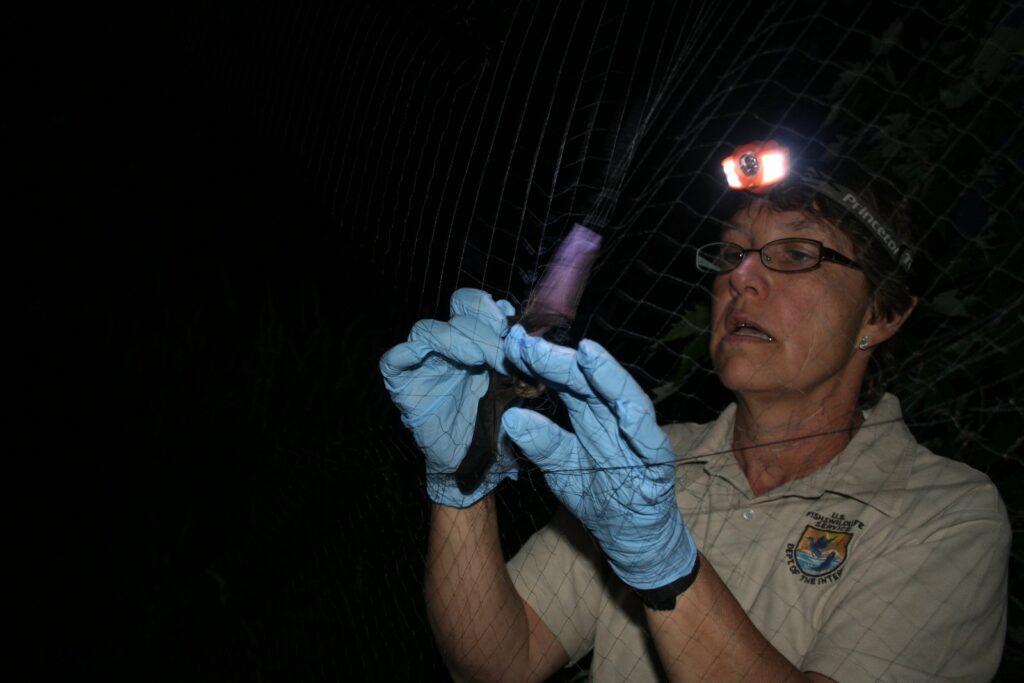
The team had recently caught little brown bats, another species hit hard by the disease, so they widened their search. To catch bats, researchers string up mist nets, which are very fine nets that bats fly into without getting hurt, so biologists can check them and let them go.
What turned up in those nets was a shock: Indiana bats. The species had not been caught in a mist-net survey in North Carolina since 2015. In the years in between, NCWRC says, the only confirmed Indiana bat in the state was a single animal found during a roost survey in Haywood County about five years ago.
“It was a surprise for sure and was so fulfilling after spending a decade on surveys that didn’t result in Indiana bat captures,” NCWRC bat biologist Katherine Etchison said in the agency’s report. “We always hope we’re going to catch this species, and we put in the work to catch them, but they’re just so rare nowadays.”
Following the bats home
The biologists caught five Indiana bats, and all five were reproductive females. That detail mattered. Female Indiana bats spend the summer in groups called maternity colonies, where they give birth and raise their pups together.
So the team fitted two of the females with tiny radio tags and tracked them. The signals led to a dead eastern hemlock tree in the Joyce Kilmer-Slickrock Wilderness. At sunset, the researchers watched and counted as bats streamed out of the tree. There were 24 of them.
That made it a confirmed maternity site: a place where a group of mothers had chosen to raise the next generation.
“This was a big find for us,” Etchison said. NCWRC says plans for future monitoring are already underway so the team can learn more about the colony.
Why an old, dead tree is the perfect nursery
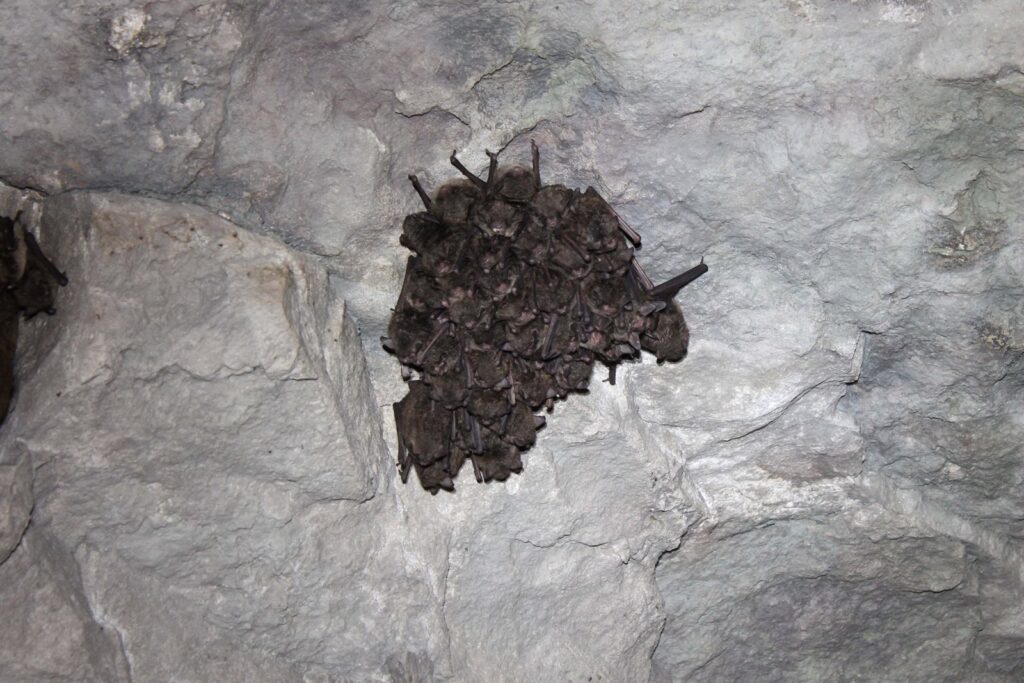
Indiana bats live two very different lives depending on the season. In winter, they hibernate in caves and mines, often packed together in tight clusters. According to the conservation group Defenders of Wildlife, as many as 300 bats can fit in one square foot of cave ceiling.
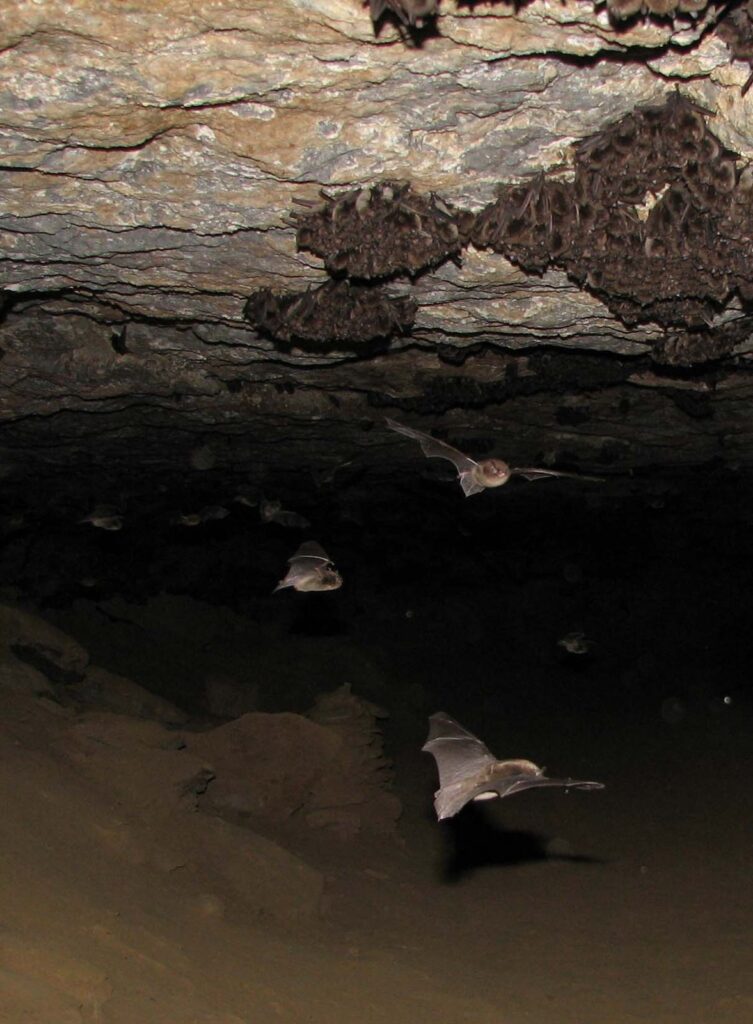
In the warmer months, females leave the caves and move into forests. They roost under the loose, peeling bark of large trees, especially dead or dying ones. That is exactly what the old hemlock in the Joyce Kilmer-Slickrock Wilderness offered.
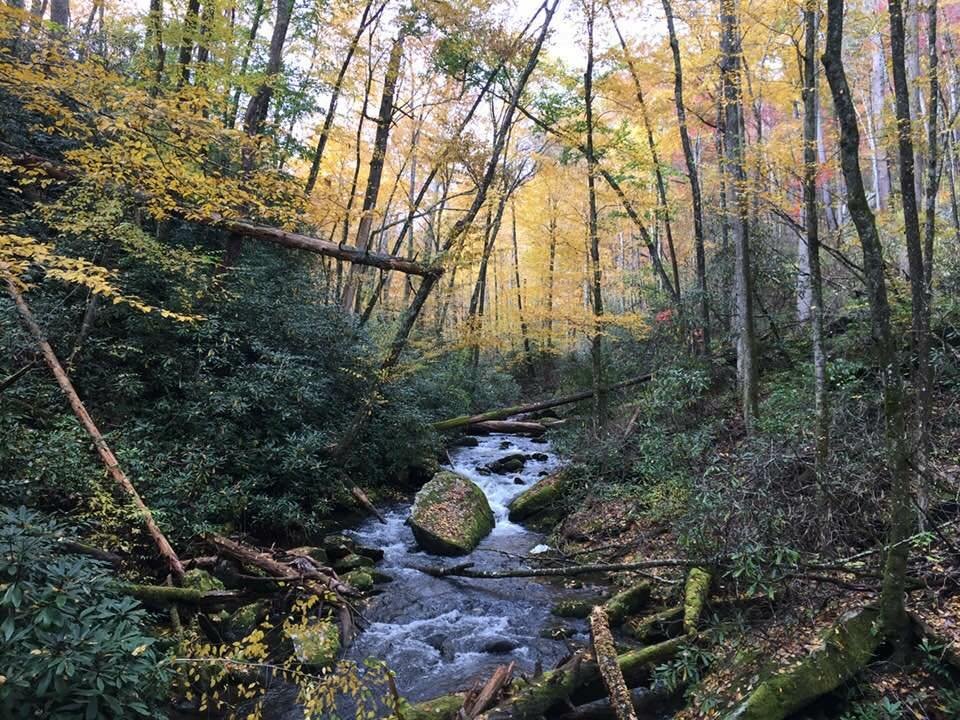
The wilderness sits within the Nantahala National Forest and protects some of the largest stands of old-growth forest left in the eastern U.S., including some of the biggest trees in the Southeast. Most of our forests are younger and more managed, so big old trees with shaggy bark are not easy to come by.
The disease that emptied the caves
To understand why 24 bats in one tree is worth celebrating, you have to know what these animals have been through.
White-nose syndrome is caused by a fungus called Pseudogymnoascus destructans. It grows on bats while they hibernate, showing up as a white fuzz on their noses, ears, and wings. Infected bats wake up too often during winter and burn through the fat they need to survive until spring.
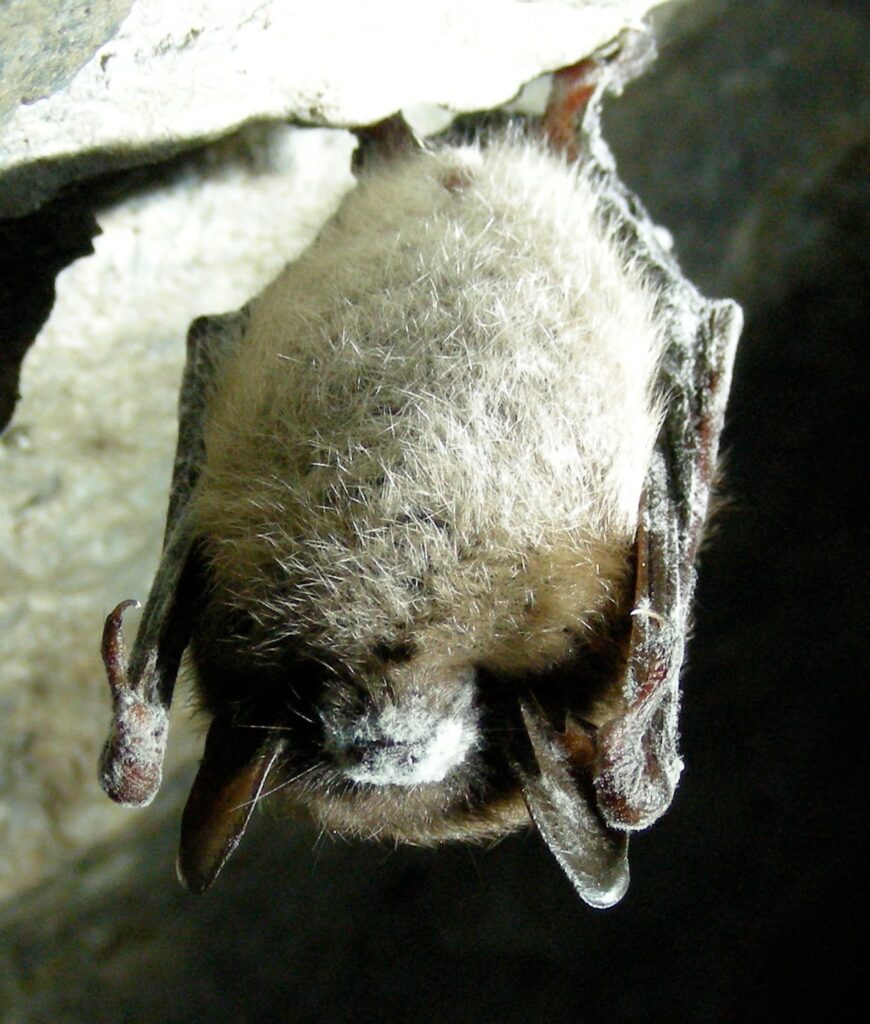
The disease was first noticed in New York in 2006. According to the Indiana Department of Natural Resources (DNR), it has since spread to 42 states and nine Canadian provinces and has killed an estimated 5.7 to 6.7 million bats across eastern North America. In infected caves, death rates often topped 90 percent. It reached both North Carolina and Indiana in 2011.
Indiana bats were already rare before the fungus arrived. They have been listed as federally endangered since 1967. After white-nose syndrome, NCWRC says, they became so scarce in North Carolina that biologists could go years without finding one.
Meanwhile, in Indiana
The species is named after Indiana because it was first described from bats found in Wyandotte Cave there in 1928. The state is still a stronghold: officials told local outlet WBIW that Indiana hosts about 37 percent of the world’s Indiana bats.
Indiana’s DNR acted early. In 2009, before the disease was even detected in the state, it closed public access to caves, sinkholes, tunnels, and abandoned mines on DNR-owned land, to avoid people carrying fungal spores from cave to cave on their boots and gear. Limited, permit-based caving with strict cleaning rules has been allowed at some sites since 2014.
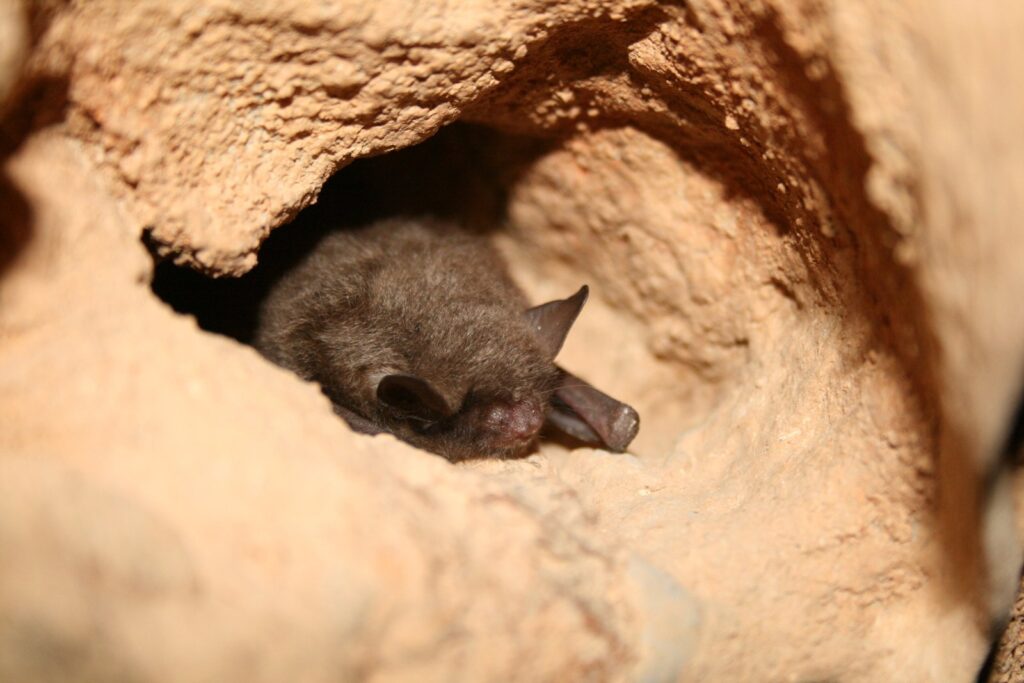
Indiana DNR biologists count hibernating bats every other winter, and they finished the latest count in 2026. The DNR’s official update says the state’s bats “continue to show signs of population recovery,” with numbers “slowly increasing.” Indiana bat numbers were about the same as in 2024, “if not increased by a few thousand bats.” Tricolored bats and little brown bats, the two species hit hardest, were up across all sites.
In an Oct. 26 report, WBIW went further, describing Indiana bats as back at record numbers that surpass their pre-white-nose levels, with counts climbing every year since 2021. The DNR’s own page is more cautious and says continued management is still needed. Either way, the direction is up.
Why it matters that the bats come back
Indiana bats are tiny. NCWRC says they measure about 3 to 3.5 inches long and weigh between 0.16 and 0.34 ounces, roughly the weight of one or two U.S. quarters. You can tell them apart from look-alikes partly by their pink lips.
But they work hard. Bats eat huge numbers of insects. Defenders of Wildlife estimates a single Indiana bat can catch around 3,000 insects in one night. That makes them free pest control for forests and farms.
They also grow back slowly. A female Indiana bat usually has just one pup a year. That’s why a single maternity colony of 24 bats, and a few thousand extra bats in Indiana’s caves, are worth celebrating. Every mother that makes it through the winter and raises a pup is a step back from the edge.
Etchison is careful not to overpromise. “Bat populations are so difficult to estimate that we don’t even try and instead focus on population trends,” she said. Nobody knows yet how many Indiana bats are surviving in North Carolina, or whether this colony will return to the same trees next summer. Female Indiana bats often do come back to the same or nearby roosts, which gives the biologists something to look forward to.
For now, the picture is simple and lovely: a dead hemlock in an ancient forest, the sun going down, and two dozen small bats slipping out into the evening, where for years there seemed to be none.
Sources
- North Carolina Wildlife Resources Commission: Endangered Bats Caught in N.C. for First Time in 10+ Years (July 20, 2026)
- Defenders of Wildlife: Animal Ghost Story? The Return of Endangered Indiana Bats to North Carolina (Oct. 27, 2026)
- Indiana Department of Natural Resources: White-nose Syndrome in Bats, Updates from the Field 2026
- WBIW: Indiana Bat population reaches record highs following decades of targeted DNR conservation efforts (Oct. 26, 2026)
Image credits
- Indiana bats hibernating on a cave wall: USFWS / K. Lott, public domain. Resized.
- Biologist removing a bat from a mist net: Ann Froschauer / USFWS, public domain. Resized.
- Indiana bats in a cave: USFWS / Andrew King, public domain. Resized.
- Joyce Kilmer Memorial Forest in autumn: Necropolis Hill via Wikimedia Commons, CC BY-SA 4.0.
- Little brown bat with white-nose syndrome: Marvin Moriarty / USFWS, public domain.
- Hibernating Indiana bat: Ann Froschauer / USFWS, public domain. Resized.