Most of us have parked on top of something we never thought about. A layer of gravel, some old fill, maybe a pipe or two. At Dinosaur National Monument in northeastern Utah, workers peeled back an old parking lot in the fall of 2025 and found something much better underneath: the tail of a Diplodocus, lying where it had rested for roughly 150 million years.
The park’s paleontologist, ReBecca Hunt-Foster, has now told the full story in the National Park Service’s Park Paleontology News (Fall 2026). It’s a wonderful mix of science, luck, and a construction crew that got just as excited as the scientists.
A parking lot built on a famous dinosaur dig
To understand why anyone was watching a parking lot so closely, you have to go back to 1909. That August, Earl Douglass of the Carnegie Museum found what is now called the Carnegie Quarry, north of the town of Jensen, Utah. His crews dug there for 13 years and shipped more than 317 metric tons of fossils and rock back to Pittsburgh, including remains of ten different dinosaur species, plus clams, turtles and crocodiles.
Other museums kept digging into the 1920s. Bones from this one hillside ended up in some of the most famous halls in America, including the Smithsonian’s Deep Time exhibit and the rearing Barosaurus in the American Museum of Natural History’s rotunda. The quarry is the reason Dinosaur National Monument was created in 1915.
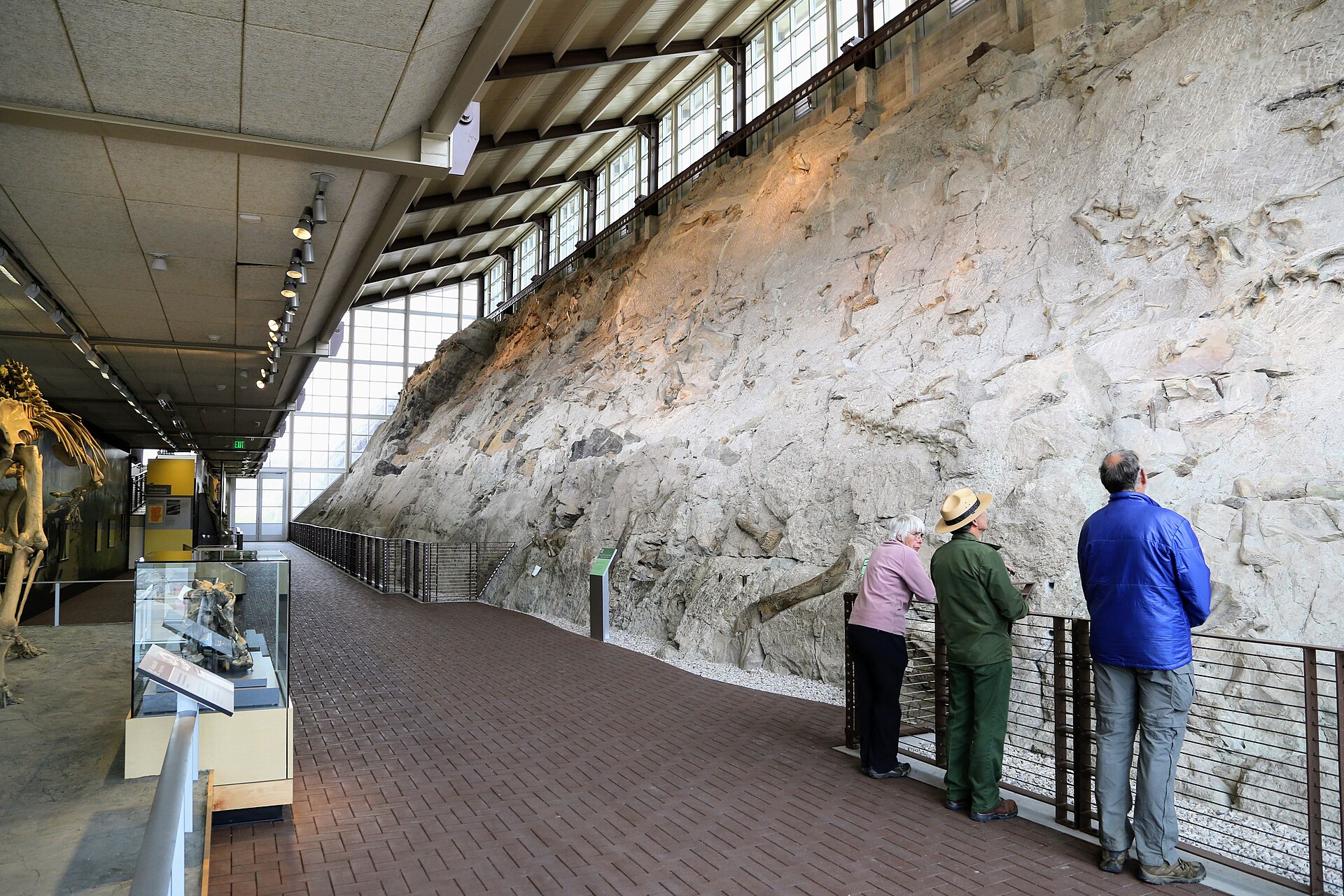
Today, visitors see the quarry inside the Quarry Exhibit Hall, where many bones were left in the rock wall, exposed but not removed, so people can see them the way they were found. (That’s the famous “Wall of Bones,” below.)
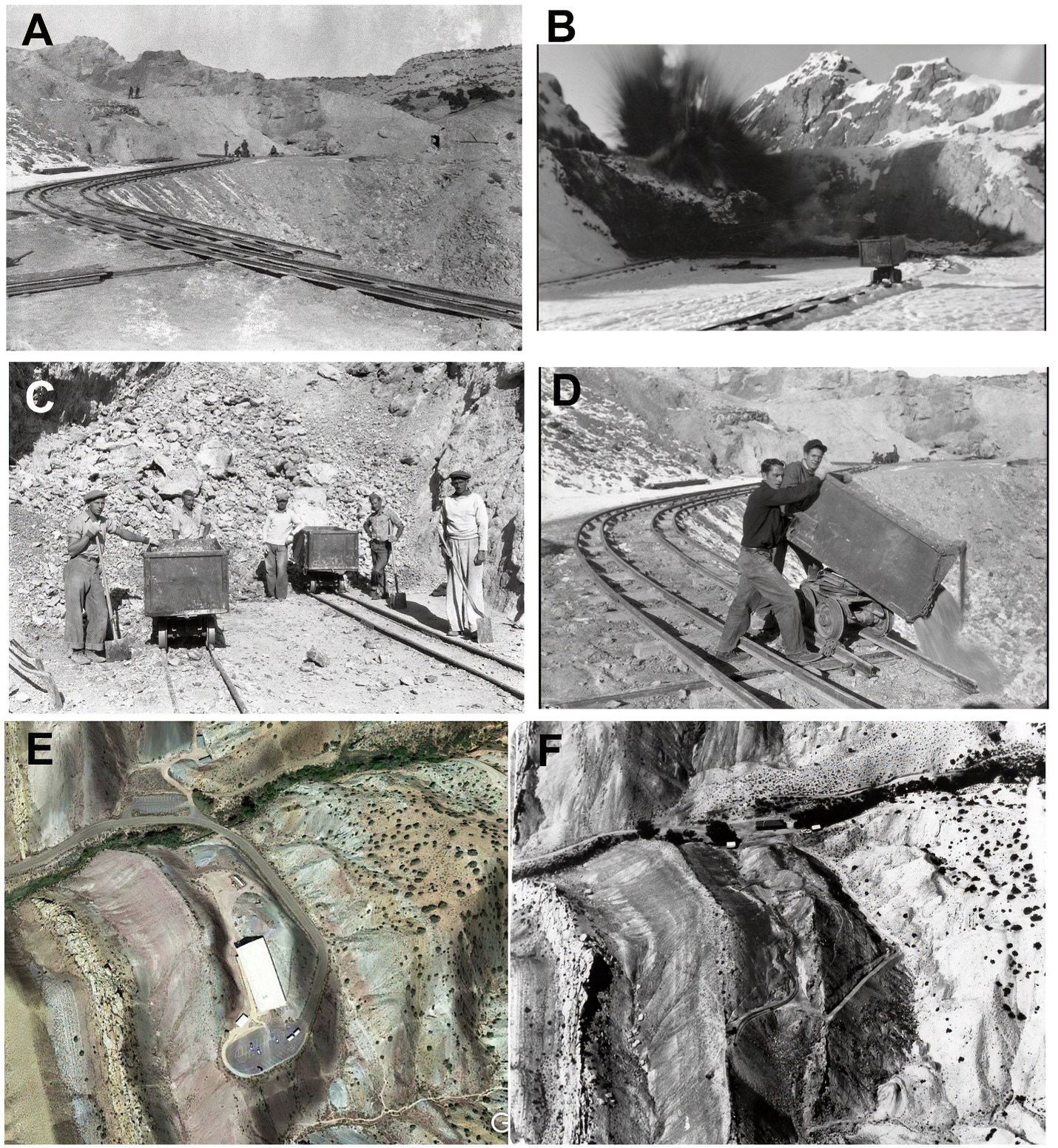
Here’s the twist: all the rock that early diggers blasted and hauled away was dumped into a gully on the east side of the quarry. In the 1930s, New Deal work crews cleared even more overburden and dumped it there too. Those old waste piles later became the foundation of the Quarry Exhibit Hall’s parking lot.
Why paleontologists were watching the backhoes
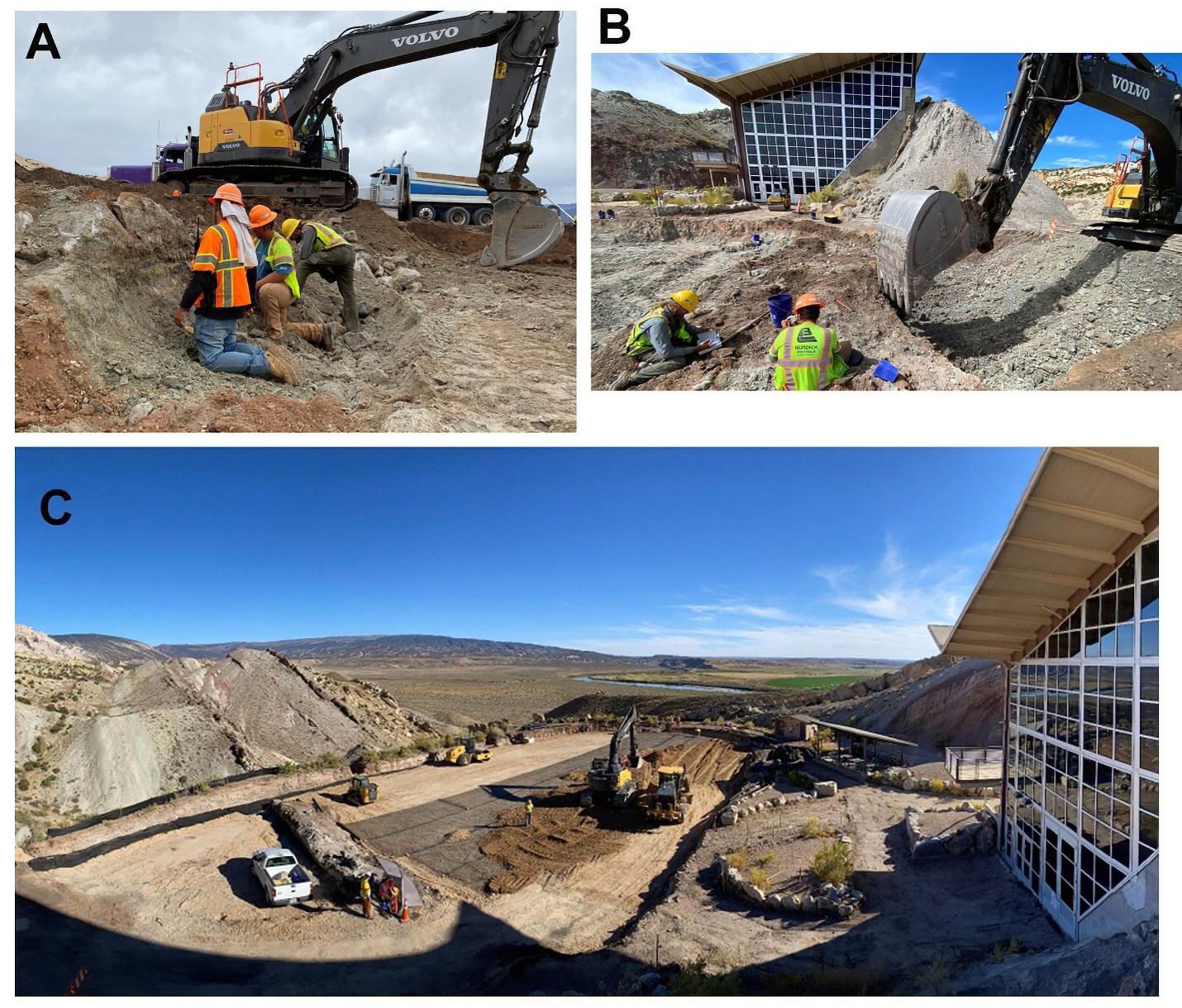
In May 2025, the park started an $11.2 million project to upgrade roads, parking areas and overlooks. Because the work would cut through Jurassic and Cretaceous rock, and right through those old quarry dumps, the park brought in a seasonal paleontological assistant, Rudolph Hummel, to watch every scoop of dirt alongside Hunt-Foster.
The worry was simple. Early diggers had tossed out rock they didn’t think was worth keeping, and fossils could easily be hiding in it. Worse (or better, if you’re a paleontologist), the parking lot might sit right on top of the same fossil-rich sandstone layer that runs through the quarry wall.
The road and the exhibit hall closed from September 8 to late October 2025. On September 10, the old asphalt came off. The very first backhoe scoop turned up fragments of fossil bone. The next day, the team found its first identifiable bone: a vertebra from a meat-eating theropod, likely an Allosaurus.
September 16: a bone in the sandstone
As the crew dug down about five feet, small finds kept coming every day, mostly loose sauropod vertebrae and rib pieces. The construction workers got hooked too. Hunt-Foster writes that many of them jumped in to search for fossils by hand instead of leaving it all to the backhoe. One worker even spent two days power-washing a section of the sandstone so the scientists could study it properly.
That cleanup paid off. On September 16, while documenting the freshly washed rock, Hunt-Foster spotted a bone in the cross-section of the sandstone. It was a large limb bone plunging down into the layer. Construction in that corner paused so the two paleontologists could dig.
After a week, they found a sauropod tail vertebra lying over the limb bone, which they now think is a tibia (a lower leg bone). Then a second vertebra. Then a third, all still connected in a row, the way they were in life.
Digging down while the parking lot rose up
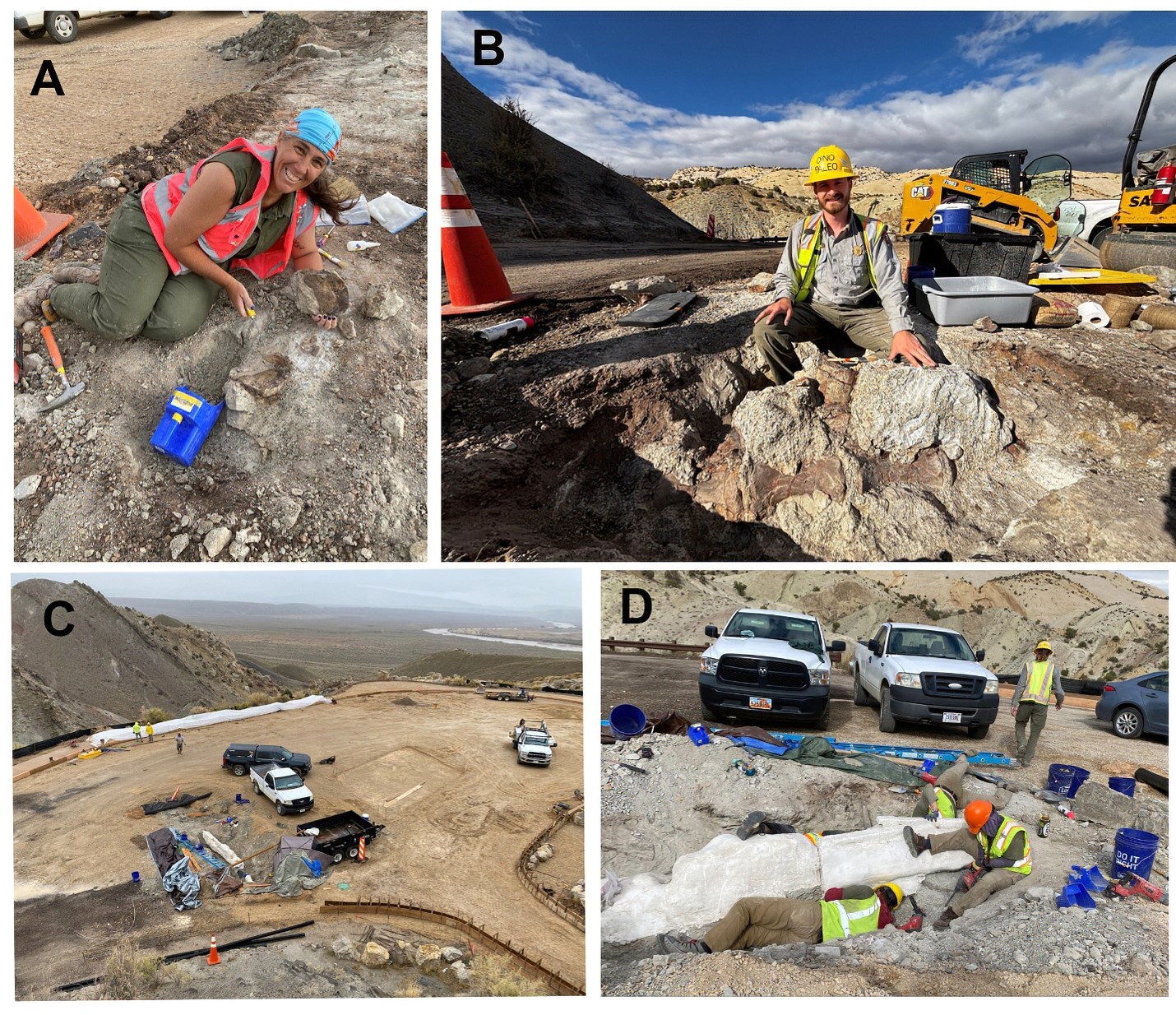
This is the part that makes the story so fun. The construction project didn’t stop. While the paleontologists dug down, the crew around them backfilled and compacted new layers of fill and fabric for the new lot. Hunt-Foster describes “dump truck parades” rolling past and rollers packing the ground, until the fossil team was sitting in a deep trench surrounded by a brand-new parking lot.
The trench was tight, with very hard sandstone on both sides. Removing rock from around the fossils took what she calls extreme “quarry yoga,” with people lying sideways, upside down and bent into pretzel shapes. The team also had to make careful choices: dig too far and they might find more fossils (great for science, bad for the construction deadline).
Working west, they found six more tail vertebrae, still connected, plus a lower arm (a radius and ulna). By then they could tell the tail most likely belonged to Diplodocus, the long-necked giant that is also the most common dinosaur in the Carnegie Quarry. Around it were other bones, part of a turtle, plenty of freshwater clams, and a surprising amount of carbonized wood right under the skeleton.
A tail that touched the old asphalt
By September 26, the team reached the end of the tail. The vertebrae got smaller as they went, and the ninth one was cleanly sheared off, tilted up toward the old surface. The team believes the very tip of the tail, and the top of that first leg bone, were probably scraped away when the original road was built in the late 1950s.
Several of the last vertebrae were touching the old asphalt itself. Historic photos from the Quarry Visitor Center’s grand opening on June 1, 1958 show a gravel lot, and it seems to have been paved around 1959. For more than six decades, visitors parked their cars just inches above a Diplodocus tail without anyone knowing.
3,000 pounds of fossils, lifted out by backhoe
Time was running short. Paving day was getting close, the days were getting shorter, and every delay cost money and kept the area closed to the public. Volunteers, a Utah Conservation Crew, park coworkers and construction staff all pitched in to wrap the fossils in plaster field jackets, sometimes working under makeshift tents of tarps, ladders and fence pickets during a stretch of wind and rain.
On October 13, the first small jacket came out. On October 17, the construction company lent its skilled backhoe operator to lift the big ones. In total, roughly 3,000 pounds of fossils and rock came out of the 2025 parking lot excavation. It was also the first fossil digging in this part of the Carnegie Quarry since 1924.
Where the fossils are now (and you can watch)
The jackets went to the Utah Field House of Natural History State Park Museum in Vernal, Utah, where the bones are being cleaned and studied. The work happens in the museum’s fossil preparation lab, where visitors can watch it in progress.
The team also took rock samples from the top and bottom of the sandstone layer for uranium-lead dating, which should help pin down exactly how old this ancient riverbed is. And the story isn’t over: Hunt-Foster’s article ends with a promise of a “Part 2” about more digging in 2026 and additional discoveries. We’ll keep an eye out.
Why this one makes us smile
It would have been easy to pave right over these bones. Instead, the park planned ahead, put paleontologists next to the backhoes, and paused work when it mattered. The construction crew didn’t just tolerate the scientists; they grabbed tools, washed rock, and ran the machine that lifted the dinosaur out. More than a century after Earl Douglass’s first find, the same hillside is still giving up surprises, sometimes right under our tires.
Sources
- ReBecca Hunt-Foster, “The Parking Lot Sauropod of Dinosaur National Monument: Part 1”, National Park Service, Park Paleontology News Vol. 18, No. 2 (Fall 2026)
- Dinosaur National Monument (NPS)
Image credits
- Featured image: Wall of Bones in the Quarry Exhibit Hall, NPS Photo, public domain, via Wikimedia Commons.
- Excavation, construction and historic quarry photos: National Park Service (public domain), from the NPS article linked above.