On a tiny coral atoll in the middle of the North Pacific, two very rare birds have done something that has wildlife biologists smiling. George and Geraldine, the only nesting pair of short-tailed albatrosses on Midway Atoll, have a new egg.
The U.S. Fish and Wildlife Service shared the news on Nov. 18, 2026, saying the endangered pair laid “a very important egg” the week before. It’s the tenth year in a row that George and Geraldine have found each other on the atoll. It’s also a comeback of sorts for them: last season they didn’t lay an egg at all.
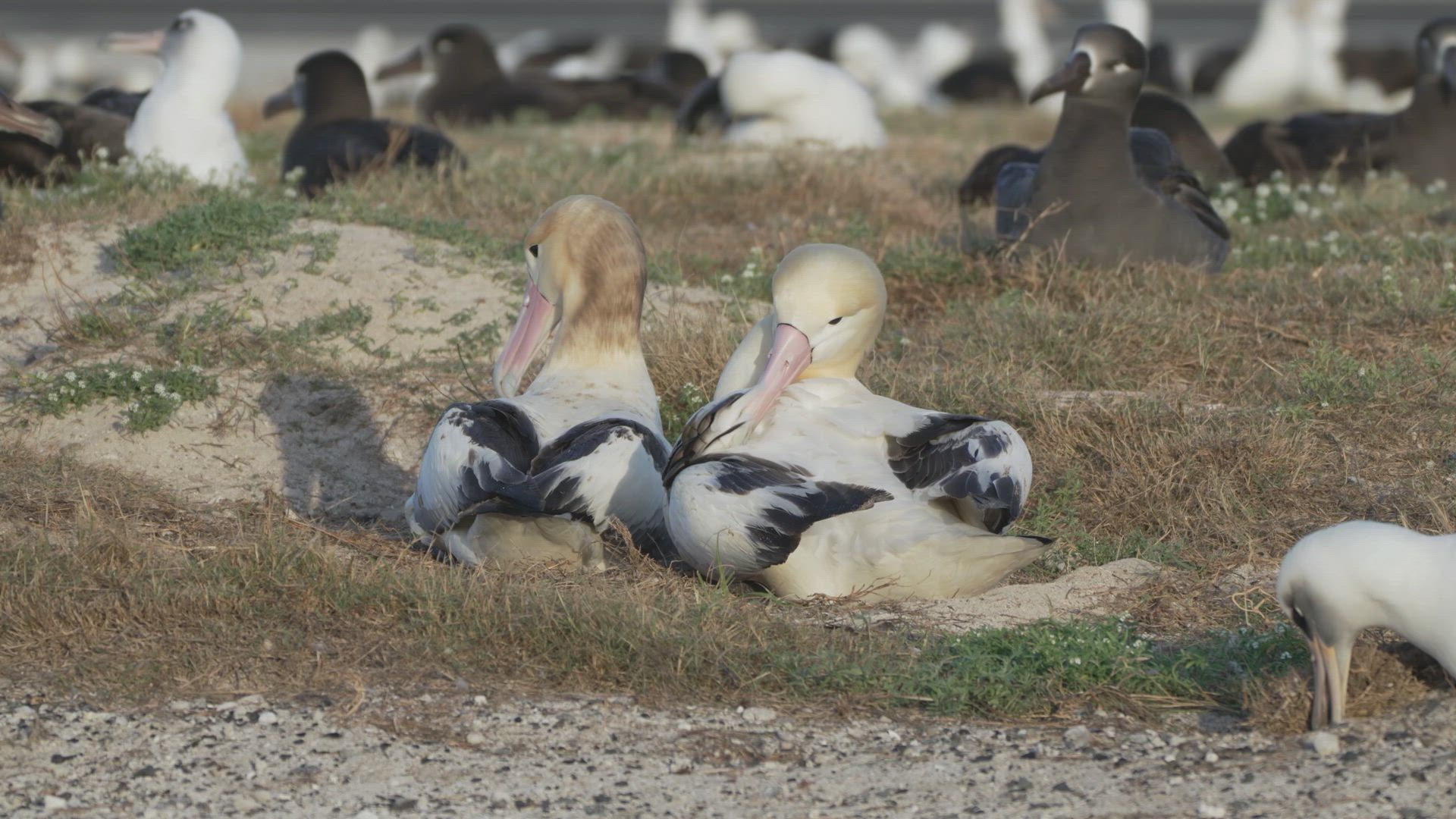
Meet George and Geraldine
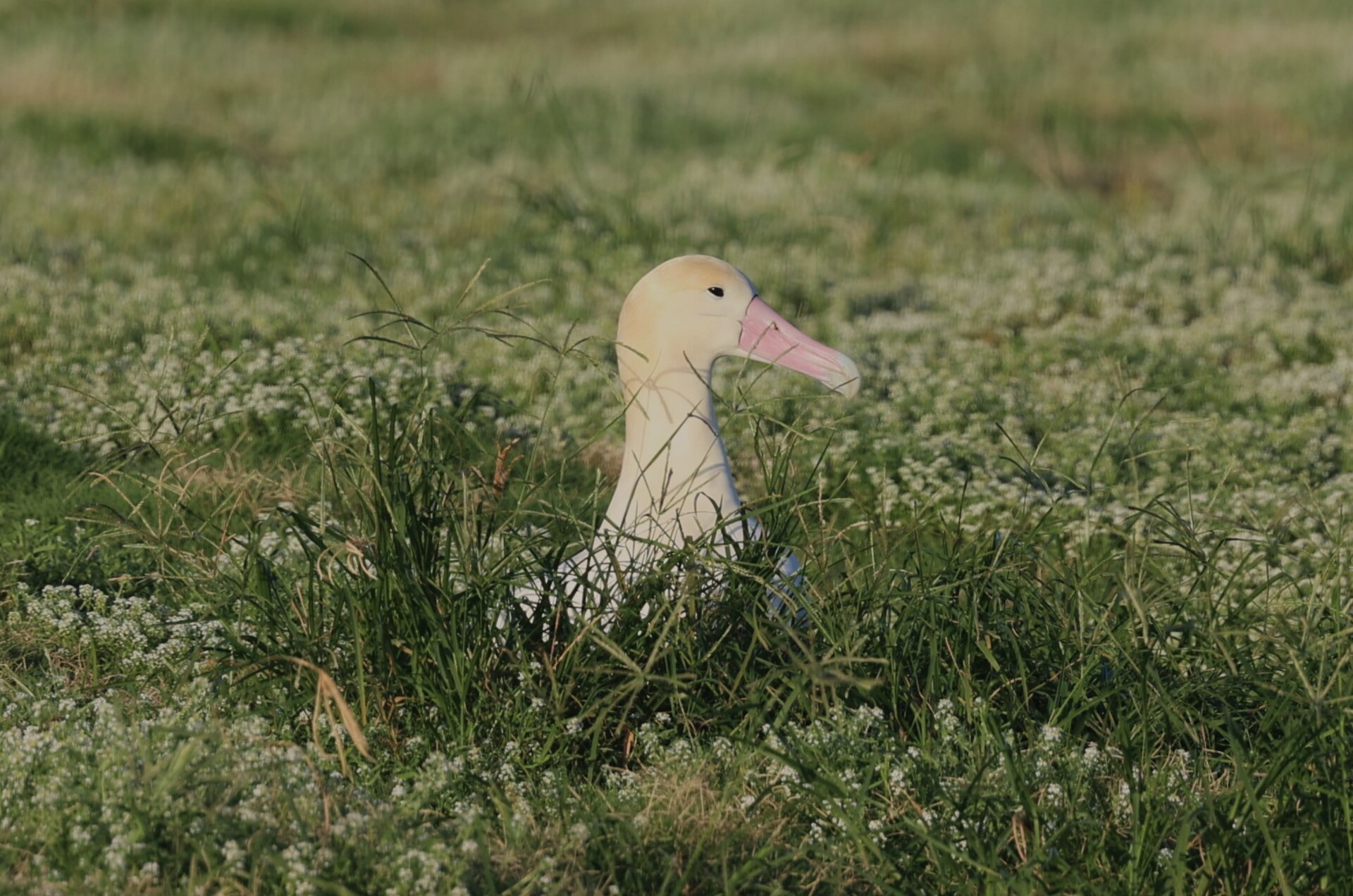
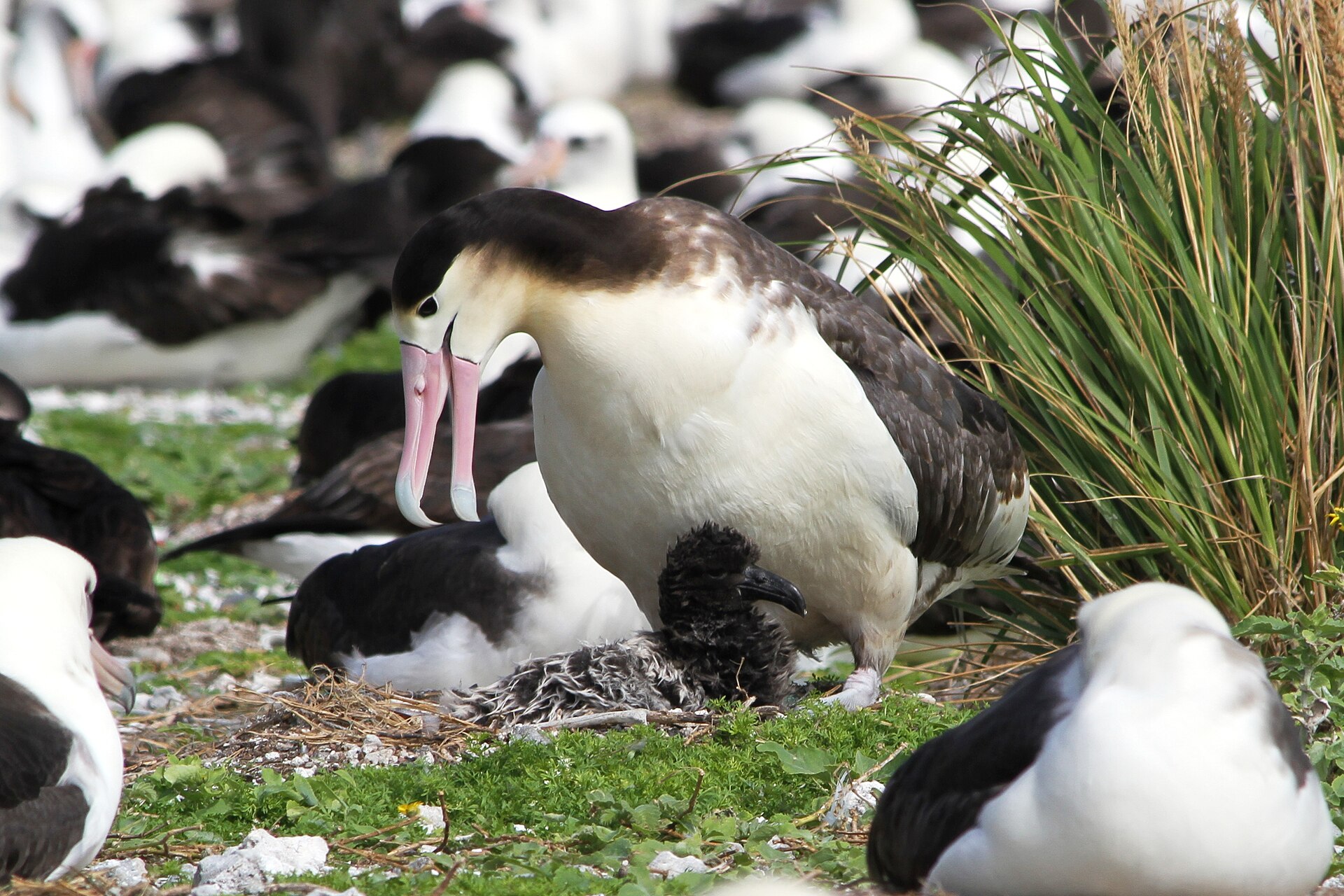
Short-tailed albatrosses are called makalena in Hawaiian. They’re big, mostly white seabirds with a golden wash on the head and a huge pink bill that makes them easy to spot. With wingspans of about 7 to 7.5 feet (213 to 229 cm), they’re the largest albatross in the North Pacific.
Both George and Geraldine started life more than 2,000 miles away. They were banded as chicks on Torishima, a volcanic island south of Tokyo, Japan, where most of the world’s short-tailed albatrosses breed. Somehow they both ended up on Midway Atoll National Wildlife Refuge, on the far northwestern edge of the Hawaiian Islands.
They were first seen together there in 2016. In the 2018–2019 season they raised their first chick, and they kept going. According to the Agreement on the Conservation of Albatrosses and Petrels (ACAP), the pair fledged five chicks in six breeding seasons. Then came two quieter years: no chick in 2024–25, and no egg in 2025–26.
A reunion right on schedule
This fall, George showed up first. He was spotted on Oct. 18, 2026, and by Oct. 22 the two were back together at their usual nest site, preening each other. Volunteer biologist and videographer Dan Rapp filmed the reunion, and both the USFWS and the Friends of Midway Atoll shared the clip.
Short-tailed albatrosses are monogamous and return to the same breeding site year after year, so this kind of loyalty is exactly what scientists hope to see. Their nest is outside the view of Midway’s public live camera, which makes every photo and video of them extra special.
Why one egg is such a big deal
A hundred-plus years ago, short-tailed albatrosses glided over the North Pacific in huge numbers, from Japan to Alaska and Hawaiʻi. Then feather hunters arrived. Their down was prized for bedding, and millions of birds were killed around the turn of the 20th century.
The losses were staggering. A visiting ornithologist counted roughly 2,000 albatrosses on Torishima in 1930. Just three years later, only a few dozen were left. In 1949, after watching the island from a ship, American ornithologist Oliver Austin reported that the species appeared to be extinct.
Luckily, he was wrong. Weather station staff on Torishima later found about a dozen birds nesting on steep cliffs. Japanese researchers and authorities protected them, planted grass to stop landslides on the nesting slopes, and even used lifelike decoys and recorded calls to lure birds to a safer part of the island. The population climbed from around 250 birds in 1980 to more than 4,000 by 2016.
The USFWS listed the species as endangered in 2000. Its 2020 five-year review estimated 7,365 birds, growing at about 8.9% a year, and the agency now puts the population at around 10,000. That’s real progress, but nearly all of those birds still depend on just a couple of island groups in the western Pacific, one of them an active volcano. That’s why every new nesting site matters.
Decoys, recordings and a lot of patience
Midway borrowed a trick from Japan. Since 2000, refuge biologists have set out short-tailed albatross decoys and played recordings of the birds’ calls, hoping passing makalena would think, “Hey, this looks like a good neighborhood.”
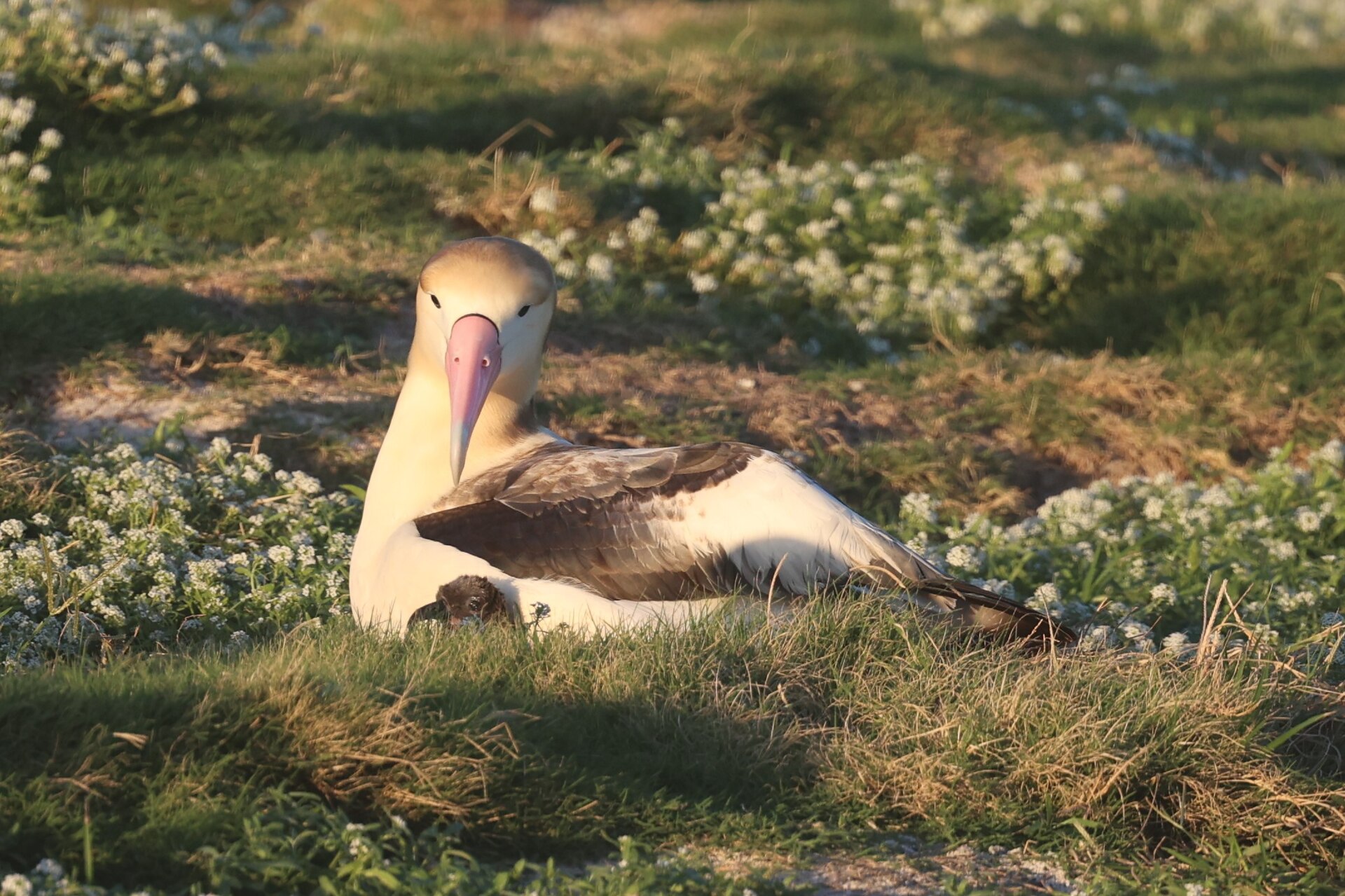
It took years. In January 2011, a different pair on Midway’s Eastern Island hatched a chick, which Audubon described as the first short-tailed albatross known to hatch outside Japan. Today George and Geraldine are Midway’s only breeding pair, but they aren’t totally alone. In December 2025, refuge staff recorded seven short-tailed albatrosses visiting the atoll, including three of George and Geraldine’s grown-up offspring. One chick that hatched in 2019 came back to the refuge in 2023.
That’s the dream: young birds raised on Midway coming home to breed there, slowly building a new colony far from the volcano.
What happens next
Albatrosses lay a single egg each season, and both parents share the work. Short-tailed albatross parents take turns sitting on the egg while the other heads out to sea on feeding trips that can last two to three weeks. Incubation takes about 65 days, and the species usually hatches from late December through January. If all goes well, that puts a fluffy dark chick on Midway sometime around the new year.
After that comes months of feeding on squid, fish and flying fish eggs. By late May or June the parents start leaving, and the chick heads out to sea soon after.
Busy season on the world’s biggest albatross colony
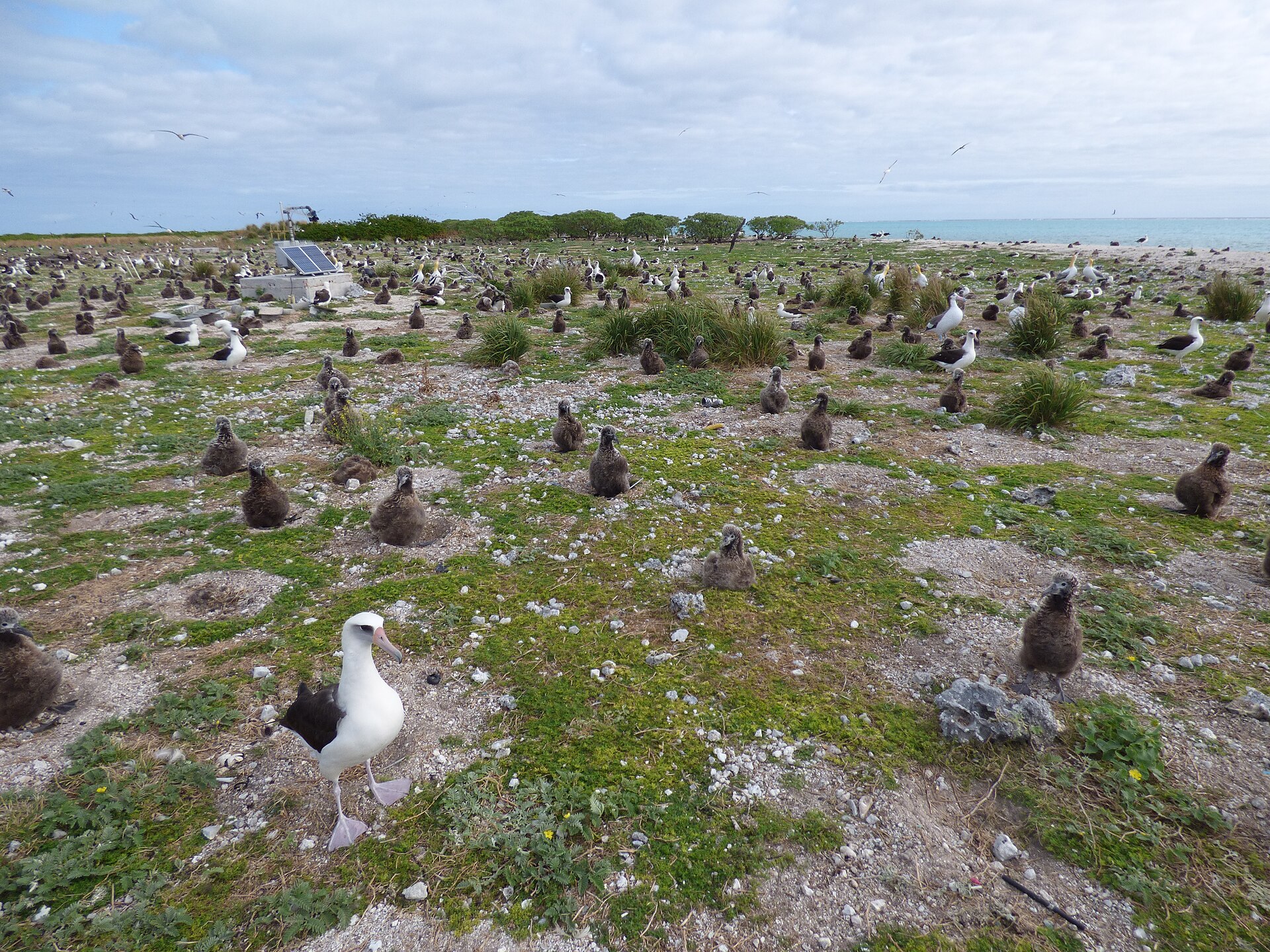
George and Geraldine have a lot of company. Every fall, Midway, about 1,250 miles from Honolulu, turns into the world’s largest albatross colony, with hundreds of thousands of Laysan and black-footed albatrosses nesting around them. The first egg of the 2026–27 season came from a black-footed albatross, and Laysan albatrosses usually lay from late November through December.
Fans are also waiting for Wisdom, the Laysan albatross who is more than 70 years old and the oldest known banded wild bird. As of Nov. 18, she hadn’t been spotted yet this season.
The birds still face real threats, including getting hooked on fishing lines, swallowing floating plastic, and rising seas on low-lying atolls like Midway. But for now, there’s one big, precious egg on a grassy patch of sand, and two very devoted parents taking turns keeping it warm. We’ll be rooting for them.
Sources
- U.S. Fish and Wildlife Service on X, “We have eyes on egg!” (Nov. 18, 2026)
- U.S. Fish and Wildlife Service on YouTube, Endangered albatross reunite! (Nov. 3, 2026)
- Friends of Midway Atoll NWR on YouTube, George & Geraldine Are Reunited on Kuaihelani (Nov. 4, 2026)
- Popular Science, Albatross couple George and Geraldine reunite for the 10th straight year (Margherita Bassi, Nov. 9, 2026)
- Popular Science, First albatross egg of the season spotted at Midway Atoll National Wildlife Refuge (Laura Baisas, Nov. 18, 2026)
- ACAP, Midway Atoll’s Short-tailed Albatross pair, George and Geraldine, return for a new breeding season (Dec. 17, 2025)
- U.S. Fish and Wildlife Service, Short-tailed Albatross species profile
- U.S. Fish and Wildlife Service, Short-tailed albatross and chick on Midway Atoll (photo record noting the 2019 chick’s return in 2023)
- Audubon, Story of First Short-Tailed Albatross to Hatch Outside of Japan Told Through Pictures (Alisa Opar, Feb. 2, 2011)
- Nippon.com, The Recovery of the Short-Tailed Albatross: A Preservation Success Story (Ishi Hiroyuki, Sept. 6, 2017)
Image credits
- Featured image and first photo: George and Geraldine on Midway Atoll NWR, Dec. 7, 2025. USFWS volunteer video still by Dan Rapp, via USFWS Pacific. Public domain. Wikimedia Commons
- George incubating an egg, Oct. 19, 2024. Jon Plissner/USFWS. Public domain. Wikimedia Commons
- Geraldine and chick, Jan. 3, 2023. Jon Plissner/USFWS. Public domain. Wikimedia Commons
- Short-tailed albatross decoys, Eastern Island, Midway Atoll, April 3, 2015. Forest and Kim Starr. CC BY 3.0 US. Wikimedia Commons
- Short-tailed albatross female and chick, Midway Atoll, 2011. Pete Leary/USFWS. Public domain. Wikimedia Commons
Note: None of these photos show the new 2026 egg. They show George, Geraldine, their earlier chicks, another Midway pair from 2011, and the refuge’s decoys.