Somewhere far beyond Pluto, a spacecraft about the size of a small car is crossing a line no human-made object has ever crossed. On Wednesday, Nov. 18, 2026, at 5:16:07 a.m. EST (6:16 p.m. in Manila), NASA’s Voyager 1 reaches one light-day from Earth.
That means a radio message sent from home now needs a full 24 hours to reach it, and Voyager’s reply needs another 24 hours to come back. It took a little machine launched in 1977 more than 49 years to get here. Here’s why this milestone is such a big deal, and why NASA invited the whole world to flash lights at the sky to celebrate.
So what exactly is a light-day?
A light-day is a distance, not a length of time. It’s how far light travels in 24 hours. Light moves at about 186,000 miles (299,792 kilometers) every second, so in one day it covers 16,094,799,096 miles (25,902,068,356 kilometers), according to NASA.
To feel how far that is, NASA offers a few comparisons:
- The Moon is about 1.3 light-seconds away.
- The Sun is about 8 light-minutes and 20 light-seconds away.
- Neptune, the most distant planet, is about 4 light-hours and 10 light-minutes from Earth on average.
- Voyager 1 is now a full 24 light-hours away.
Voyager 1 is no slowpoke. It cruises at nearly 38,000 mph (61,000 km/h). Still, NASA notes it took the spacecraft 49 years, two months and 11 days to cover the distance light crosses in a single day. That one fact says a lot about how huge space really is.
A trip that started with a once-in-176-years lineup
The twin Voyagers were built to take advantage of a planetary alignment that happens only once every 176 years. That lineup let one spacecraft use the gravity of one giant planet to swing on to the next.
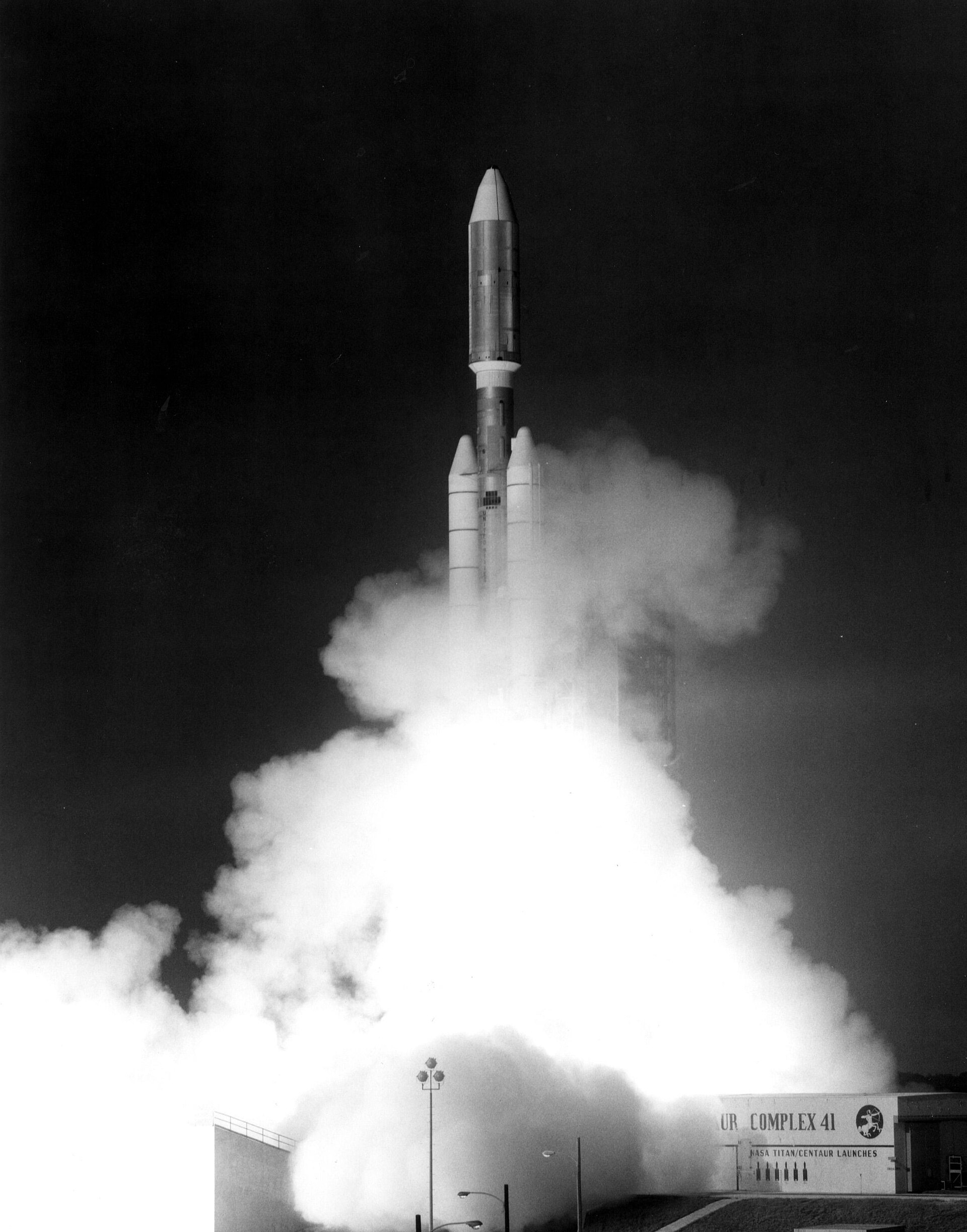
Voyager 2 launched first, and Voyager 1 followed about two weeks later, on Sept. 5, 1977. Voyager 1 took a faster, shorter path to Jupiter, then flew past Saturn in 1980. After Saturn, it left the planets behind for good and headed up and out of the solar system.
Voyager 2 took the scenic route. It visited Uranus and Neptune, and it is still the only spacecraft ever to fly past either of those worlds.
The day Voyager looked back
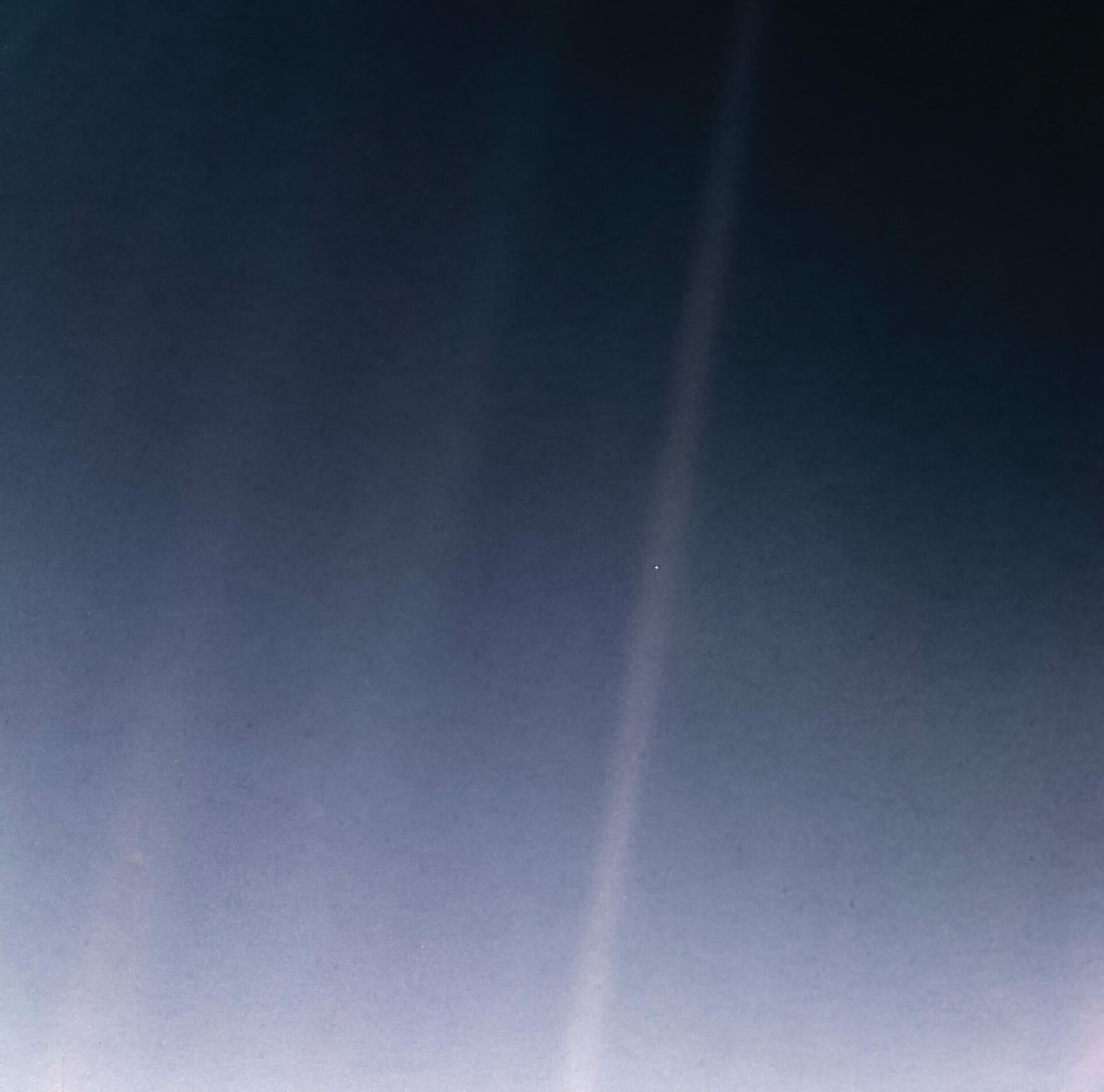
On Feb. 14, 1990, Voyager 1 turned its camera around and photographed Earth from about 6 billion kilometers (roughly 3.7 billion miles) away. In that picture, our whole world is a single tiny speck caught in a beam of scattered sunlight. It became known as the Pale Blue Dot, one of the most famous space photos ever taken.
NASA released a reprocessed version in 2020 for the photo’s 30th anniversary. Today Voyager 1 is more than four times farther away than when it took that picture.
The first visitor to interstellar space
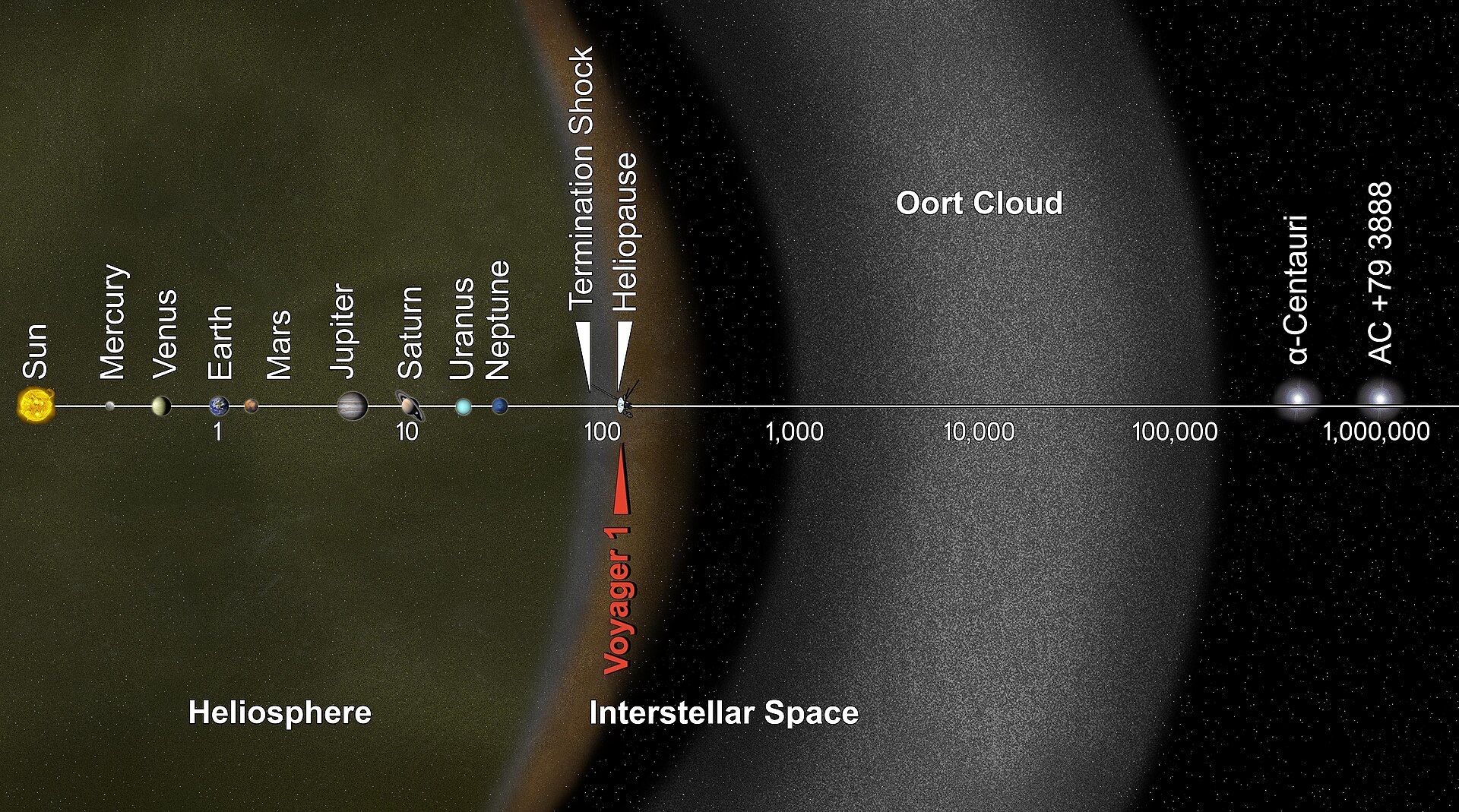
In August 2012, Voyager 1 became the first spacecraft to enter interstellar space. That’s the region beyond the heliosphere, the protective bubble made by the Sun’s magnetic field and the wind of particles it blows out. Voyager 2 followed in 2018. Together they are the only probes that have ever studied interstellar space directly.
Voyager 2 is about 2 billion miles closer to Earth, according to Astronomy magazine. NASA expects it to hit its own one-light-day mark in November 2035.
Still working after almost 50 years
How do you keep a 1970s spacecraft running in the cold, dark space between the stars? Very carefully.
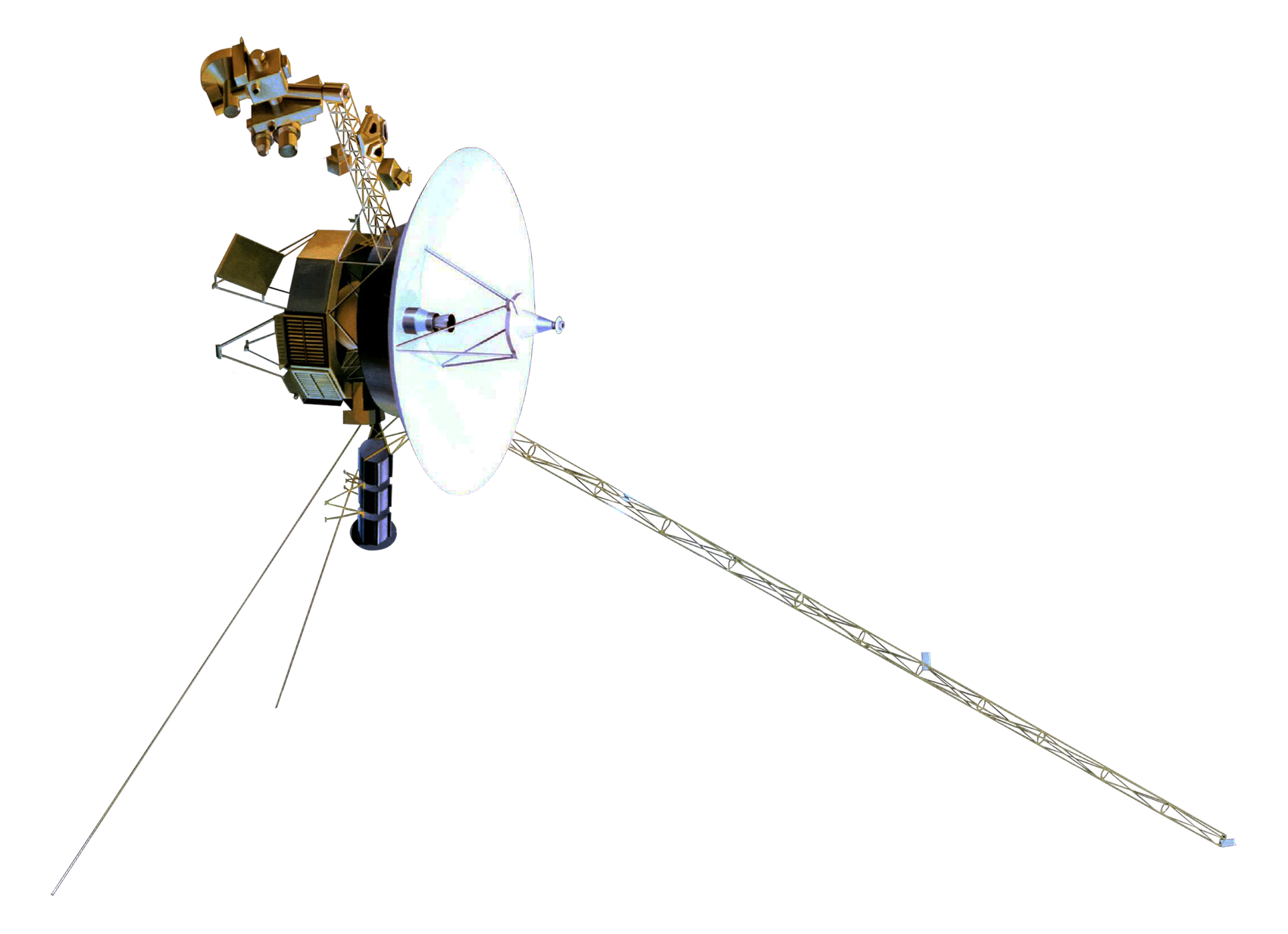
Each Voyager runs on a radioisotope thermoelectric generator, the same kind of power source used by NASA’s Curiosity and Perseverance rovers on Mars. Heat from decaying plutonium-238 is turned into electricity. But the power drops by about 4 watts every year, so engineers have spent years switching off heaters, parts and instruments to save energy. According to Astronomy, Voyager 1 now runs just two of its original 10 instruments, and Voyager 2 runs three.
Talking to them is a patience game, too. Commands travel through NASA’s Deep Space Network, and from now on every “Hello, are you OK?” to Voyager 1 means a two-day wait for an answer.
A golden message for whoever finds it
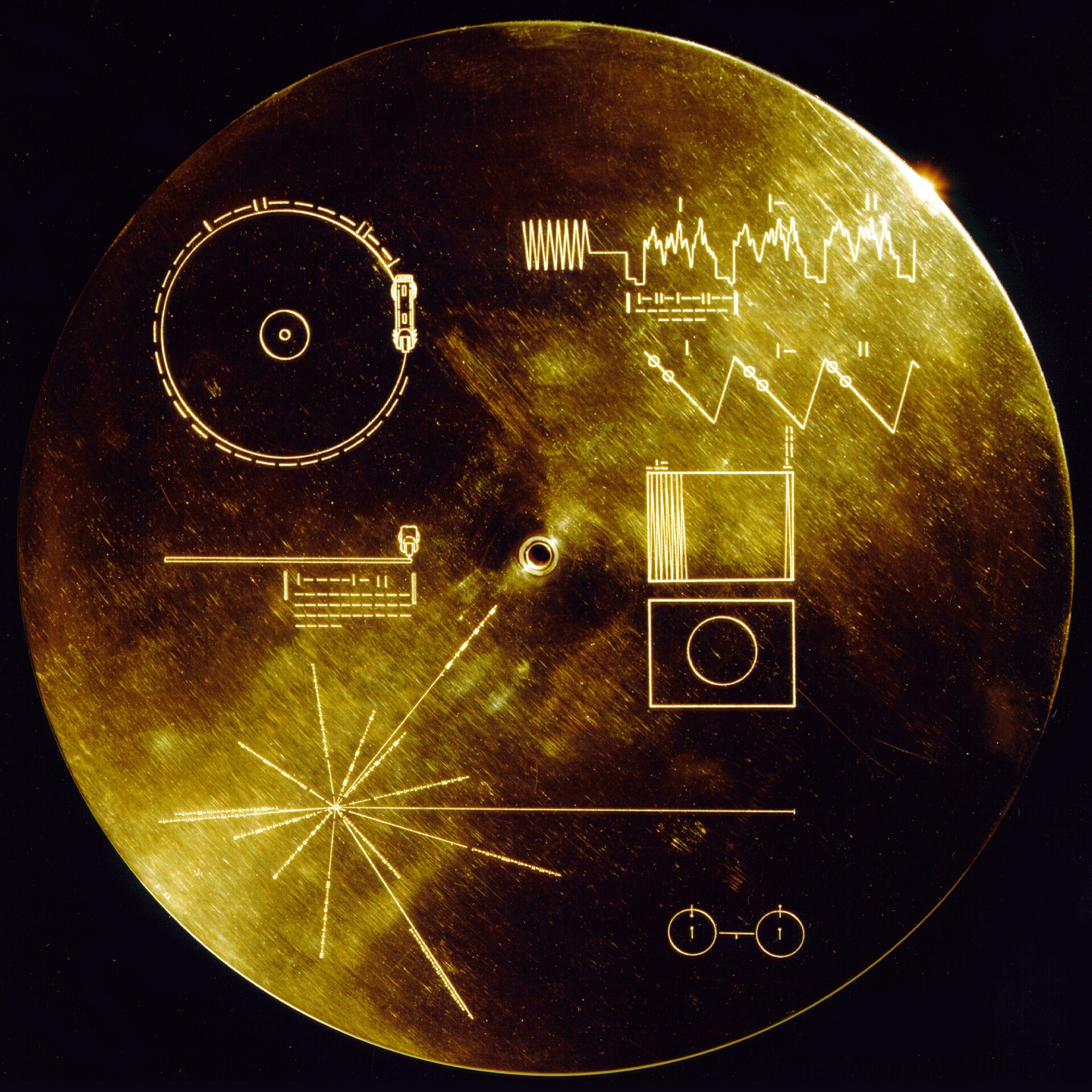
Both Voyagers carry a Golden Record, a gold-plated disk filled with sounds and images from Earth. Its gold-colored cover was designed to protect the record from tiny space dust impacts. It also does a second job: the engravings on it are a picture guide that tells a finder how to play the record.
So where is that message headed? NASA says Voyager 1 is traveling toward a faint star called AC +79 3888 (also known as Gliese 445), in the constellation Ursa Minor, the Little Dipper. It should pass within about 1.7 light-years of that star in roughly 40,000 years.
The world flashed a hello
NASA turned the milestone into a global party. On the evening of Tuesday, Nov. 17, it invited people everywhere to “Shine Bright for Voyager’s Light-Day.” The idea was a wave of golden light rolling around the planet after sunset, as people flashed Voyager’s call sign, VGR, in Morse code with phones, flashlights and even whole buildings.
If you missed it, you can still try it tonight. Here’s the code, as Astronomy spelled it out:
- V: dot-dot-dot-dash
- G: dash-dash-dot
- R: dot-dash-dot
Use quick blinks for dots, about one-second flashes for dashes, and pause between letters.
What’s next
On Thursday, Nov. 19, at 12 p.m. EST (1 a.m. Friday, Nov. 20, in Manila), NASA’s Jet Propulsion Laboratory plans a live discussion with Voyager mission leaders about the health of both spacecraft and the science they still gather. It will be held in JPL’s von Kármán Auditorium, the same room where Voyager briefings took place during its grand tour of the planets. NASA also says it will preview a NASA+ Voyager documentary planned for 2027, the mission’s 50th anniversary.
Not bad for a spacecraft built for a tour of the giant planets. Nearly half a century later, Voyager 1 is still out there, still sending data home, and still carrying a little golden hello from all of us.
Sources
- NASA Science, What Is a Light-Day?
- NASA JPL, NASA Invites Media, Public to Join Voyager 1 One-Light Day Activities (Nov. 2026)
- Astronomy, Voyager 1 reaches 1 light-day from Earth (Brooks Mendenhall, Nov. 17, 2026)
- NASA/JPL Photojournal, PIA23645: Pale Blue Dot Revisited
Image credits
- Featured image: “Voyager 1 Goes Interstellar” (PIA17046), artist’s concept. NASA/JPL-Caltech. Public domain. Wikimedia Commons
- Voyager 1 launch, Sept. 5, 1977 (KSC-77P-232). NASA. Public domain. Wikimedia Commons
- Voyager spacecraft illustration. NASA. Public domain. Wikimedia Commons
- “Pale Blue Dot Revisited” (PIA23645). NASA/JPL-Caltech. Public domain. Wikimedia Commons
- Voyager Golden Record cover (GPN-2000-001978). NASA/JPL. Public domain. Wikimedia Commons
Illustrations are artist’s concepts, not photos of Voyager in space.