On a gray, rain-soaked day this November, a small team of biologists in south-central Tennessee did two things for one of the rarest fish on Earth. They released 131 hatchery-raised Barrens topminnows back into the wild. Then, at another spring, they scooped up more than 200 wild ones that were stranded in a shrinking puddle and took them somewhere safe.
Here’s the story of a tiny fish, a long drought, and the people who keep showing up for it.
Meet the Barrens topminnow
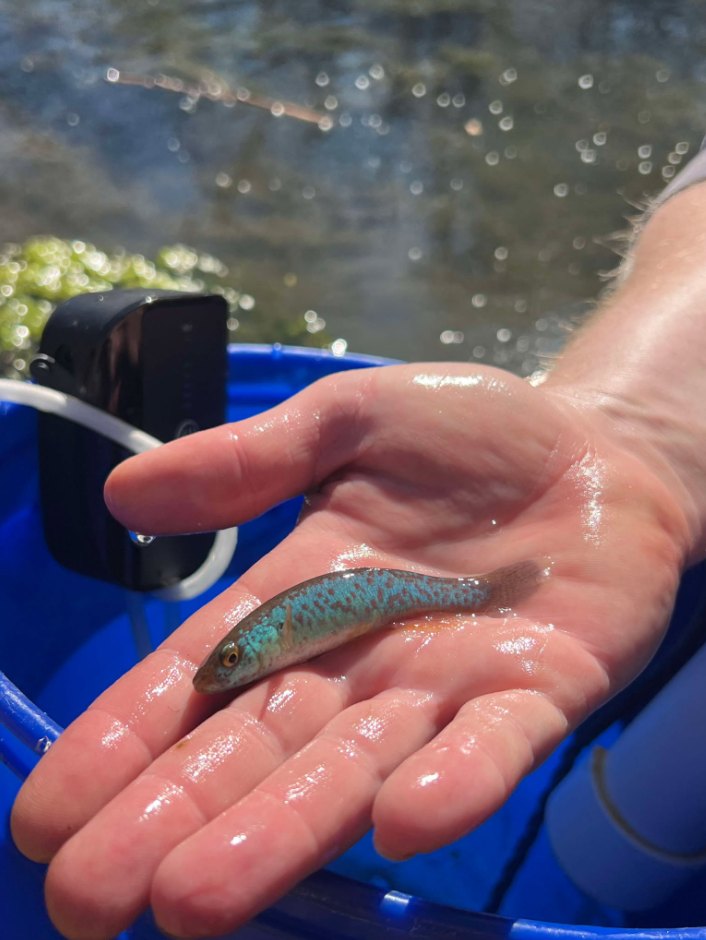
The Barrens topminnow (Fundulus julisia) is a small, colorful fish. It lives in groundwater-fed spring pools and spring runs on the Barrens Plateau of middle Tennessee, and nowhere else on the planet. According to the U.S. Fish and Wildlife Service, its whole range sits in just six Tennessee counties: Cannon, Coffee, DeKalb, Franklin, Grundy and Warren.
In spawning season the males are especially striking, with vivid blue markings and speckled, warm-toned bodies. The Service calls it “one of the rarest fish in the world,” and it has been listed as endangered under the Endangered Species Act since November 2019.
The mosquito-control plan that backfired
The topminnow’s biggest problem came from a well-meant idea. In the mid-1900s, western mosquitofish (Gambusia) were stocked on the Barrens Plateau and across much of North America to eat mosquito larvae.
As the Service puts it, the mosquitofish “were not so enticed by mosquito larvae and instead preyed upon Barrens topminnow eggs.” They also eat young topminnows and harass adults. The Service’s critical habitat FAQ is blunt about what happens next: apart from one known case, once mosquitofish became established at a Barrens topminnow site, the topminnows were gone within three to five years.
Habitat destruction and pollution added to the pressure, and the species declined for decades.
A village of fish rescuers
The fish has a dedicated team. The Barrens Topminnow Working Group brings together staff from Conservation Fisheries, Inc., the Tennessee Wildlife Resources Agency, the Tennessee Aquarium and the U.S. Fish and Wildlife Service, including the Wolf Creek and Dale Hollow National Fish Hatcheries.
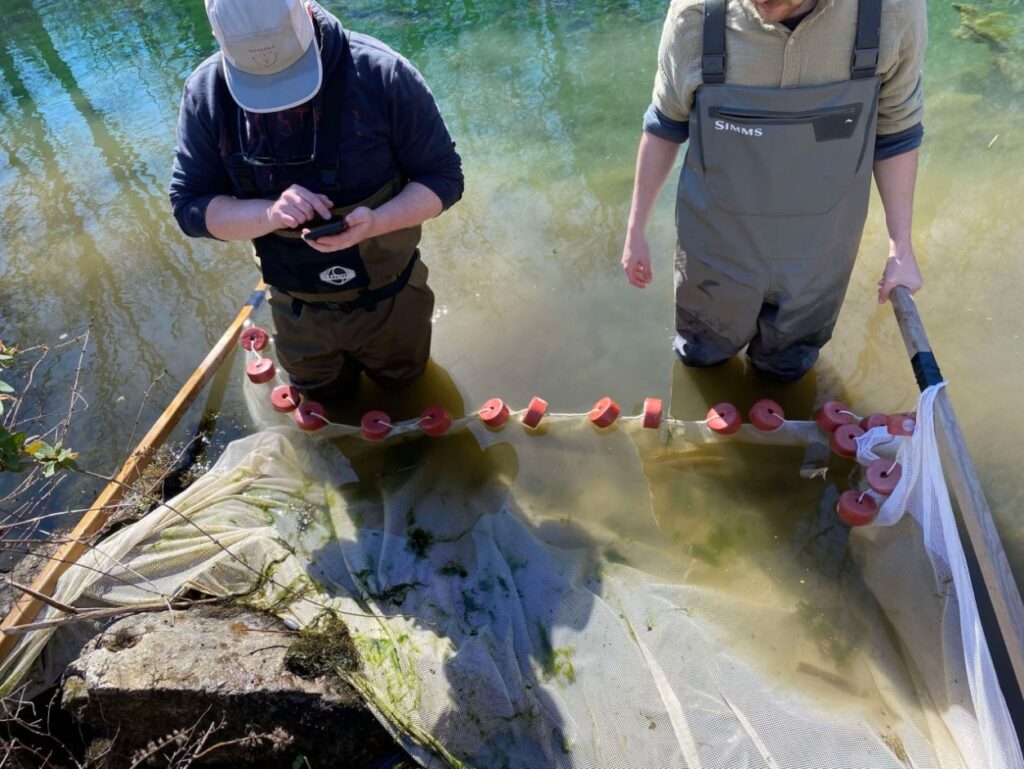
Their work is hands-on. Biologists survey each known site with seine nets and keep a census of every population. When drought threatens a spring, they move fish out. Some of the rescued fish become broodstock, the breeding adults that produce new generations at Conservation Fisheries. Others go to the hatcheries’ threatened and endangered species labs and wait there until conditions improve.
Going home, with holiday-colored tags
Before any topminnow goes back into the wild, it gets a tiny tattoo. Biologists use a syringe to place a color-coded elastomer tag just under the skin. The color, and which side of the dorsal fin it sits on, tells future survey teams when that fish was released and which group it came from.
The fish released from Wolf Creek National Fish Hatchery this November got a green tag on the right side of the dorsal fin, next to the red tag they’d been given earlier. In the cheerful words of the Service’s write-up, they were “sporting their red and green tattoos (just in time for the holiday season).” That day, 131 Hickory Creek topminnows were released back into the wild.
Then came a rescue
On the same day, members of the working group checked on the species’ type locality, the spring where the Barrens topminnow was first found and scientifically described. Drought had hit it hard.
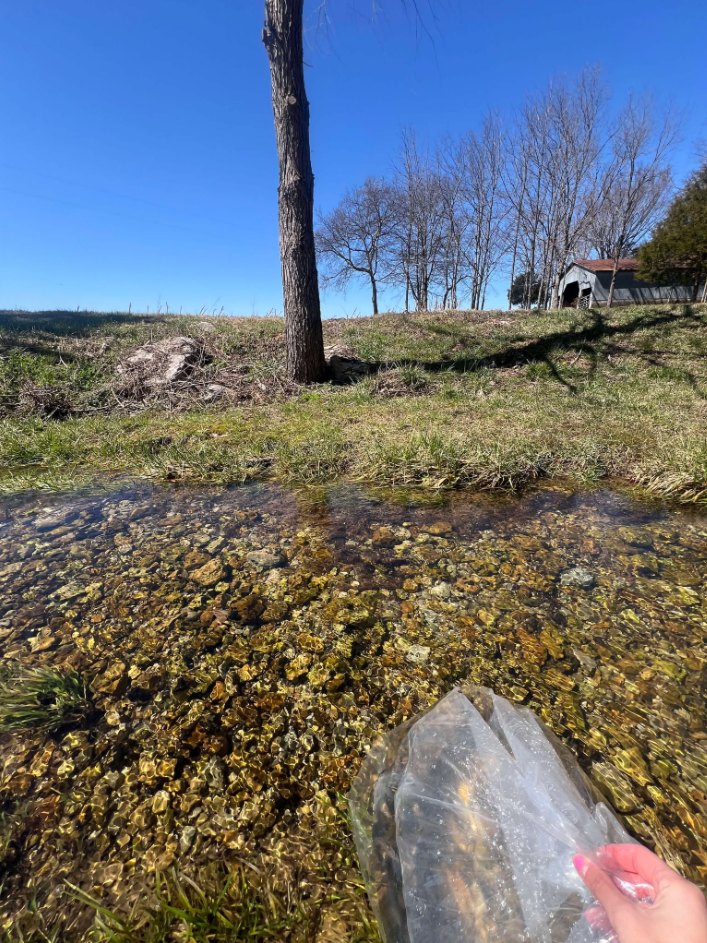
A long stretch without rain had cut the pool off from its spring head. The team found “hundreds of topminnows fighting to survive in a compact puddle.”
The team made several passes through the water with a seine net and moved the fish out:
- 40 adults went to Conservation Fisheries, Inc. to join its breeding program.
- 145 adults and 47 juveniles went to Wolf Creek National Fish Hatchery to wait until the habitat recovers.
That’s 232 wild fish moved to safety in a single visit, from a population where, as the Service notes, “the loss of even one individual” is cause for concern.
This has worked before
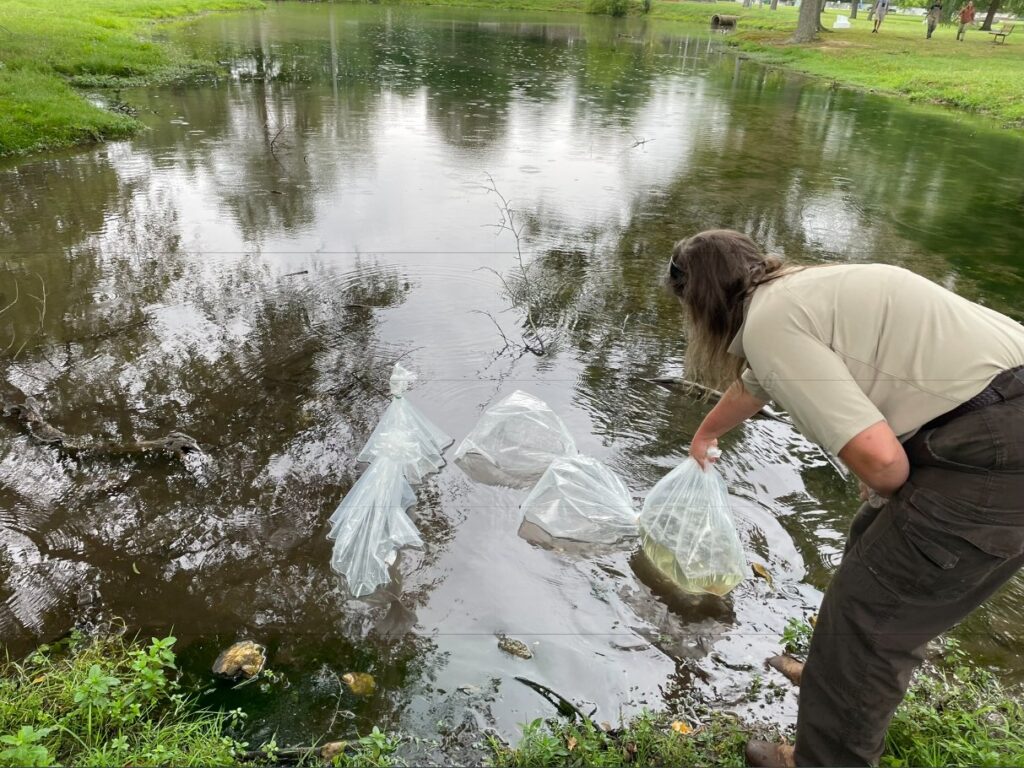
The team has done this round trip before. In early 2025, Wolf Creek hatchery staff and partners returned 107 Merkle-population and 94 type-locality topminnows to their home waters. Those fish had been pulled out during an earlier drought, and they went back once rain refilled the springs, just in time for spawning season.
When biologists surveyed afterward, they found adults and juveniles at the site. The males were showing their blue spawning colors and many females were carrying eggs. A fish that leaves during a drought can come home and breed again.
Why it matters
- Every fish counts. The Barrens topminnow survives in only a few small springs, so pulling a couple hundred fish out of a drying puddle can protect a real share of a population.
- It’s a lesson in unintended consequences. The mosquitofish was brought in to solve one problem and ended up nearly wiping out a native species. Protecting what’s left takes patient work over many years.
- Droughts don’t have to mean extinction. With rescue, safe keeping in hatcheries, captive breeding and careful releases, this team has turned dry years into a pause button for each population.
- Partnerships work. A nonprofit hatchery, a state wildlife agency, an aquarium and federal biologists are all working in the same cold creeks for one small fish. The Service sums it up: conservation “takes a village.”
The Barrens topminnow is far from safe. But right now, 131 tagged fish are swimming free in Tennessee, and 232 more are waiting out the drought in clean, cool hatchery water until their spring can take them back.
Sources
- U.S. Fish & Wildlife Service: Rescue, Release, Recovery: Conservation Takes a Village (Makenzie Foster, Nov. 9, 2026)
- U.S. Fish & Wildlife Service: Wolf Creek NFH Releases Endangered Barrens Topminnow (Mar. 3, 2025)
- U.S. Fish & Wildlife Service: Proposed Critical Habitat for the Barrens Topminnow FAQ (July 8, 2024)
- Federal Register: Endangered Species Status for Barrens Topminnow (final rule, Oct. 21, 2019)
Image credits
- Featured image: Barrens topminnow at Conservation Fisheries, Inc., 2018. Photo: G. Peeples/U.S. Fish and Wildlife Service. Public domain. Wikimedia Commons
- Male in spawning colors, February 2025. Photo: Abigail Harris/USFWS. Public domain. Wikimedia Commons
- Seine-net survey, February 2025. Photo: Makenzie Foster/USFWS. Public domain. Wikimedia Commons
- Release bag tempering in a stream, March 2025. Photo: Abigail Harris/USFWS. Public domain. Wikimedia Commons
- Temperature acclimation before release, Dale Hollow NFH, July 24, 2024. Photo: USFWS. Public domain. Wikimedia Commons
Photos show earlier surveys and releases from 2018–2025. They are not from the November 2026 release.