For 378 days, four people lived on “Mars” without ever leaving Houston. No windows. No outside sounds. No live phone calls home. Messages to “Earth” took up to 22 minutes to arrive, and replies took just as long to come back.
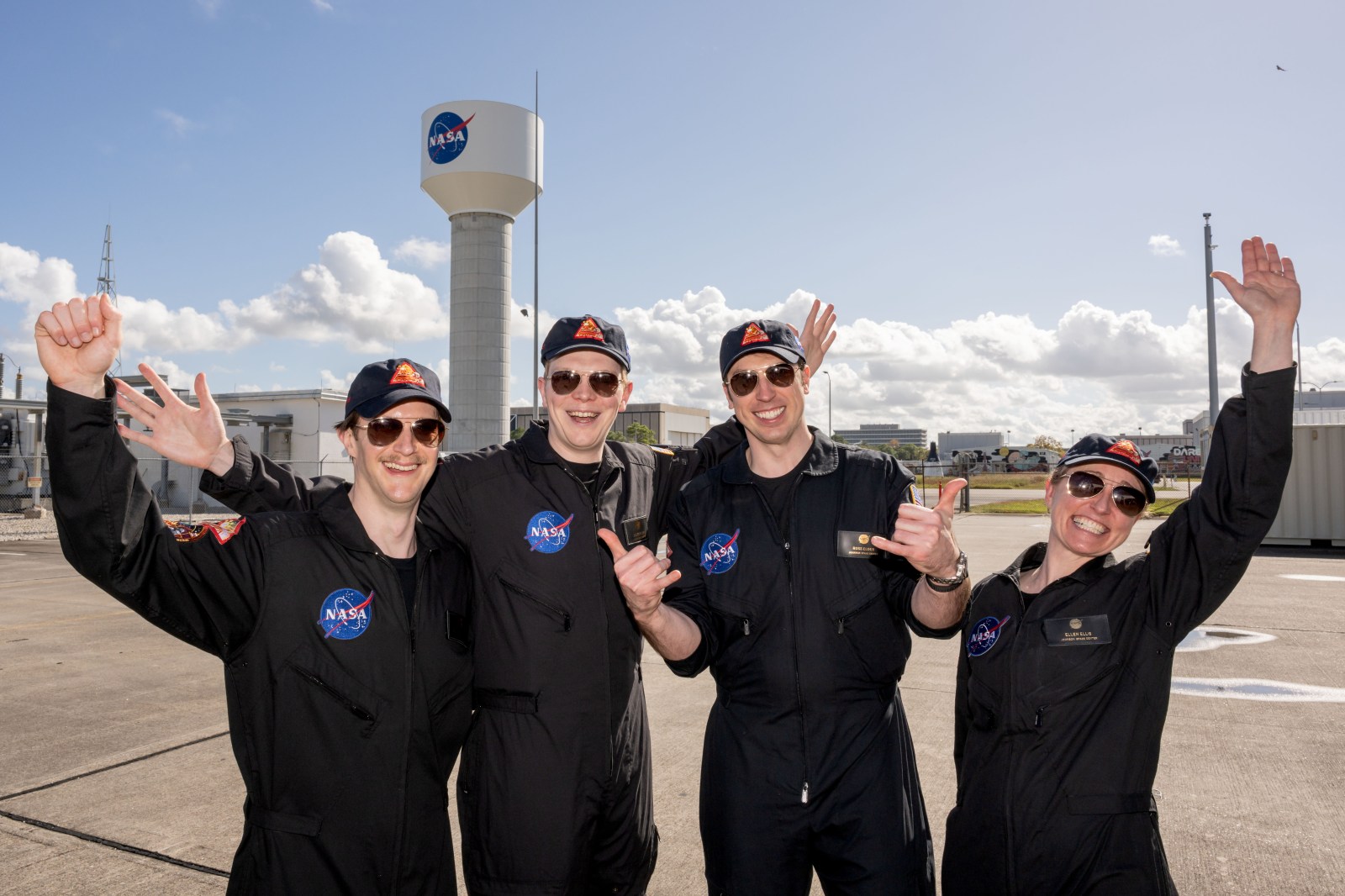
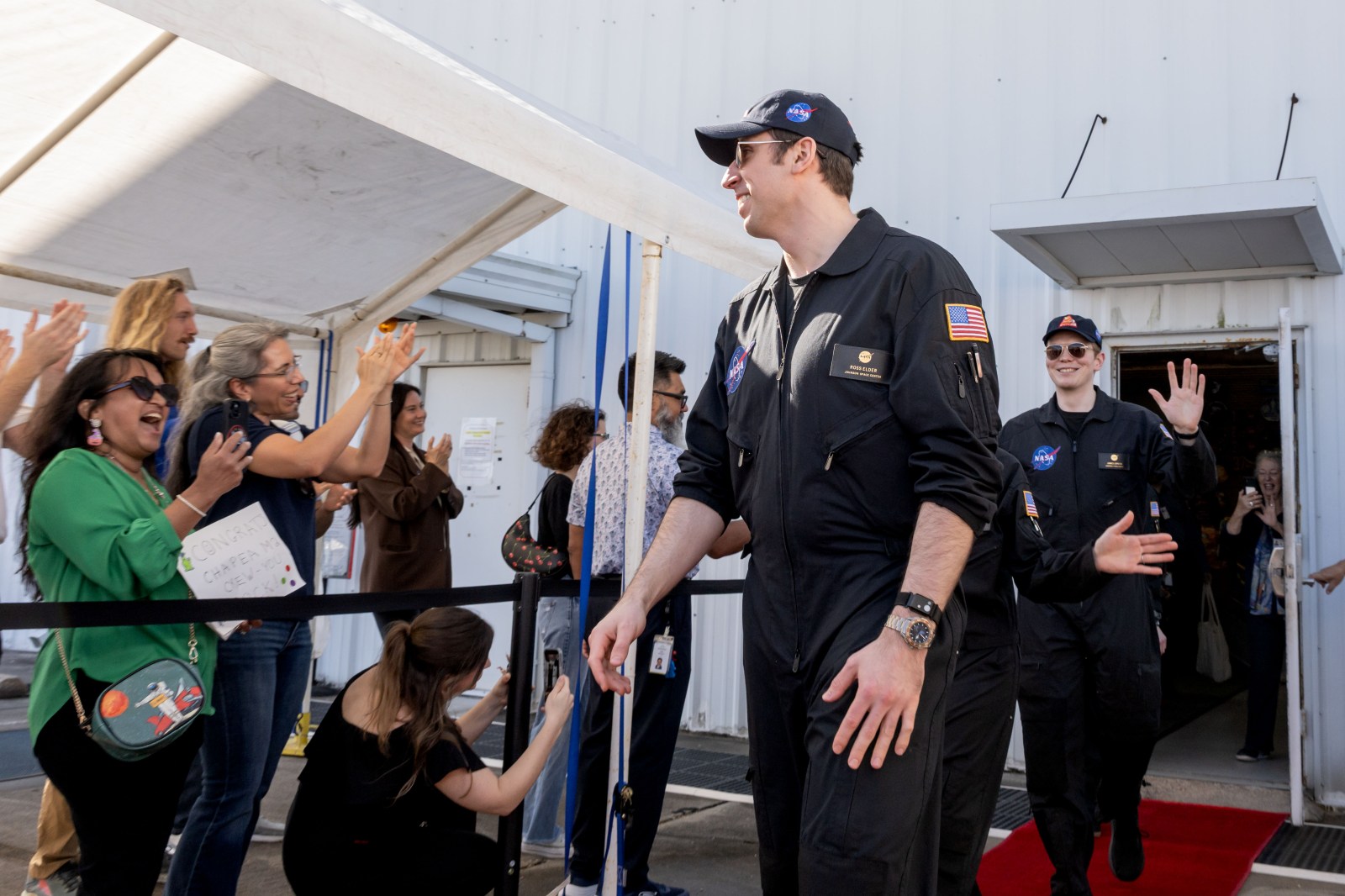
Then, on October 31, 2026, a door opened, and Ross Elder, Ellen Ellis, James Spicer, and Matthew Montgomery stepped into Texas sunshine and a crowd of cheering family and friends. NASA’s second yearlong Mars surface simulation was complete, and the crew came out sounding less like people who’d survived a year of isolation and more like people who’d found a second family.
A year inside a 3D-printed “Mars”
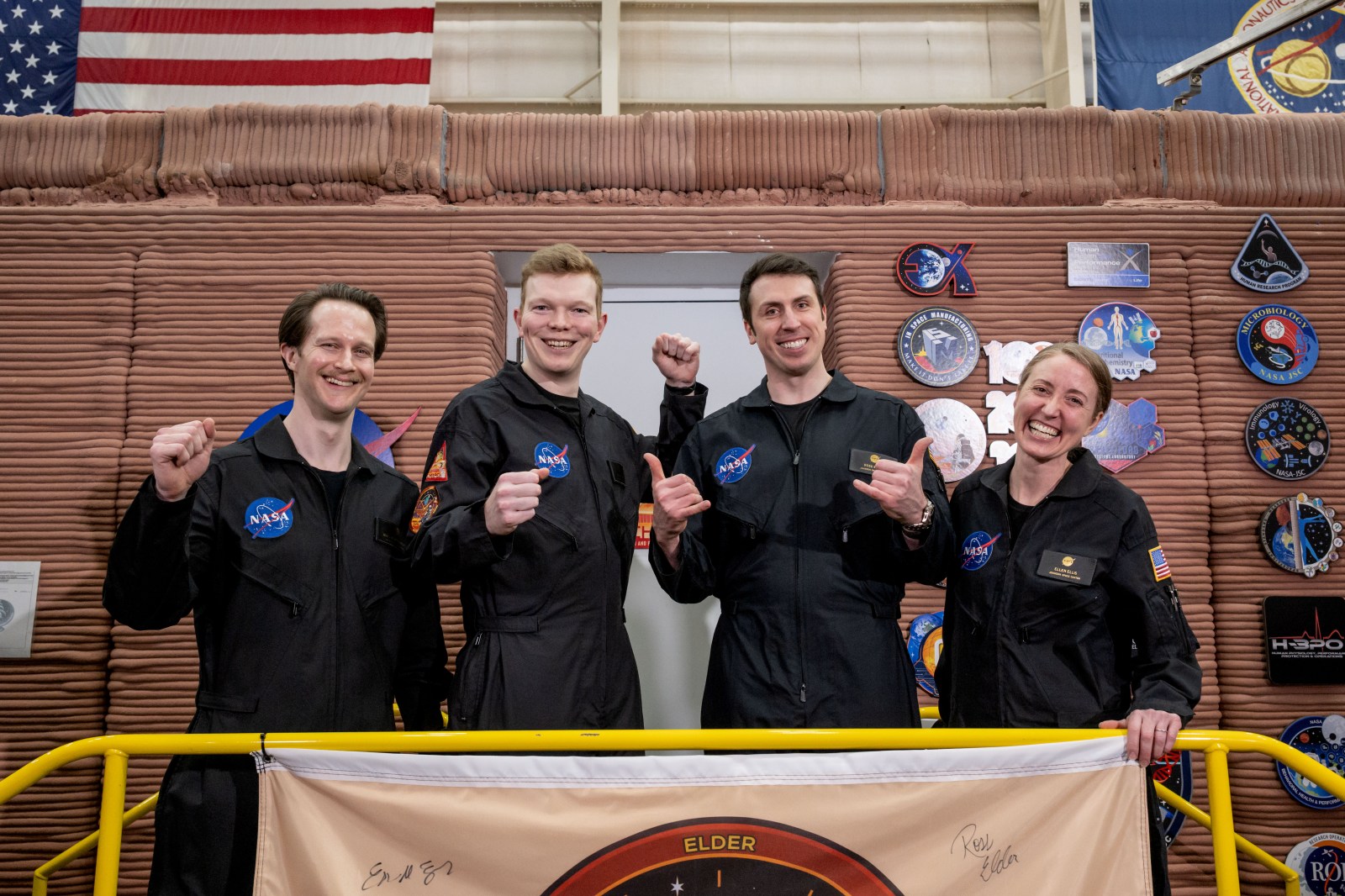
The mission is called CHAPEA, short for Crew Health and Performance Exploration Analog. The crew’s home was Mars Dune Alpha, a roughly 1,700-square-foot (about 158 square meters) habitat built by 3D printing inside a building at NASA’s Johnson Space Center. They sealed themselves in on October 19, 2025.
The goal was not to cosplay as astronauts. It was to collect real data on how people hold up when they live the way a future Mars crew will: far from help, with limited supplies, long communication delays, and a heavy workload. NASA researchers tracked the crew’s health, performance, nutrition, and exercise throughout the year.
Their days were full. According to NASA, the crew carried out simulated “Marswalks,” remotely flew a drone and drove a rover to survey terrain and collect rocks, maintained the habitat, exercised, and grew crops. Some Marswalks happened in a sandbox of red simulated Martian soil just outside the airlock. Others used virtual reality headsets and treadmills, so the crew could “walk” much greater distances than the room allowed.
Meet the crew
None of the four are NASA astronauts. They’re volunteers who went through a long selection process. Montgomery told the University of Central Florida that the application and screening took about 18 months. Each one brought a different skill set:
- Ross Elder, commander: a U.S. Air Force experimental test pilot. He said running simulated Marswalks and robotic exploration felt “uncannily similar” to working as part of a flight crew.
- Ellen Ellis, medical officer: a U.S. Space Force officer with experience at the National Reconnaissance Office. She organized the crew’s biological sample collections for health research.
- James Spicer, flight engineer: a satellite communications and spacecraft development specialist who kept the habitat’s systems running. At the exit ceremony, he was thanked as the “flight engineer extraordinaire and resident data scientist.”
- Matthew Montgomery, science officer: an engineer with a background in robotics, indoor farming, and independent film. His crewmates called him the “Swiss Army knife of crewmates.”
Tomatoes, peppers, and a garden on “Mars”
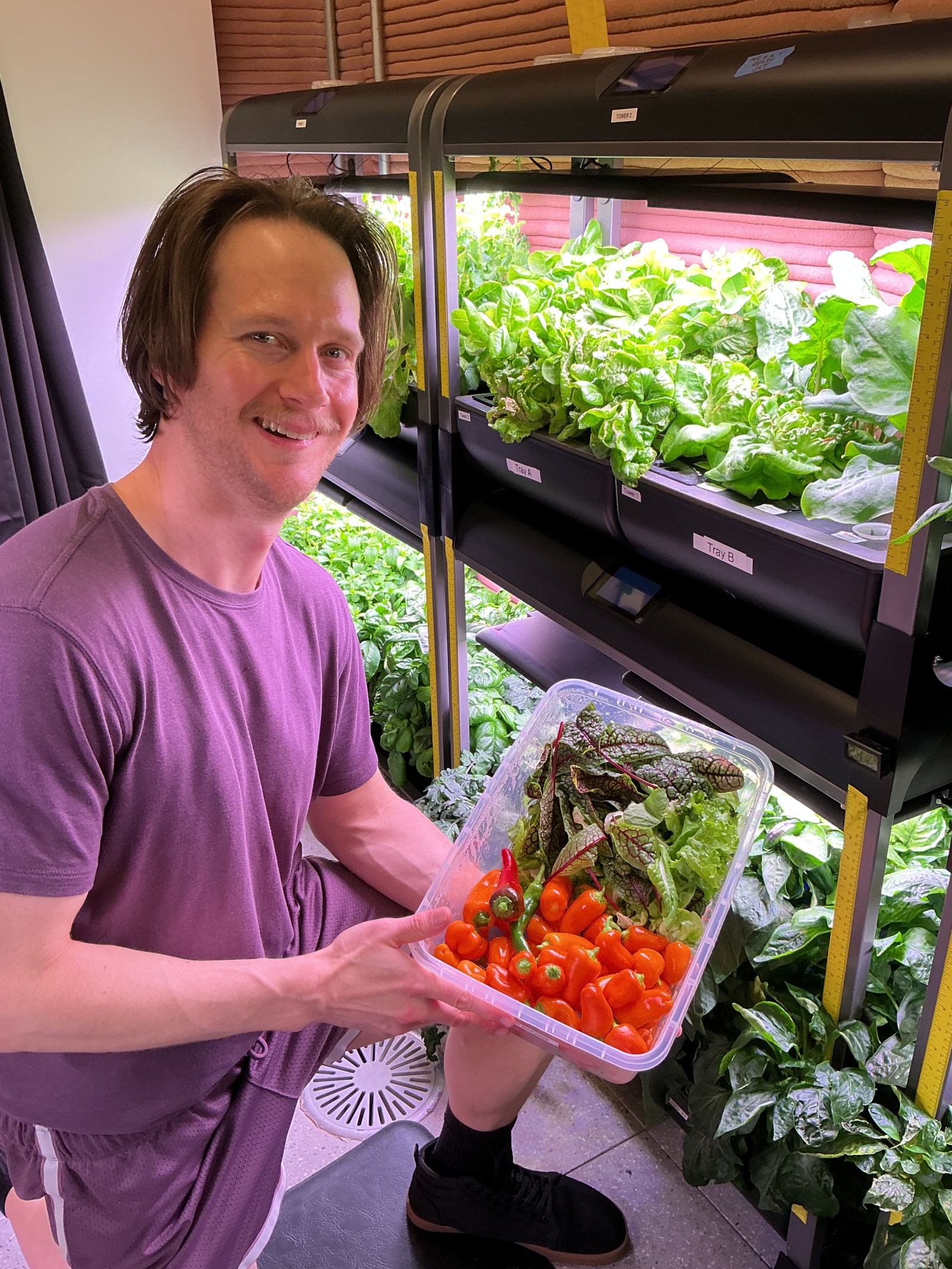
One of the most hopeful parts of the mission grew in trays under LED lights. Montgomery, who had worked in controlled-environment agriculture before the mission, led the crew’s crop growing. He told Nature they grew leafy greens, peppers, and tomatoes, and that tending plants did more than add fresh food to the menu.
“Just interacting with Earth-based things like plant life has a cognitive benefit as well as a nutrient benefit,” he said.
He also ran a seed-germination experiment that compared a control against simulated Martian soil, the kind of test real explorers would need before trying to farm on another world.
Two weeks completely cut off
Living with a 22-minute delay already means no quick calls and no real-time help. Much of the crew’s communication with mission control had to be written. But the crew also faced something tougher: a planned two-week communication blackout, with no contact with mission control or the outside world at all.
It wasn’t a random test. On a real Mars mission, the Sun periodically sits between Mars and Earth and blocks radio signals, leaving astronauts on their own. Montgomery told Nature the crew spent about a month preparing, working through procedures, schedules, and safety plans with the ground teams so they’d be ready if anything went wrong.
Everyday life took careful planning too. Spicer compared the year to living on a submarine or a boat. The crew tracked every consumable, from dish soap to respirator filters, and carefully managed food and water. He was surprised, he said, by how little he missed constant news and social media.
“Most days, I don’t feel isolated”
You might expect a year in a windowless box to produce friction. Instead, the crew’s reflections are full of warmth.
The team had trained together before the mission, including a winter camping expedition in Wyoming where they ran into a blizzard, followed by five weeks of pre-mission training. Montgomery told Nature that, inside the habitat, “conflict was very minimal.”
Ellis put it simply: “It would be difficult to convince someone who has never lived in isolation that most days, I don’t feel isolated. I have three teammates that I rely on every day to get through the mission.”
Spicer said stories and jokes around the kitchen table brought laughter to demanding days, and he told his crewmates they had made the year “not a chore, but a joy.” Elder called the group “one of the finest teams I’ve ever been a part of.”
What happened on the real world while they were away
At the exit ceremony, NASA astronaut Jack Hathaway put the crew’s year into perspective. While they were inside, he flew a 237-day mission aboard the International Space Station and came home. The Artemis II astronauts flew around the Moon and set the record for the farthest humans have ever traveled from Earth. The space station also marked 25 years of continuous human presence.
“The reality of what you guys did here required immense physiological and psychological strength, teamwork, and human grit,” Hathaway told the crew.
Why a pretend Mars matters for the real one
Over the next two weeks of post-mission evaluations and debriefs, researchers will pair the crew’s data with their personal experiences. The study builds on the first CHAPEA mission, which ended on July 6, 2024.
CHAPEA principal investigator Grace Douglas said the research will help NASA weigh human health and performance risks against limited resources such as crew time, communication capacity, and food and water systems. She also noted that many of the resource challenges space explorers face mirror problems here on Earth.
And the timing is good. Project scientist Sara Whiting said the data arrives as NASA plans how astronauts will live and work at its planned Moon Base near the lunar South Pole. “This is really the now moment for this kind of data,” she said.
Montgomery’s biggest takeaway wasn’t about hardware at all. Before the mission, he told UCF he signed up for a simple reason: “The researchers asked for help, and they had a worthy cause.” Coming out, he credited his crewmates’ different perspectives for solutions none of them could have found alone.
“It’s really the people that make exploration possible,” he said.
Sources
- NASA: CHAPEA Mission 2 Crew Reflects After 378 Days on Simulated Mars (Nov. 9, 2026)
- NASA: CHAPEA Crew Leaves a Mark (Nov. 10, 2026)
- Nature: He spent a year on ‘Mars’: NASA science officer emerges from mock mission (Nov. 9, 2026)
- University of Central Florida: UCF Alum ‘Returns to Earth’ After 378-Day Mars Mission (Oct. 27, 2026)
Image credits
- Crew celebrates outdoors, Oct. 31, 2026: NASA/James Blair (public domain), via nasa.gov (jsc2026e424293).
- Crew in front of the Mars Dune Alpha habitat: NASA (public domain), via nasa.gov (jsc2026e424286).
- Matthew Montgomery with hydroponic harvest: NASA (public domain), via nasa.gov (jsc2026e403163).
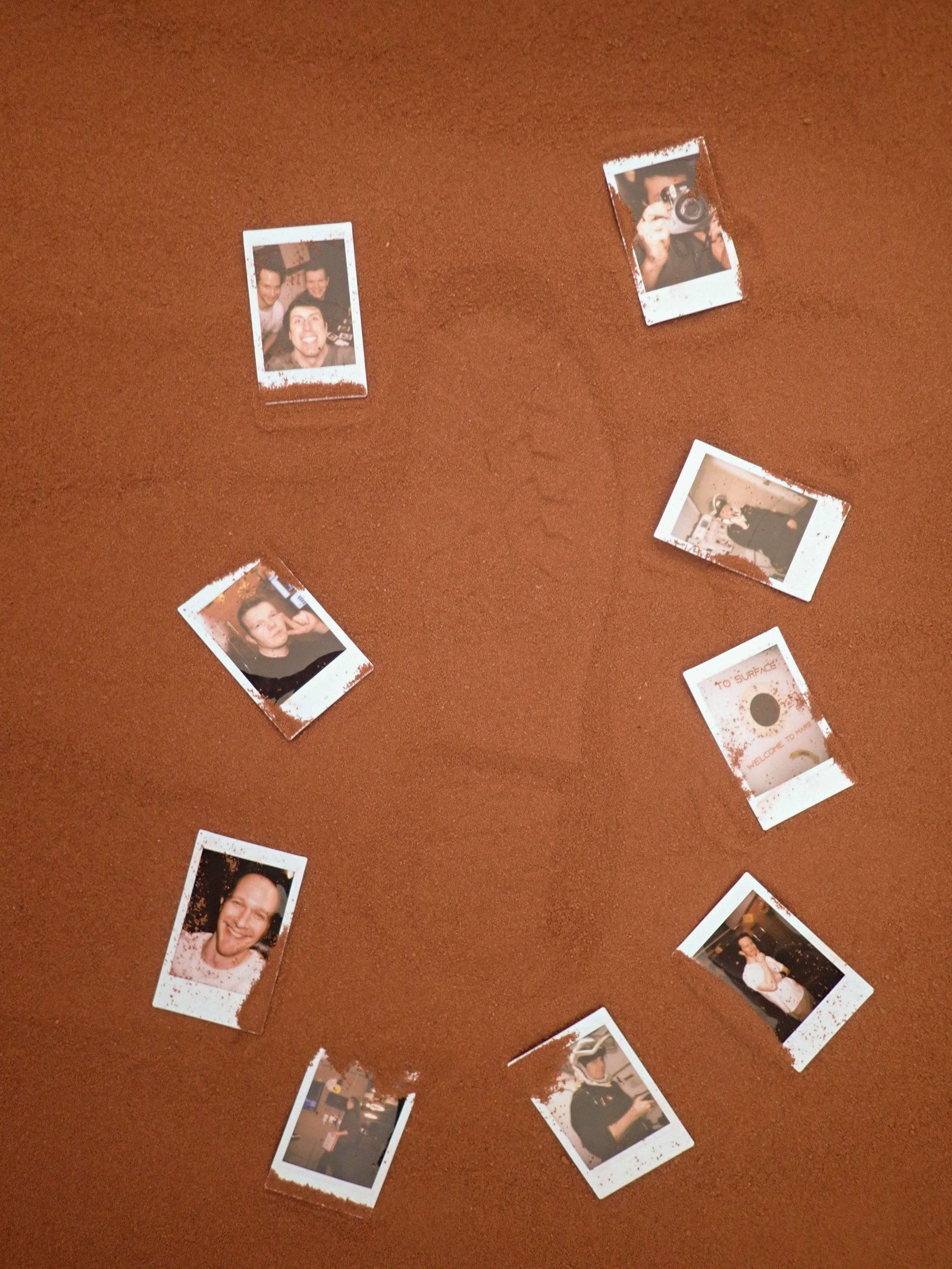
- Photos around a boot print, Aug. 31, 2026: NASA (public domain), via nasa.gov (jsc2026e425219).
- Family and friends welcome the crew: NASA/James Blair (public domain), via nasa.gov (jsc2026e424291).