The world’s largest sea turtle may be quietly trying something new. Along the coast of Ecuador, more than 1,000 miles south of the beaches in Mexico and Costa Rica where eastern Pacific leatherbacks have traditionally nested, researchers documented a record number of leatherback nests during the 2025–2026 nesting season. And one determined mother, nicknamed Bella, turned a rough start into 134 hatchlings.
It is an early, cautious bit of good news for one of the most endangered sea turtle populations on Earth, and the people of Ecuador’s coast are helping it along.
What the scientists found
The findings come from a study published in the journal Chelonian Conservation and Biology, highlighted by Simon Fraser University (SFU) in Canada on November 9, 2026. Researchers pulled together more than 45 years of records from along Ecuador’s coastline: sightings of females of reproductive age, nesting attempts, nests, hatching success, and stranded turtles. According to Nautilus, the team drew on peer-reviewed studies, conservation reports, government survey records and even validated social media sightings, going back as far as 1980.
They then lined those records up against El Niño and La Niña, the climate cycles that swing the eastern Pacific between warmer and cooler sea surface temperatures. Their key findings:
- Record nesting: the 2025–2026 season produced a record-breaking number of leatherback nests on several Ecuadorian beaches.
- A cool-water pattern: over the past decade, leatherback activity and nesting in Ecuador increased during cooler La Niña periods in the southeastern tropical Pacific.
- Healthy nests: the number of eggs per nest and hatch rates in Ecuador were comparable to the traditional nesting grounds farther north, and in some cases Ecuadorian nests produced more hatchlings than usual.
“Historically, observing female Eastern Pacific leatherbacks on Ecuador’s beaches was a rare or unusual event, but our findings suggest they are adapting their reproductive cycle to thrive and survive in coastal Ecuador,” said Juan José Alava, a marine ecotoxicologist, adjunct professor at SFU’s School of Resource and Environmental Management and a leading co-author of the study.
Meet Bella, the turtle who wouldn’t give up
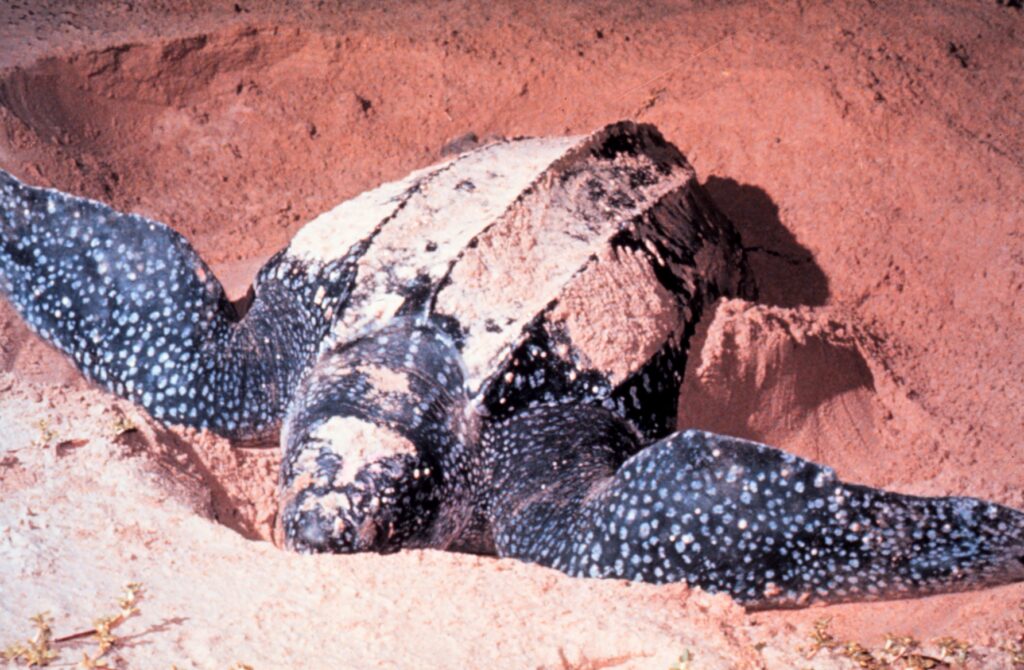
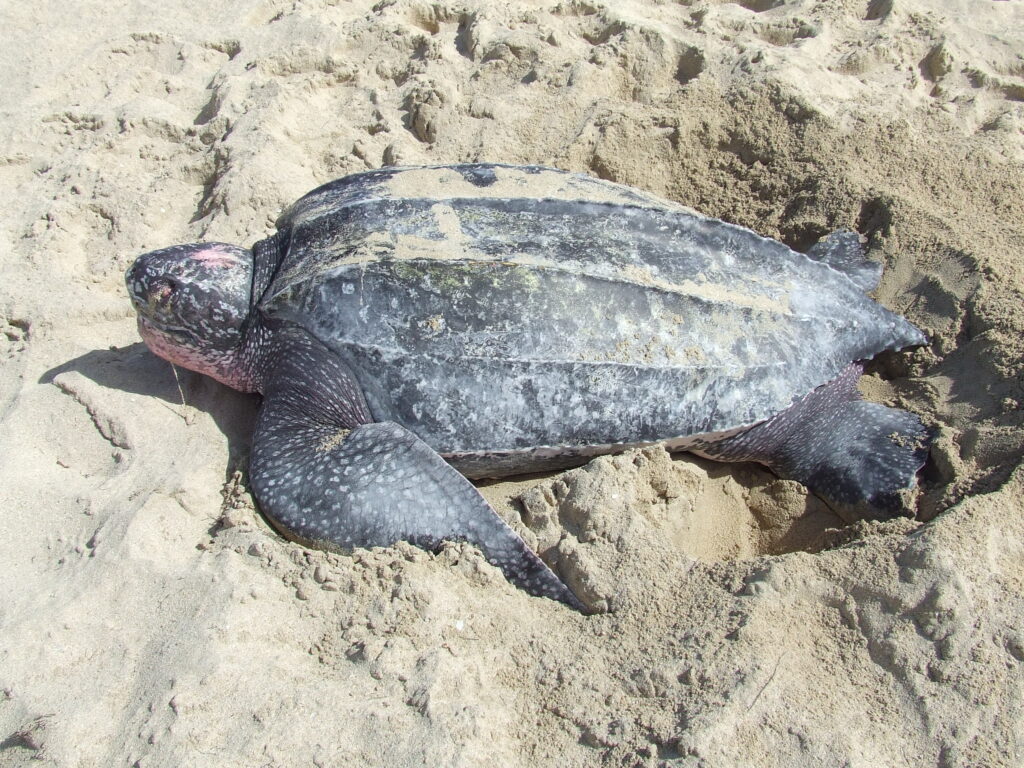
The most charming part of this story has a name. In January 2026, by the light of the moon, a female eastern Pacific leatherback that researchers called Bella crawled up the sand at Playa de Crucita, Ecuador, looking for a place to dig her nest.
Things did not go to plan. Disoriented by nearby streetlights, Bella climbed over a rock breakwater and ended up on a sidewalk instead of the beach. She returned to the ocean without nesting, still carrying her eggs.
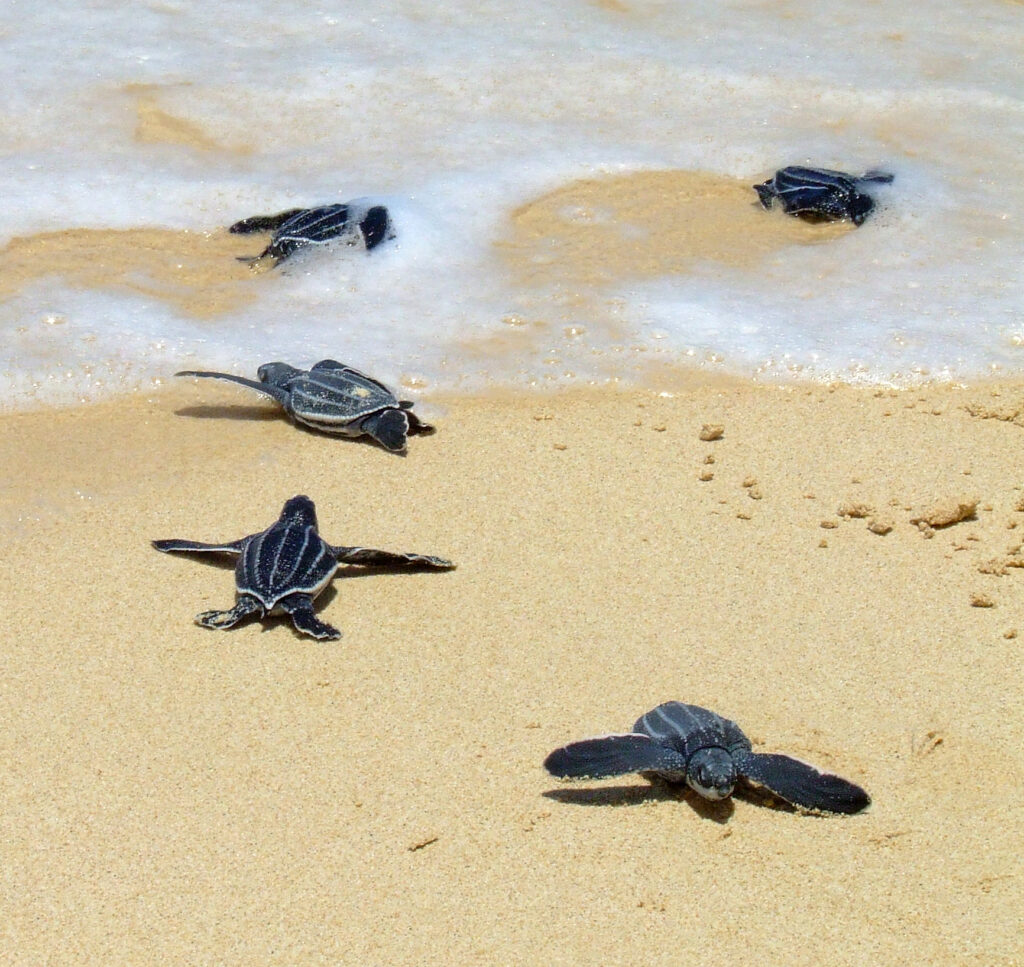
Two nights later, she tried again on a quieter stretch of beach. This time she dug her nest, laid 47 eggs, covered them with sand and hauled herself back to the sea. A few weeks later, 44 hatchlings emerged and scrambled toward the surf.
Bella was not done. Researchers had tagged her during that first failed attempt, which is how they learned she nested four to five times in 2026 alone. One nest stayed where she laid it; the others were moved to the San Jacinto hatchery for safekeeping. Across the season, Bella laid 146 eggs and 134 baby turtles emerged, an overall success rate of 91.8 percent.
Why this matters so much
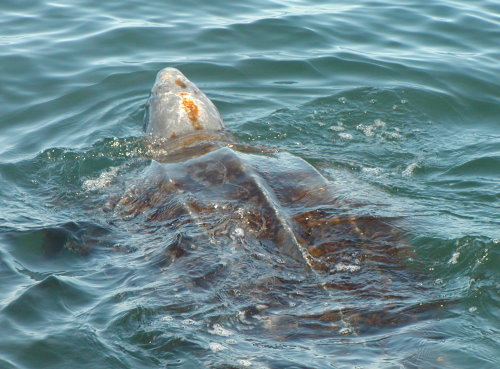
Leatherbacks are remarkable animals. They are the only sea turtles that thrive in both warm and cold water, migrating thousands of miles between tropical nesting beaches and subpolar Pacific feeding grounds, where they feast on jellyfish in summer. Their travels even reach Canada: SFU notes more than 150 records of leatherbacks in British Columbia waters between 1931 and 2024.
But the eastern Pacific population is in deep trouble. It has declined by more than 90 percent since the 1980s, according to SFU, driven by warm El Niño episodes made worse by human-caused climate change, plus fishing bycatch, plastic pollution, vessel strikes, egg harvesting and loss of nesting habitat.
That is why a healthy new nesting area matters. “It signals new hope for a subspecies of leatherback on track for extinction in the eastern Pacific within 60 years,” Alava said. “They are making their way alongside nature against all odds, representing hope for this species and other sea turtle species even as they reach tipping points.”
A long road back to Ecuador’s beaches
Ecuador’s leatherback comeback did not happen overnight. As Nautilus reported, the study found an uptick in nesting females starting around 2000. Leatherback hatchlings had not been reported along Ecuador’s coast since 1983, so nests that hatched in Manabí Province in the winters of 2020 and 2021 were cause for celebration. The 2025 and 2026 seasons brought more hatching success from nests relocated to protected areas.
Much of that success comes from people on the ground. Photos released with the study show staff, volunteers and community members from Ecuadorian groups such as Equilibrio Azul and Fundación Reina Laúd working with nesting leatherbacks, and the paper’s long author list includes many Ecuadorian researchers and conservationists.
The honest caveats
This is hopeful news, not a finished rescue, and the researchers are careful about what they claim:
- Cause is not proven. The link between cooler La Niña conditions and more nesting suggests ocean temperatures may influence where females lay eggs, but the findings do not establish that warming waters are directly pushing turtles south. Whether this is a lasting adaptation remains uncertain.
- Dangers remain. Nautilus reports that at least 35 dead leatherbacks were confirmed stranded on Ecuador’s coast from 2011 to 2026, many associated with injuries from fisheries and other human activities.
- Beaches need care. Bella’s run-in with streetlights and a breakwater shows how coastal development can interfere with nesting, even when turtles find a promising beach.
What comes next
Alava says ongoing monitoring, efforts to reduce accidental capture in fishing gear, and effective management of Ecuador’s nesting beaches will be essential to the population’s long-term survival. He also stresses that local people should be at the center of it: “Management and conservation efforts should be championed in close consultation and participation with local and traditional ecological knowledge through coastal, community-grounded interventions.”
Leatherbacks have been swimming the oceans for a very long time. If some of them are finding fresh, welcoming beaches in Ecuador, and if coastal communities keep the lights low and the nests safe, more turtles like Bella’s 134 babies may get their chance to reach the sea.
Sources
- Simon Fraser University, “Endangered leatherbacks finding new nesting beaches in Ecuador as Pacific Ocean warms, study finds,” November 9, 2026.
- Devin Reese, “The World’s Largest Marine Turtle Makes a Move South,” Nautilus, November 13, 2026.
- “On the Brink of Extinction, These Giant Sea Turtles Are Doing Something Unexpected,” SciTechDaily (via Simon Fraser University), November 20, 2026.
- Study: J. J. Alava, K. Briones, C. Soledispa et al., “A New Hope: Eastern Pacific Leatherback (Dermochelys coriacea) Nesting and Stranding Observations Amidst a Warming Ocean Show the Value of Ecuador for Species Persistence,” Chelonian Conservation and Biology, October 19, 2026.
Image credits
Note: we could not use the photos of Bella and the Ecuadorian nests, so all images here are free, public-domain photos of leatherback sea turtles taken elsewhere. They show the same species, not this study’s turtles.
- Leatherback hatchlings crawling to the sea: U.S. Fish and Wildlife Service Southeast Region. Licence: public domain (U.S. government work). Wikimedia Commons
- Leatherback nesting at Las Baulas National Marine Park, Costa Rica: NOAA. Licence: public domain (U.S. government work). Wikimedia Commons
- Leatherback sea turtle at sea: Scott R. Benson, NOAA Fisheries Southwest Fisheries Science Center. Licence: public domain (U.S. government work). Wikimedia Commons
- Leatherback on the beach, Sandy Point NWR, U.S. Virgin Islands: Al Woodson, USFWS volunteer (U.S. Fish and Wildlife Service Southeast Region). Licence: public domain (U.S. government work). Wikimedia Commons