Here’s a fun fact to start your day: some of the best evidence about what’s frozen beyond Neptune didn’t come from a spacecraft out there. It came from dust grains caught on sticky pads under the wing of a NASA airplane flying above Earth.
A team from NASA’s Johnson Space Center in Houston and UCLA studied 12 of these tiny grains, each far smaller than the width of a human hair. They found what they describe as compelling evidence for an ancient store of “heavy” water ice in the Kuiper Belt, the cold, distant zone of icy objects past Neptune. Scientists had suspected this reservoir was there for decades but had a hard time proving it. The study was published in Science Advances in mid-November 2026, and NASA highlighted it on Nov. 18.
Space dust, caught 65,000 feet up
Every day, Earth picks up fine dust from space. Some of it drifts slowly down through the upper atmosphere, and NASA has a clever way of catching it.
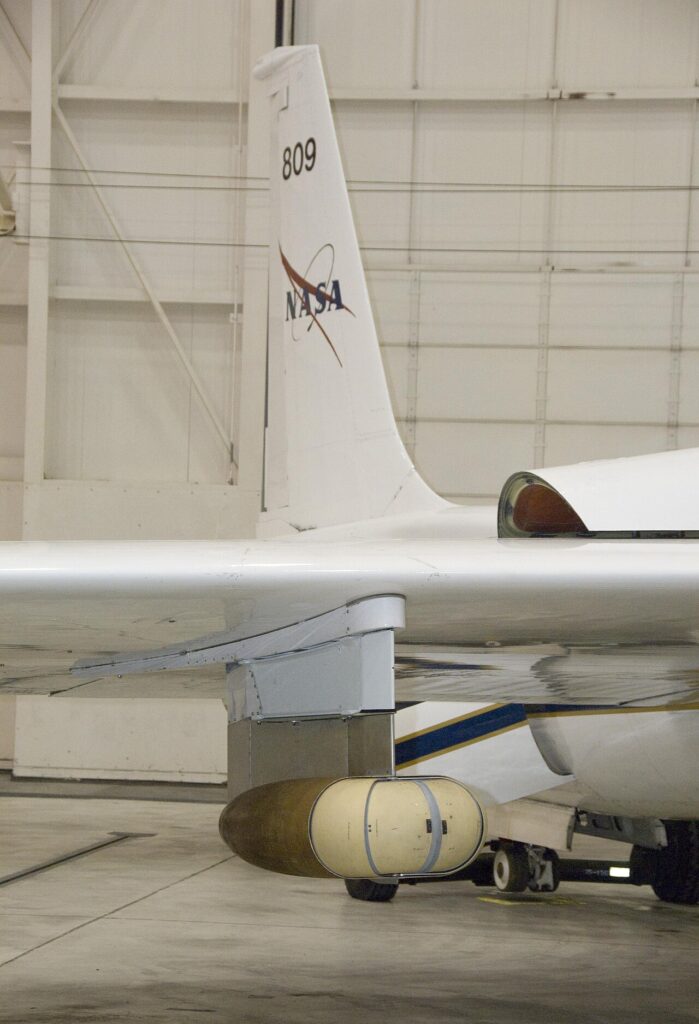
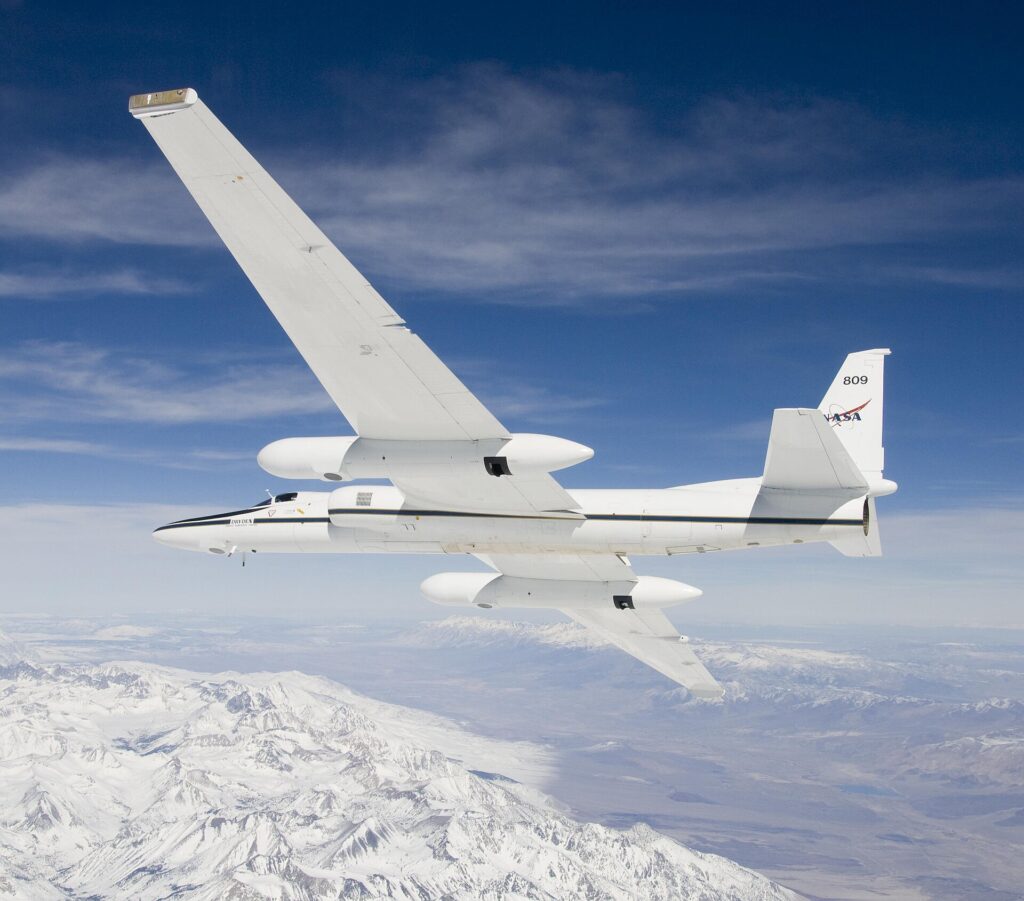
The agency’s ER-2 is a high-altitude research plane that can carry collector pods under its wings. When the plane gets to about 65,000 feet, clamshell-like doors on the collectors open and expose pads coated with sticky oil. Microscopic grains of cosmic dust land on the pads and stay there. Back on the ground, scientists take them off one by one and study them in the lab.
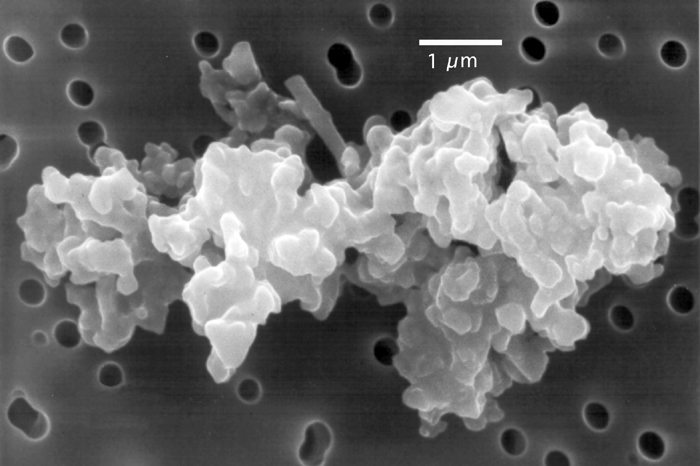
These grains are called interplanetary dust particles, or IDPs. They’re some of the most pristine material from the early solar system we can get our hands on, and nobody has to launch a rocket to go get them.
How do you know a speck came from beyond Neptune?
This is my favorite part. The researchers didn’t just assume the dust came from the outer solar system. They checked the grains for damage.
Dust floating through space gets hit by energetic particles from the Sun, and each hit leaves a microscopic track in the grain’s crystals. The longer a grain spends drifting through space, the more tracks it collects. Earlier research had connected unusually dense track patterns to dust that made the very long trip in from the Kuiper Belt.
All 12 of the grains in this study had high track densities, which fits that long journey. In their paper, the authors write that track-rich particles like these “originate from Edgeworth-Kuiper belt objects.”
Reading the water’s fingerprint
Now for the chemistry, which is simpler than it sounds.
Oxygen comes in three stable versions, or isotopes: oxygen-16, oxygen-17 and oxygen-18. The heavier two have one or two extra neutrons. Different places in the solar system ended up with slightly different mixes of the three, so the mix works like a return address.
Scientists have long predicted that ice in the outer solar system should be unusually rich in the heavier isotopes compared with rocky material. The evidence was thin, though. Hints had turned up in minerals from one primitive meteorite and at comet 67P. In 2011, NASA’s Genesis mission added a key clue when it showed that the Sun has proportionally more light oxygen than Earth and most meteorites do.
Here’s how the team tested the idea:
- At NASA Johnson, Lindsay Keller and Christopher Snead used electron microscopes to study the grains’ minerals. They found clay-like hydrated minerals, which form when water reacts with rock and dust. That means these grains, or the bodies they came from, were once soaked in water at low temperatures.
- At UCLA, Ming-Chang Liu, Kevin McKeegan and Snead used a very sensitive ion microprobe (a CAMECA ims-1290) to measure the oxygen isotopes inside the particles.
- Then they worked backward. By comparing the water-altered minerals with the minerals they probably started as, the team calculated what the water itself must have been like.
The answer: the water was strongly depleted in ordinary oxygen-16 and enriched in the heavier isotopes, which is exactly the long-predicted signature. According to Phys.org’s write-up of the paper, the team estimates that the water’s oxygen-18 to oxygen-16 ratio was roughly 15% higher than the standard for Earth’s ocean water. The authors call that a model-based upper limit, not a direct measurement, because the original ice is long gone.
“These are extraordinary particles, and studying them requires capabilities that no single laboratory has,” Liu said in UCLA’s announcement.
Did Saturn act like a bouncer?
The study has a second interesting result. That heavy-water signature barely shows up in meteorites, which mostly come from closer to the Sun. So the distant ice reservoir seems to have stayed mostly isolated while the planets were forming.
The researchers think the giant planets are why. They point to Saturn in particular, possibly helped by Uranus and Neptune. Simulations predict a “pressure bump” in the gas disk just outside Saturn’s orbit during the solar system’s first few million years. In the paper, the team writes that this bump “would have slowed or stopped radial drift of outer solar system particles inward of Saturn’s orbit.”
Put simply, Saturn may have worked like a bouncer at a door, keeping much of the outer solar system’s icy material from drifting inward.
“This research shows that water in the early solar system was not distributed or mixed uniformly,” McKeegan said. “The isotopic differences preserved in these tiny particles tell us something important about how the solar system developed.”
Why this is worth smiling about
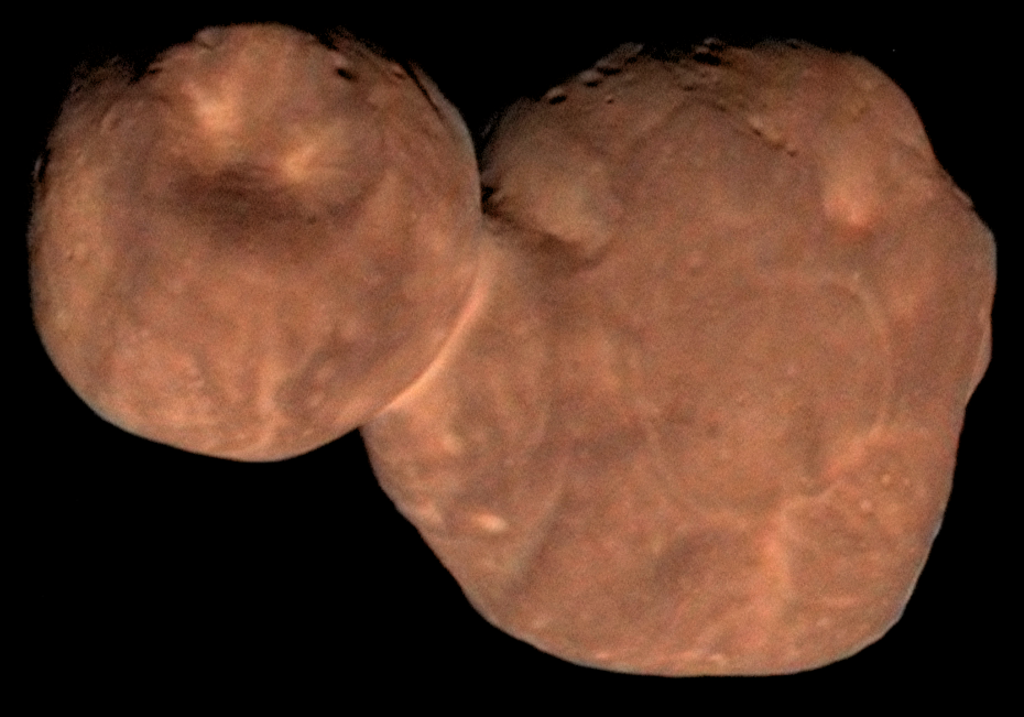
The Kuiper Belt is billions of miles away. Only one spacecraft, New Horizons, has ever flown past objects out there. Sample-return missions to the outer solar system would be enormously hard and expensive.
And yet a piece of that faraway region kept drifting to us anyway, one invisible speck at a time. An airplane caught it, and patient teams in Houston and Los Angeles read its story with microscopes. Grains you couldn’t see with the naked eye ended up holding clues about where the solar system’s water was kept 4.6 billion years ago, and how the planets might have divided it up.
Next time you see a sunbeam full of floating dust, remember that a tiny share of the dust drifting down to Earth is older than the planets and came from the dark edge of the solar system.
Sources
- NASA Science, “NASA Scientists Find Clues to Ancient Ice Beyond Neptune” (Victoria Segovia, Nov. 18, 2026)
- UCLA Division of Physical Sciences, “UCLA and NASA researchers identify ancient water reservoir in outer solar system” (November 2026)
- Keller, L. P., Snead, C. J., Liu, M.-C., and McKeegan, K. D., “A primordial heavy water reservoir in the outer solar system,” Science Advances 12(46), 2026. DOI: 10.1126/sciadv.aeg1602
- EurekAlert!/AAAS, “Dust from the Kuiper Belt suggests the outer solar system contains water with heavy oxygen” (Nov. 11, 2026)
- Phys.org, “Space dust particles point to ancient heavy-oxygen water reservoir in the Kuiper belt” (Krystal Kasal, Nov. 12, 2026)
Image credits
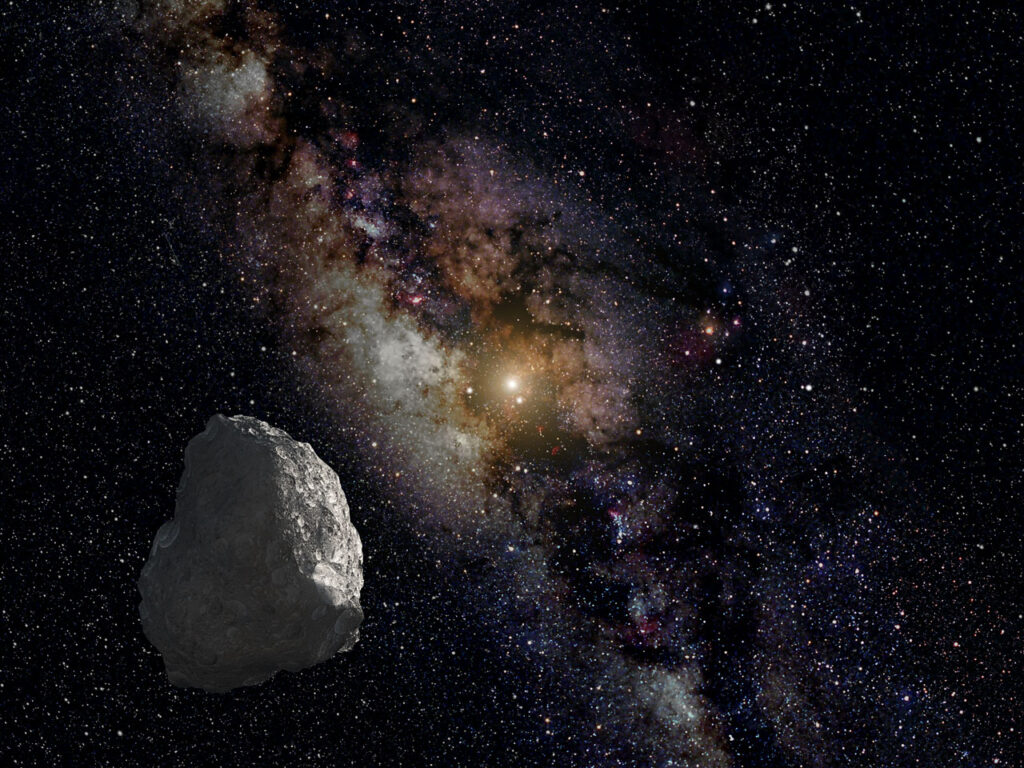
- Artist’s impression of a Kuiper Belt object: NASA, ESA, and G. Bacon (STScI), CC BY 4.0, via Wikimedia Commons. Illustration.
- Cosmic dust collector under the ER-2 wing (2009): NASA/Tom Tschida, public domain, via Wikimedia Commons. File photo.
- Interplanetary dust particle (SEM image): Donald E. Brownlee (University of Washington) and Elmar Jessberger (Institut für Planetologie, Münster), Creative Commons Attribution license (CC BY 1.0 per Commons; the file description cites CC BY 2.5), via Wikimedia Commons. Example particle, not from this study.
- Arrokoth (2019): NASA/Johns Hopkins University Applied Physics Laboratory/Southwest Research Institute/Roman Tkachenko, public domain, via Wikimedia Commons. Archival image.
- NASA ER-2 over the Sierra Nevada (2008): NASA/Carla Thomas, public domain, via Wikimedia Commons. File photo.