For more than four decades, the Jamaican rock iguana was a ghost. Scientists believed it had vanished from the Earth. Then a handful of survivors turned up in a rugged patch of dry forest on Jamaica’s south coast, and people decided not to let the story end there.
On Saturday, November 14, 2026, a team of conservationists hiked into Jamaica’s Hellshire Hills carrying 33 young iguanas and set them free. That release pushed a milestone past the finish line: just over 1,000 head-started Jamaican rock iguanas have now been returned to the wild since the recovery program began.
The lizard that came back from “extinct”
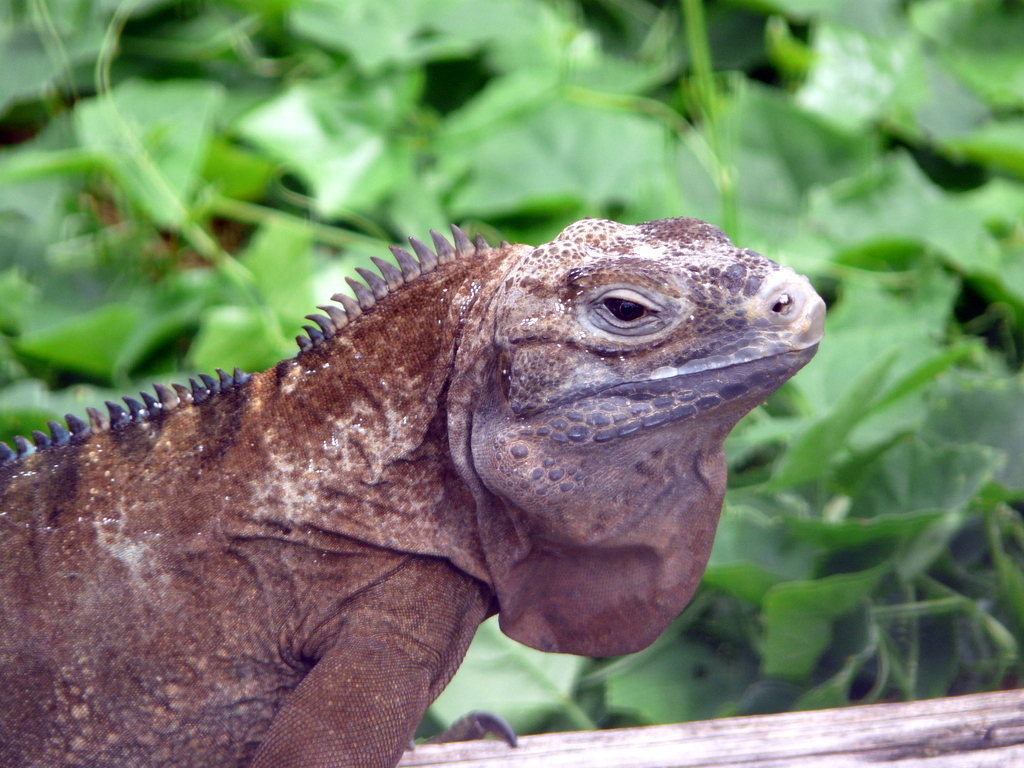
The Jamaican rock iguana (Cyclura collei) is a big, spiny, slate-and-olive lizard found nowhere else on the planet. By the mid-1940s, people thought it was gone. Jamaica’s environment minister, Matthew Samuda, recalled this month that the species was “genuinely thought to be extinct and declared so in 1948.”
According to the IUCN Red List, as quoted by Discover Wildlife, the species’ continued survival in the Hellshire Hills was confirmed in 1970 from a single individual. Then, in 1990, researchers found a remnant population of fewer than 50 iguanas, mostly old adults. That is not many animals to rebuild a species from, and old adults alone can’t keep a population going if their babies keep getting eaten.
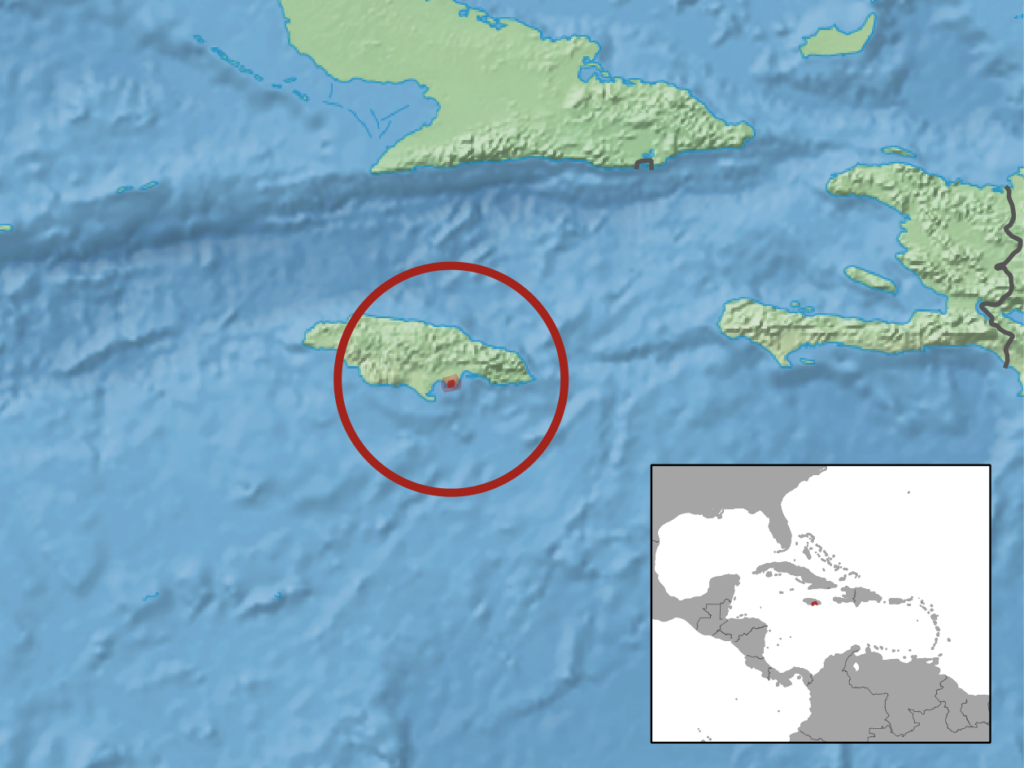
And the babies were getting eaten. Young iguanas in Hellshire face introduced predators like mongooses, cats and dogs, on top of habitat loss and degradation. The wild population today is still restricted to a small area of the island.
How “headstarting” gives baby iguanas a fighting chance
The trick that changed everything is called headstarting. Instead of leaving tiny hatchlings to fend for themselves in a forest full of mongooses, the Jamaican Iguana Recovery Program collects them and raises them at the Headstart Facility at Hope Zoo in Kingston.
There, the young iguanas eat, grow and get stronger in a protected setting. Once they are big enough to defend themselves against predators, they go home to the Hellshire Hills. Size is their armor: a larger iguana is a much harder meal for a mongoose than a hatchling.
It sounds simple, but it takes years of patient work per animal, multiplied by a thousand.
“When I joined the Fort Worth Zoo and this program in 2016, we had just reached 300 iguanas reintroduced into the wild. In the last 10 years, we have been able to improve field efforts and grow the headstart program to reach this historic milestone.”
— Dr. Stesha Pasachnik, Fort Worth Zoo conservation biologist
A two-hour hike for 33 iguanas
Getting the iguanas home is a whole adventure. According to the Fort Worth Zoo, the Jamaica Defence Force Coast Guard ferried the release team and the iguanas by sea. From there, nearly 30 people from partner organizations carried the animals on foot for more than two hours through rough terrain to reach the protected release site.
The weather was unusually hot for November, but calm seas made the trip possible. By the end of the day, 33 more iguanas were back where their species belongs, and the program had crossed the 1,000 mark.
It took a village (and an island)
No single group pulled this off. Jamaica’s recovery program is coordinated by the National Environment and Planning Agency (NEPA). The Fort Worth Zoo in Texas has contributed expertise and support since 1993. Other partners include Hope Zoo, the Caribbean Coastal Area Management Foundation, the Urban Development Corporation, the Institute of Jamaica and the University of the West Indies, Mona.
The timing was fitting, too. In the days before the release, from November 8 to 11, Kingston hosted the annual meeting of the IUCN Species Survival Commission’s Iguana Specialist Group. Minister Samuda noted that a 1993 international workshop held in Kingston helped lay the foundation for that very group, which means the iguana experts of the world essentially grew up alongside this rescue.
“The release of the 1,000th Jamaican iguana is not simply a numerical achievement. Each iguana returned to its natural habitat represents years of scientific effort, careful management and the unwavering commitment of individuals and institutions who refuse to accept extinction as the final chapter in this species’ history.”
— Matthew Samuda, Jamaica’s Minister of Water, Environment and Climate Change
Why one lizard matters to a whole forest
Saving the iguana isn’t just about the iguana. Jamaican rock iguanas eat fruit and spread seeds as they go, which helps the dry forest regenerate. In a sense, they are gardeners.
And that forest is special. The Hellshire Hills hold the Caribbean’s largest intact dry forest, home to nearly 400 plant species and 18 animal species, seven of which are found only in that area, according to the Fort Worth Zoo. Protecting iguana habitat protects all of them.
Signs the wild population is starting to stand on its own
The best news may be what is happening without human help. Conservation teams report that:
- More females are nesting in the wild.
- More nest sites are being protected.
- The number of hatchlings emerging each year keeps growing.
- Researchers are seeing natural recruitment, meaning wild-born iguanas surviving to join the population.
- Iguanas are dispersing over longer distances, using more of their habitat.
Together, those signs point toward a more self-sustaining wild population. Nobody is declaring victory. The species is still critically endangered, and the Fort Worth Zoo says continued collaboration, habitat protection and monitoring will be essential. But compare today with 1990, when the entire known population was fewer than 50 aging adults, and it is hard not to smile.
The takeaway
A species written off in 1948 now has more than a thousand head-started iguanas scrambling across the limestone of the Hellshire Hills, plus a growing number of wild-born babies. It took more than 30 years, a zoo in Kingston, a zoo in Texas, a coast guard boat, and a lot of people willing to hike for hours in the heat carrying lizards. That’s the kind of stubborn hope worth sharing.
Sources
- “Historic 1,000th Jamaican rock iguana reintroduced into the wild,” Fort Worth Zoo press release via Fort Worth Report, November 16, 2026.
- “1,000th head-started rock iguana to be released in Hellshire Hills on Saturday,” Jamaica Gleaner (JIS), November 9, 2026.
- Melissa Hobson, “Experts thought these animals might be extinct. Now, 1,000 have been released into the wild,” Discover Wildlife, November 9, 2026.
Image credits
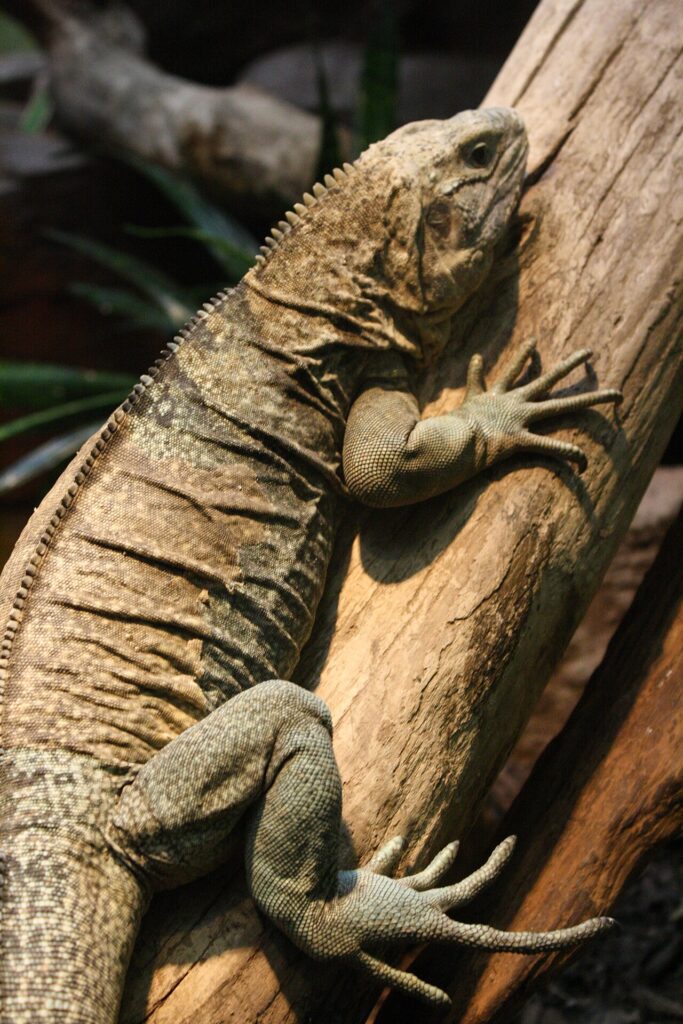
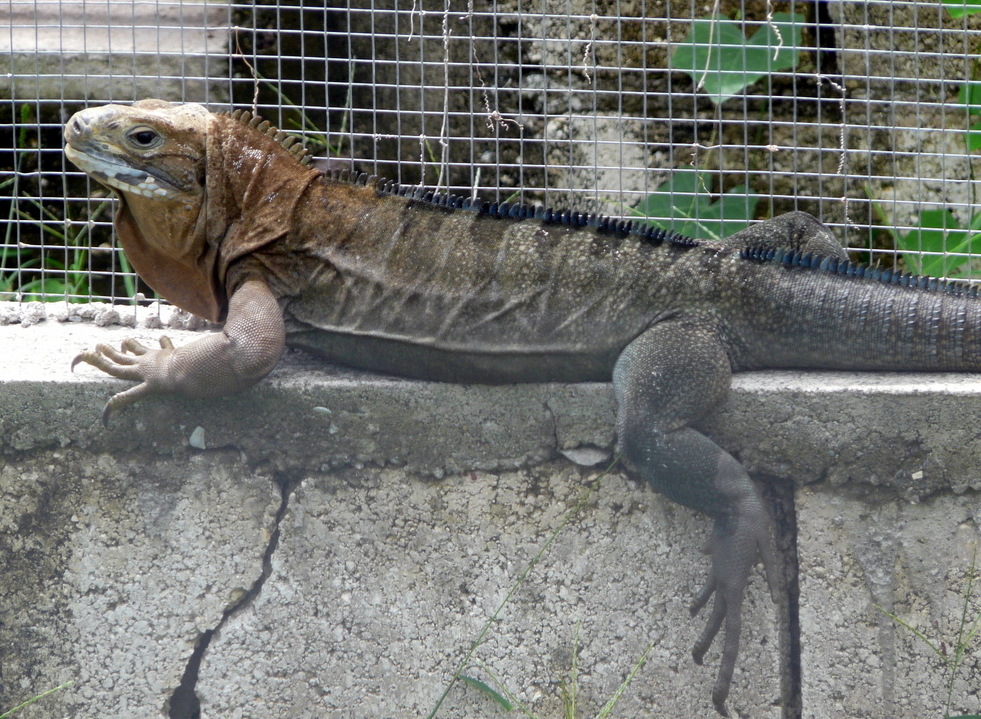
Note: the photos of this month’s release belong to the Fort Worth Zoo, so we used freely licensed photos of Jamaican rock iguanas instead. They show the same species, not the released animals.
- Female Jamaican rock iguana: Simon Tonge. Licence: CC BY 3.0. Wikimedia Commons
- Jamaican iguana range map: IUCN Red List (assessors T.D. Grant, R. Gibson & B.S. Wilson). Licence: CC BY-SA 3.0. Wikimedia Commons
- Jamaican iguana on a log: .RGB. (Flickr). Licence: CC BY 2.0. Wikimedia Commons
- Male Jamaican rock iguana: Simon Tonge. Licence: CC BY 3.0. Wikimedia Commons
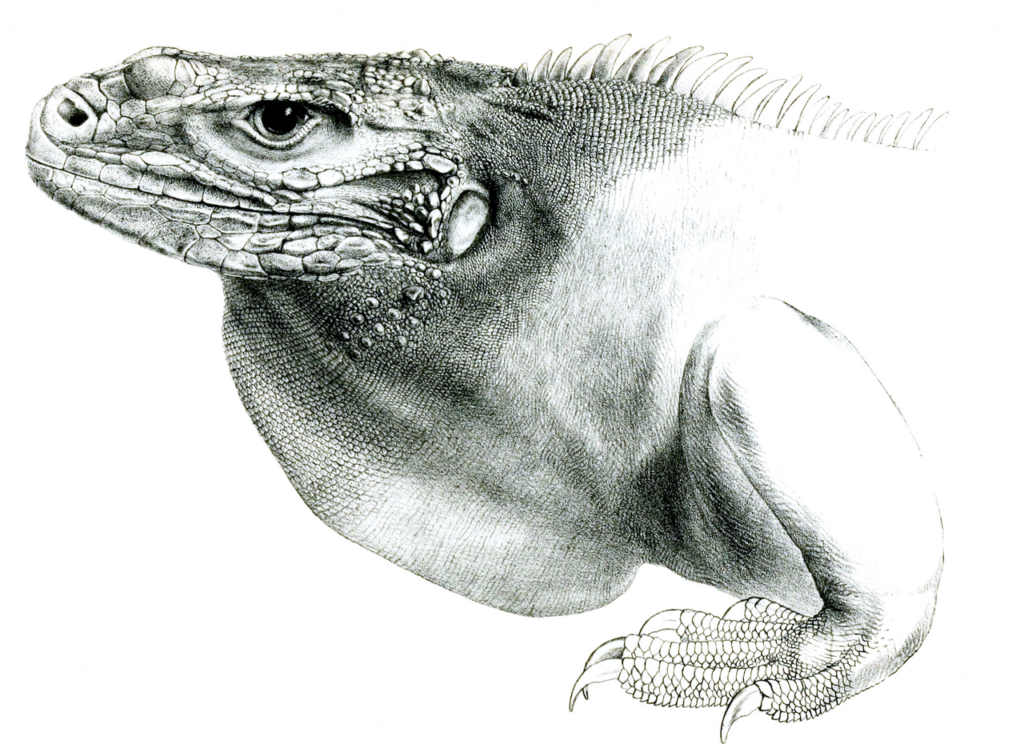
- 1848 illustration of a Jamaican iguana head: Proceedings of the Zoological Society of London. Licence: public domain. Wikimedia Commons